Turmeric Rhizomes for Planting – Easy to Grow Spice Plant
Turmeric Rhizomes for Planting – Easy to Grow Spice Plant
Cultivate your own vibrant spice with these premium turmeric rhizomes for planting. Known for their culinary and health benefits, these rhizomes are simple to grow, offering a rewarding harvest for both beginner and experienced gardeners.
$20.99

With our Alive & Thrive Guarantee, we’ve got your back for the first 30 days! If you have any concerns about your plants, just reach out to us. Our team is here to help answer your questions and guide you in selecting the best plants for your garden, climate, and unique preferences. We're excited to help you create the garden of your dreams!
Estimated arrival
Apr 01
Apr 06 - Apr 08
Apr 11 - Apr 15
Product Details
-
USDA Hardiness Zone
USDA zones 8-11 (outdoors) or year-round indoors -
Soil type
Rich, well-draining soil -
Sunlight Exposure
Full sun to partial shade (6-8 hours daily) -
Expected Planting Period
Late winter to early spring
Overview
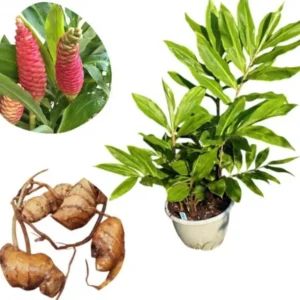
Embark on a rewarding gardening journey with our premium turmeric rhizomes for planting. These rhizomes, also known as turmeric fingers, are the underground stems of the Curcuma longa plant, renowned globally for its bright orange-yellow color, distinctive aroma, and powerful properties. Growing your own turmeric at home ensures a fresh, organic supply of this beloved spice, free from pesticides and chemicals. Whether you’re a seasoned gardener looking to expand your edible landscape or a novice eager to try something new, planting turmeric is an incredibly satisfying experience that yields both culinary delights and a beautiful, tropical-looking plant. These rhizomes are carefully selected to ensure strong growth and abundant yields, making it easy to grow turmeric at home in various climates, especially when given proper care and attention.
Turmeric has been a staple in traditional medicine and cuisine for centuries, originating from Southeast Asia. Its vibrant color comes from curcumin, the active compound responsible for many of its acclaimed benefits. By choosing to plant these high-quality turmeric rhizomes for planting, you are not just growing a spice; you are cultivating a piece of history and a powerhouse of flavor and wellness right in your backyard or even in a container on your patio. The process is straightforward, and the results are truly gratifying, providing you with a continuous supply of fresh, pungent turmeric for all your cooking and health needs.
Key Benefits
Cultivating your own turmeric offers a multitude of advantages, from enhancing your culinary creations to contributing to your overall well-being. Our turmeric rhizomes for planting provide an excellent opportunity to enjoy these benefits firsthand:
- Fresh, Organic Spice: Growing your own turmeric guarantees a supply of fresh, organic turmeric root without the concerns of store-bought produce that may contain pesticides or artificial additives. You control the entire growing process from start to finish.
- Culinary Versatility: Fresh turmeric adds an unparalleled depth of flavor and vibrant color to a wide array of dishes, including curries, smoothies, teas, and stir-fries. Its unique earthy and slightly peppery taste elevates any recipe.
- Health and Wellness Support: Turmeric is celebrated for its natural properties, primarily due to the compound curcumin. Incorporating fresh turmeric into your diet is a delicious way to support your health.
- Easy to Grow: These turmeric rhizomes for planting are surprisingly easy to cultivate, making them suitable for gardeners of all skill levels. With basic care, you can achieve a bountiful harvest, even if you’re new to growing edible plants.
- Beautiful Garden Addition: Beyond its practical uses, the turmeric plant itself is quite attractive, featuring lush green foliage and sometimes delicate white or pink flowers. It adds a tropical touch to any garden or patio space.
- Sustainable Living: By learning how to plant turmeric, you contribute to a more sustainable lifestyle, reducing reliance on commercial supply chains and fostering a deeper connection with your food sources.
- Cost-Effective: Once established, a single planting of turmeric can provide multiple harvests, offering a continuous and cost-effective source of this valuable spice.
Plant Care & Growing Tips
To successfully grow turmeric at home, understanding its specific care requirements is key. Turmeric thrives in warm, humid environments, mimicking its native tropical habitat. It prefers a location that receives full to partial sun, ideally with at least 6-8 hours of direct sunlight per day. If growing indoors, choose a south-facing window or supplement with a grow light. The soil should be consistently moist but never waterlogged, as excessive moisture can lead to rot. A good rule of thumb is to water when the top inch of soil feels dry to the touch, increasing frequency during hot, dry spells.
For optimal growth, plant your turmeric rhizomes for planting in rich, well-draining soil. A mix of compost, peat moss, and sand or perlite works well to provide both nutrients and good drainage. Turmeric is a heavy feeder, so fertilize every 2-4 weeks during the growing season (spring through fall) with a balanced organic fertilizer. In cooler climates, turmeric can be grown in containers and brought indoors before the first frost. The plant will typically die back in late fall or early winter, indicating that the rhizomes are ready for harvest. Protect from strong winds, as the large leaves can be susceptible to damage. Pests are generally not a major issue, but keep an eye out for spider mites or aphids, especially in dry conditions.
Size & Details
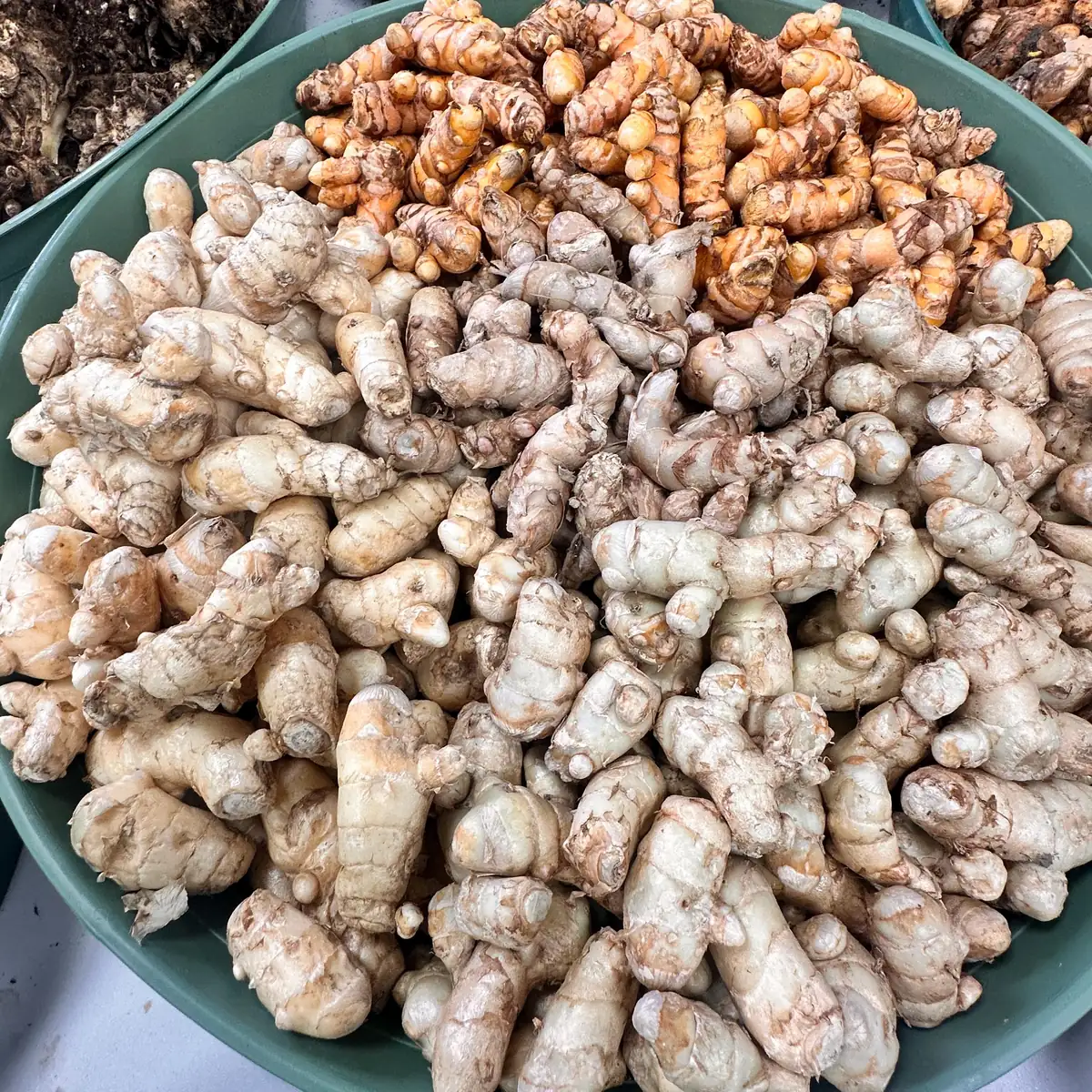
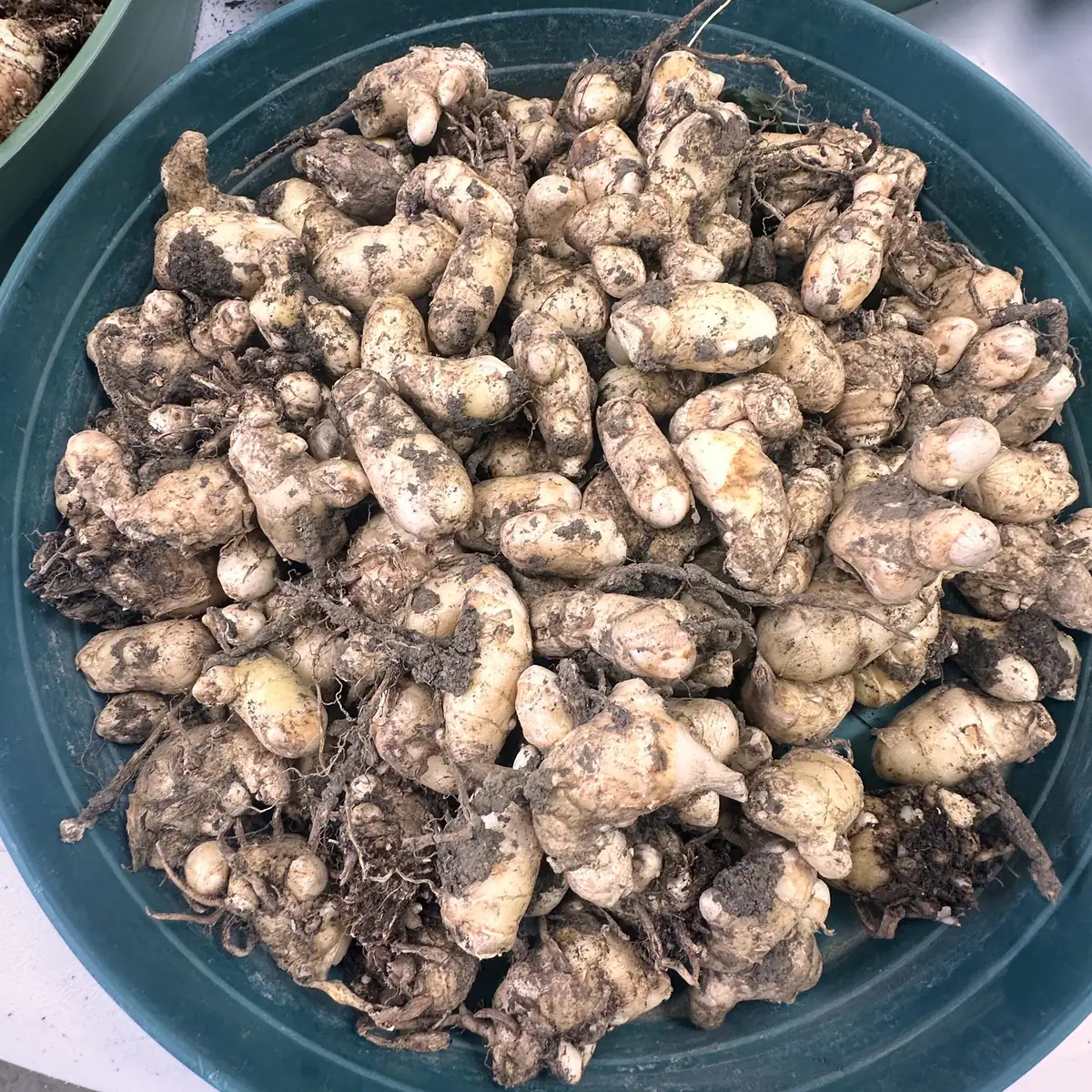
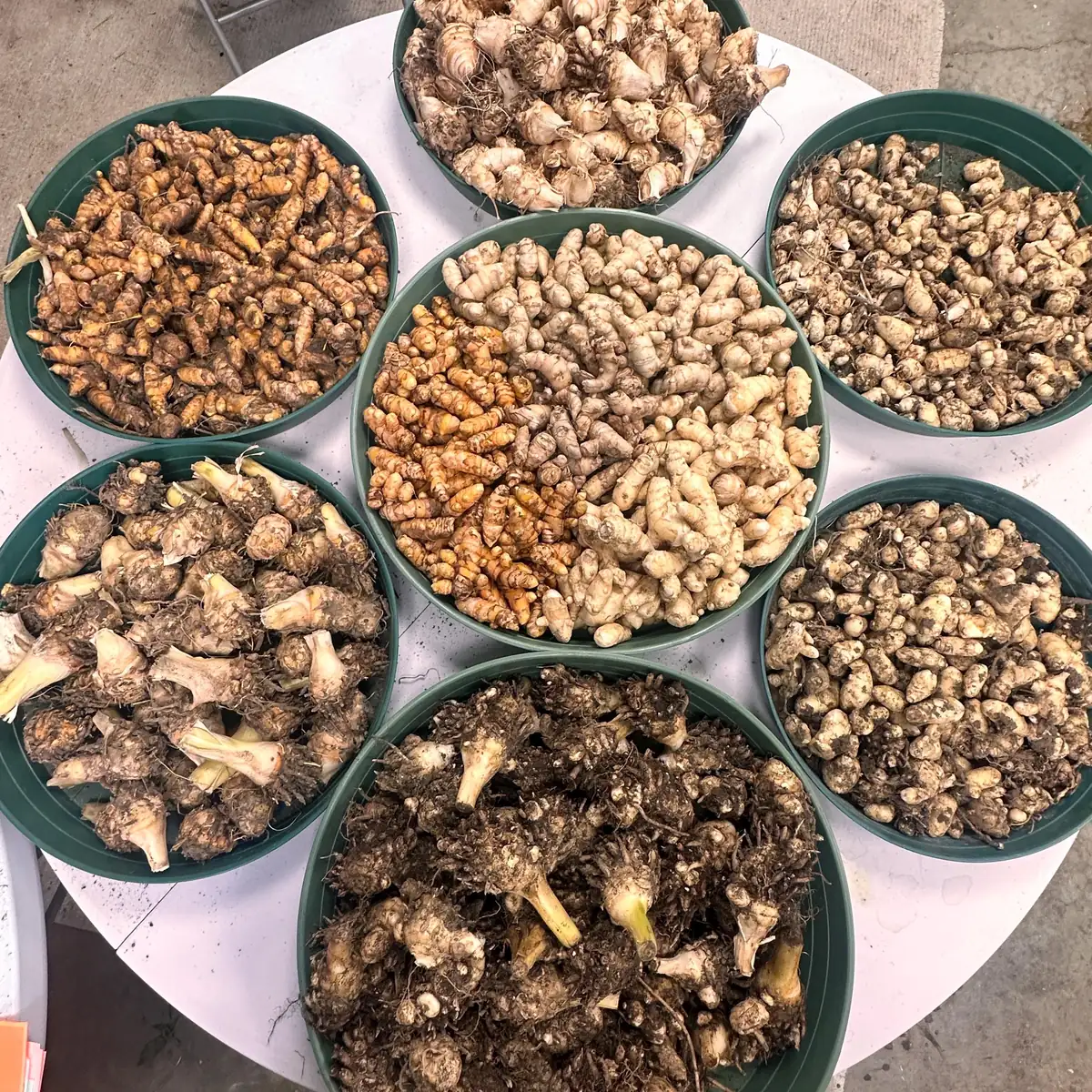
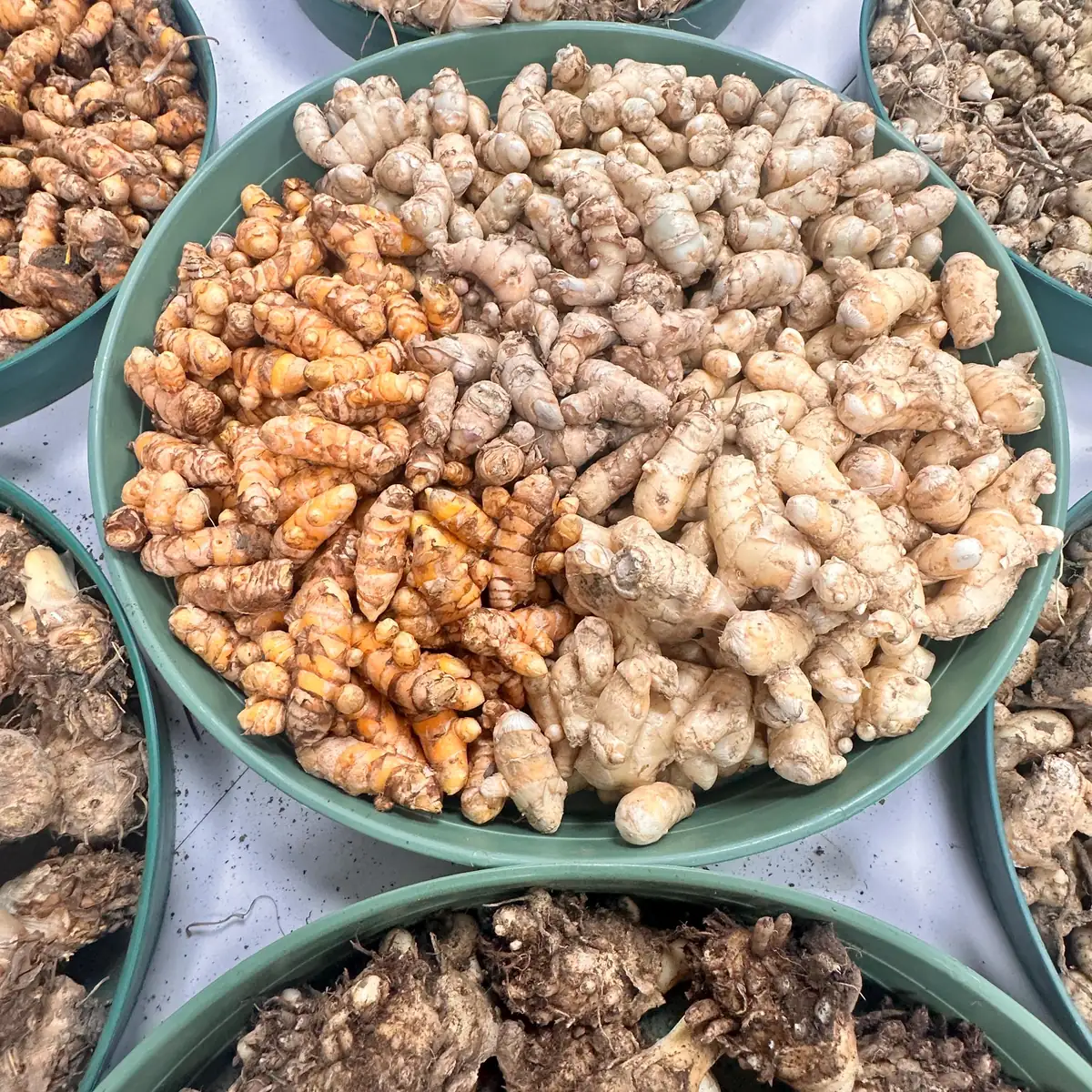
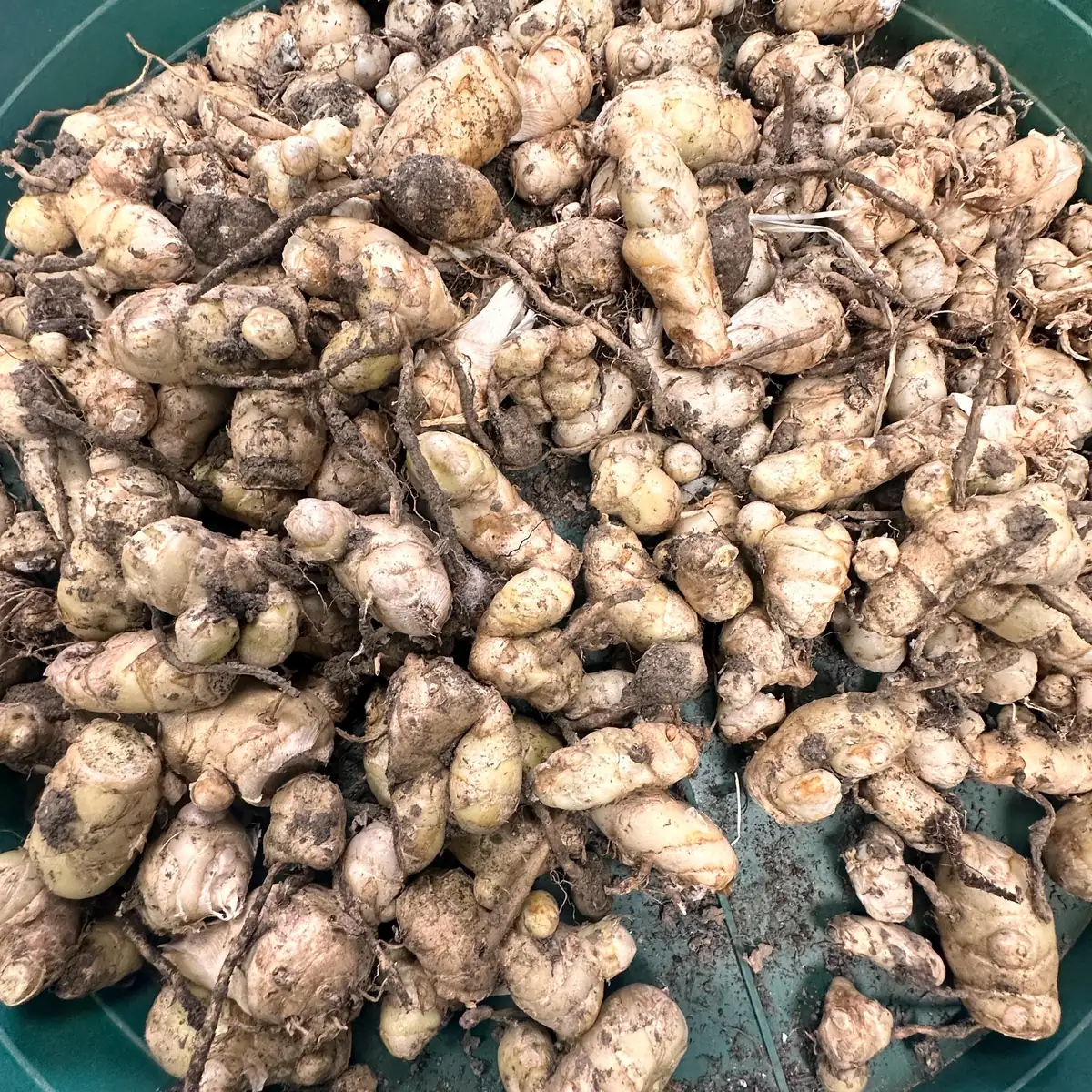
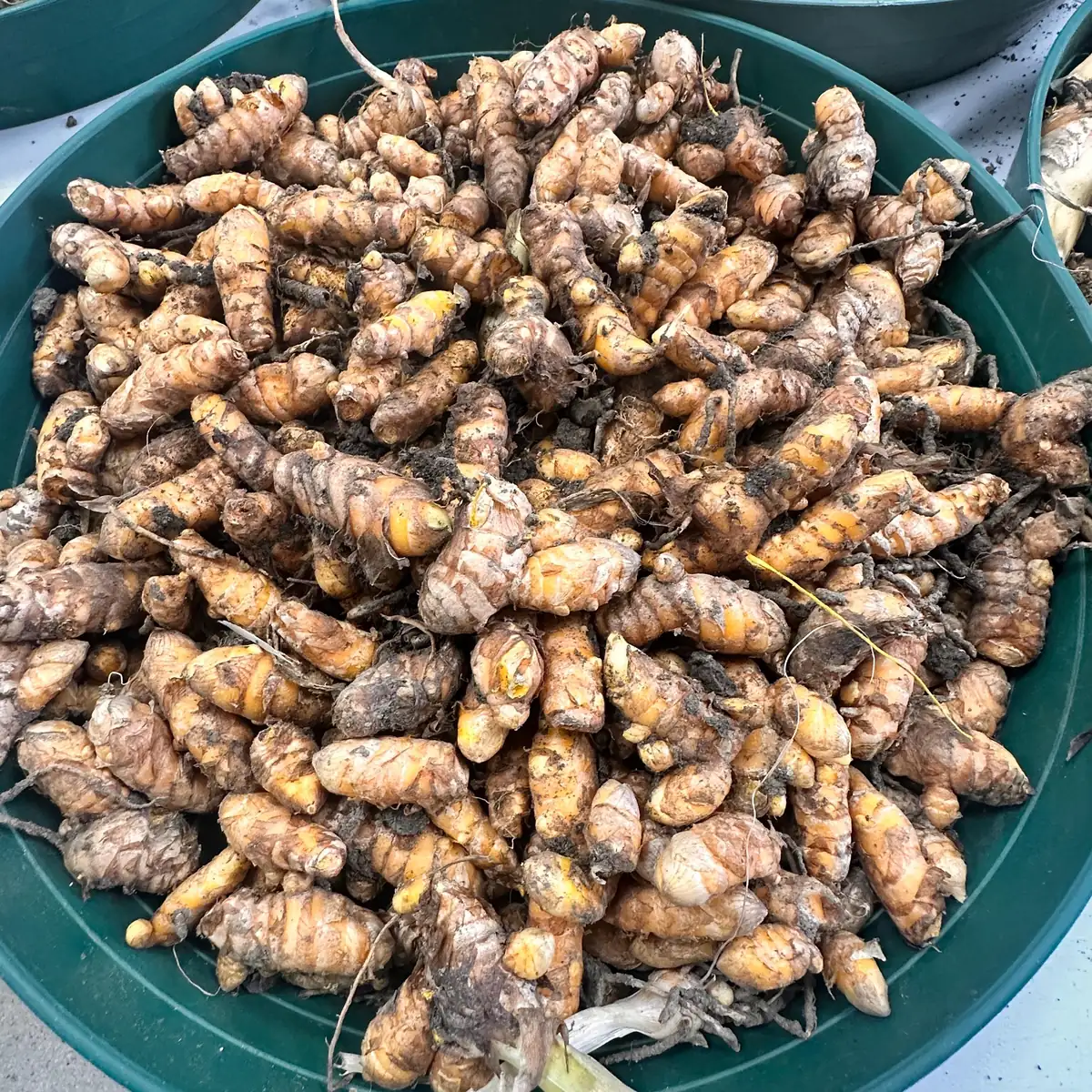
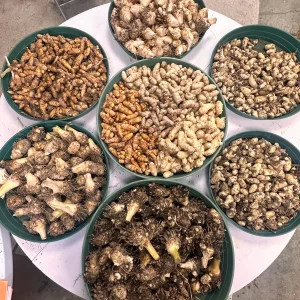
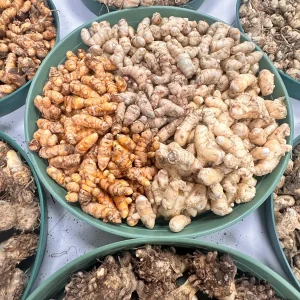
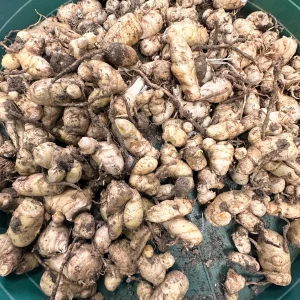
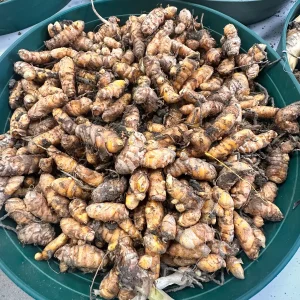
Our turmeric rhizomes for planting are typically sold as ‘fingers’ or ‘mother rhizomes,’ which are portions of the underground stem, each with at least one ‘eye’ or growth bud, ready to sprout. Each rhizome varies in size but is carefully selected to ensure viability and robust growth. When mature, a turmeric plant can reach heights of 3 to 5 feet, with broad, lush green leaves that create a tropical aesthetic. The rhizomes themselves will multiply underground, forming a dense cluster of new turmeric roots. You can expect to harvest your first batch of fresh turmeric root approximately 8 to 10 months after planting, once the foliage begins to yellow and die back. For continuous supply, some rhizomes can be left in the ground (in warm climates) or stored and replanted the following season. These rhizomes are perfect for anyone wanting to cultivate their own supply of organic turmeric plant.
Frequently Asked Questions
- Q: How big does this plant get? A: A mature turmeric plant can typically grow to a height of 3 to 5 feet, with a spread of about 2 to 3 feet, featuring large, attractive leaves. The underground rhizomes will also grow and multiply over the season.
- Q: Is this an indoor or outdoor plant? A: Turmeric can be grown both indoors and outdoors. It thrives outdoors in warm, humid climates (USDA Zones 8-11) and can be grown in containers and brought indoors in cooler regions to protect it from frost.
- Q: How much sunlight does it need? A: Turmeric prefers full to partial sun, ideally receiving 6-8 hours of direct sunlight per day. In very hot climates, some afternoon shade can be beneficial to prevent leaf scorch.
- Q: Is this plant easy to care for? A: Yes, turmeric is considered relatively easy to care for, especially if you provide it with the warm, humid conditions and consistent moisture it prefers. It’s a great plant for beginners interested in growing their own spices.
- Q: What condition will the turmeric rhizomes for planting arrive in? A: Your turmeric rhizomes for planting will arrive as dormant, healthy ‘fingers’ or sections of the root, ready for planting. They will be carefully packaged to ensure they reach you in optimal condition for sprouting.
- Q: When is the best time to plant turmeric? A: The best time to plant turmeric is in late winter or early spring, after the danger of frost has passed and soil temperatures have warmed up, typically when temperatures are consistently above 65°F (18°C).
- Q: How long until I can harvest the fresh turmeric root? A: You can typically harvest your fresh turmeric root 8 to 10 months after planting, once the plant’s foliage starts to yellow and die back. This indicates the rhizomes underground have matured.
- Q: Can I use this for cooking? A: Absolutely! These rhizomes are specifically intended for growing culinary turmeric. Once harvested, the fresh turmeric root can be used in a wide variety of dishes, just like store-bought turmeric.
- Q: What type of soil is best for how to plant turmeric? A: Turmeric thrives in rich, well-draining soil. A good blend would include compost for nutrients, peat moss for moisture retention, and sand or perlite for excellent drainage.
- Q: Will it survive winter in my zone? A: In USDA Zones 8-11, turmeric can often overwinter in the ground, especially if mulched. In colder zones, the rhizomes should be dug up before the first frost, stored in a cool, dry place, and replanted the following spring.
Related products
-50%
Original price was: $53.98.$26.99Current price is: $26.99.
-10%

Original price was: $11.99.$10.79Current price is: $10.79.
-10%
Original price was: $65.00.$58.50Current price is: $58.50.
-67%
Original price was: $39.72.$13.24Current price is: $13.24.
-30%
Original price was: $57.98.$40.58Current price is: $40.58.
-50%
Original price was: $59.96.$29.98Current price is: $29.98.
-67%
From Original price was: $35.22.$11.74Current price is: $11.74.
-48%
Original price was: $39.99.$20.99Current price is: $20.99.
PLANTING & CARE
Growing Glencoe Raspberry: A Complete Guide for Gardeners
If you’re looking to add something unique to your garden, look no further than the
31
Mar
Mar

The Comprehensive Guide to Growing Bay Leaf Plants for a Flavorful Garden
Imagine stepping into your garden, greeted by the earthy aroma of fresh bay leaves, their
09
Feb
Feb

How to Make Comfrey Tea: The Ultimate Organic Plant Food
Growing an organic garden can be surprisingly expensive, especially when most store-bought fertilizers come in
02
Feb
Feb

True Comfrey: 7 Essential Tips Before You Plant This Herb
A staple in permaculture practices across the US, True Comfrey easily earns its reputation as
27
Jan
Jan

7 Heart-Shaped Plants for a Lasting Valentine’s Gift
If you’ve ever bought a bouquet of roses for Valentine’s Day, you know they are
26
Jan
Jan

Best Types of Ivy Plant for Houses: How to Choose the Perfect Ones for Your Home
Are you a garden lover looking to introduce some greenery into your home? Maybe you’ve
14
Nov
Nov

When to Harvest Garlic (Especially Fall-Planted Garlic)
TIMING IS EVERYTHING, they say – and for garlic, that truth hits with surprising accuracy.
13
Nov
Nov

11 of the Best Sweet Potato Varieties to Grow for Your Garden
If you’ve ever tried growing sweet potatoes, you know that picking the right variety can
12
Nov
Nov