1 Osage Thornless Blackberry Live Plant – Early-Ripening, Sweet Berries
-20%
1 Osage Thornless Blackberry Live Plant – Early-Ripening, Sweet Berries
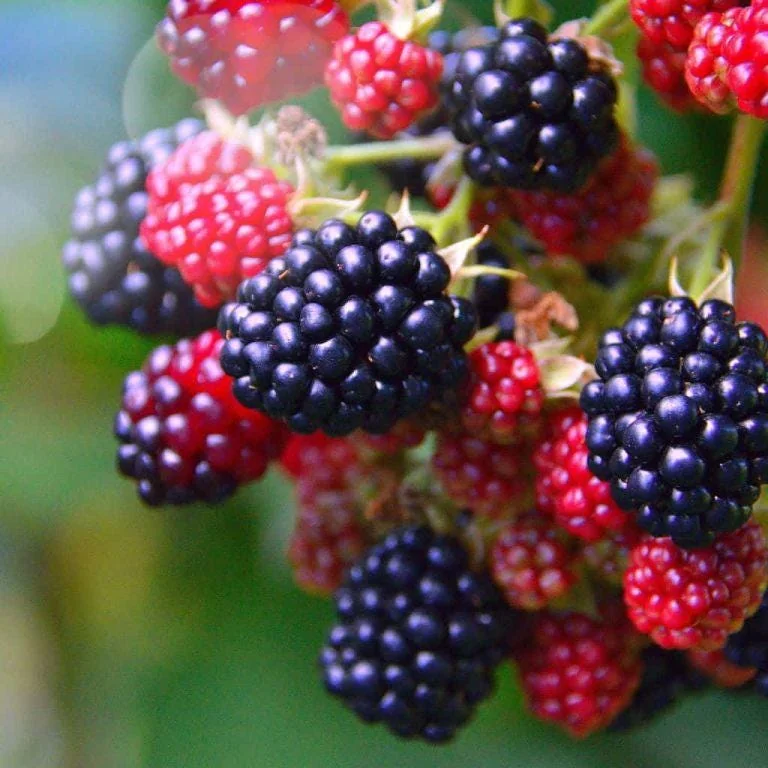
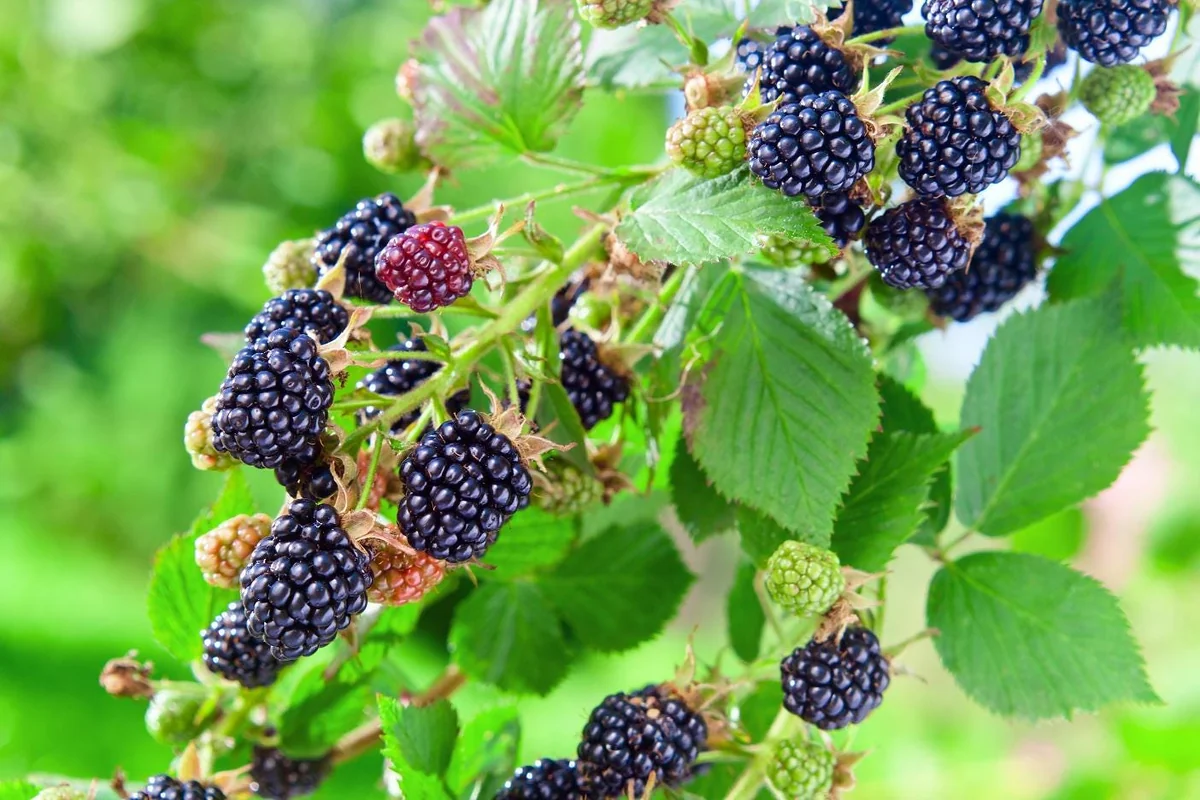
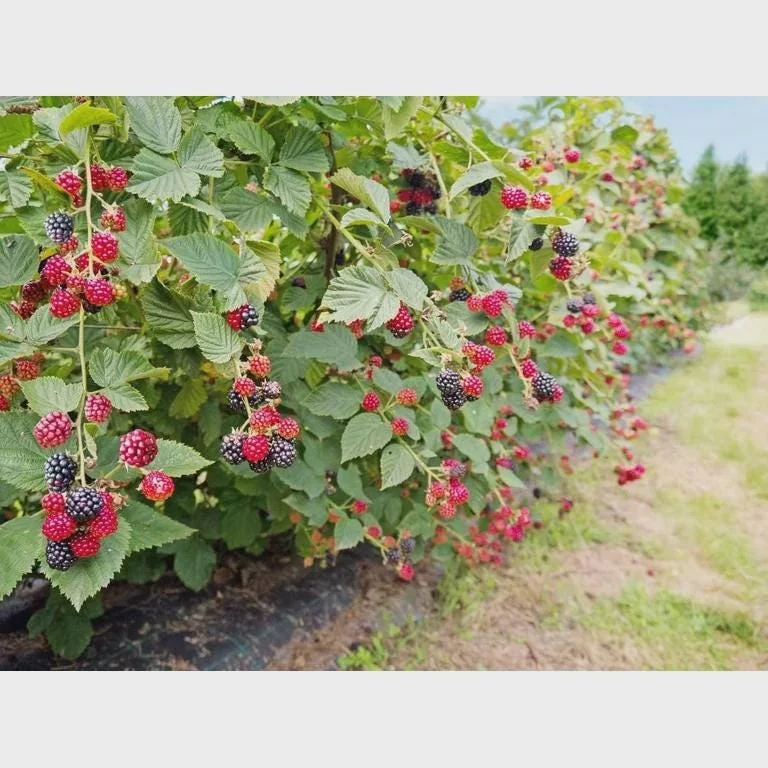
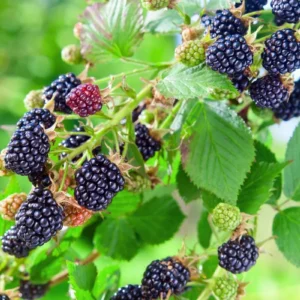
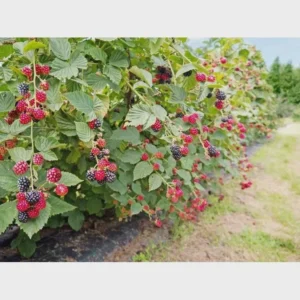
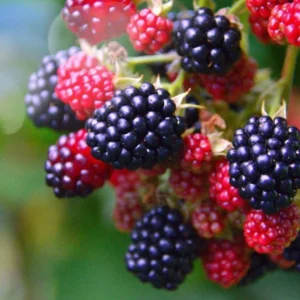
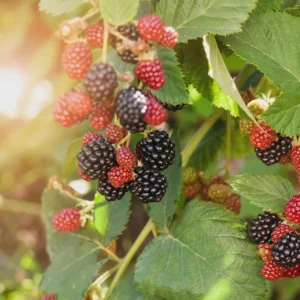
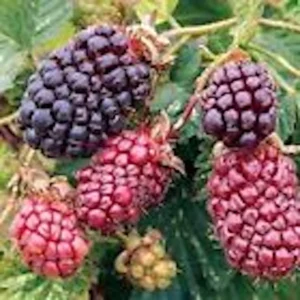
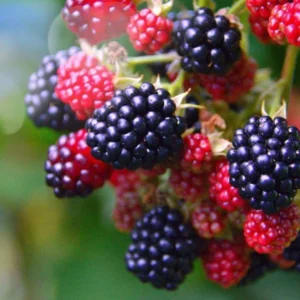
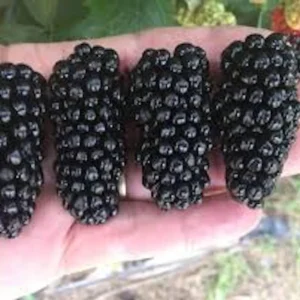
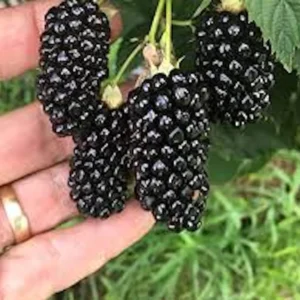
Cultivate your own delicious fruit with the Osage blackberry live plant. This thornless blackberry plant is an early-ripening, semi-erect variety known for its sweet, high-quality berries and prolific yields, perfect for home gardens.
Original price was: $36.00.$28.80Current price is: $28.80.

With our Alive & Thrive Guarantee, we’ve got your back for the first 30 days! If you have any concerns about your plants, just reach out to us. Our team is here to help answer your questions and guide you in selecting the best plants for your garden, climate, and unique preferences. We're excited to help you create the garden of your dreams!
Estimated arrival
Apr 13
Apr 18 - Apr 20
Apr 23 - Apr 27
Product Details
-
USDA Hardiness Zone
USDA Zones 5-9 -
Soil type
Well-draining, rich in organic matter -
Sunlight Exposure
Full sun (6-8+ hours daily) -
Expected Planting Period
Early spring or early fall
Overview
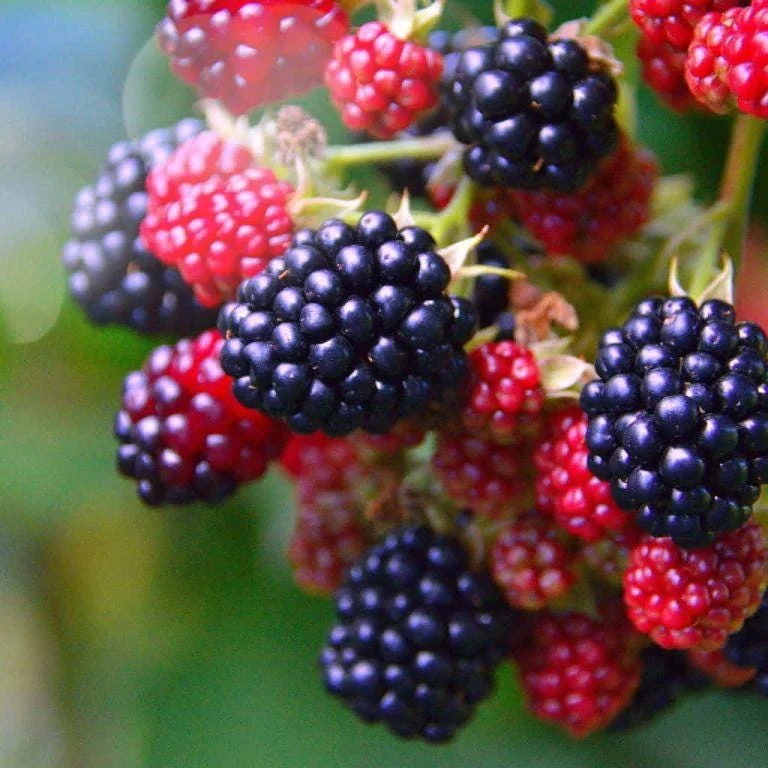
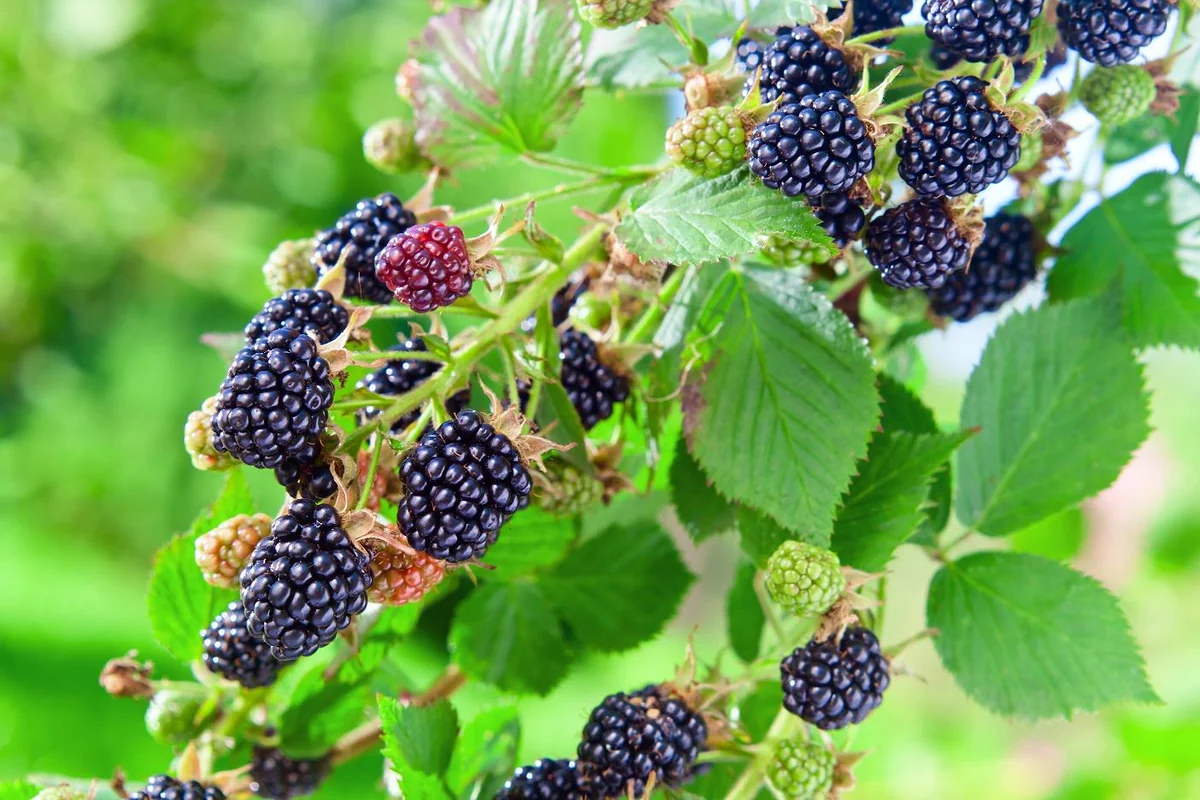
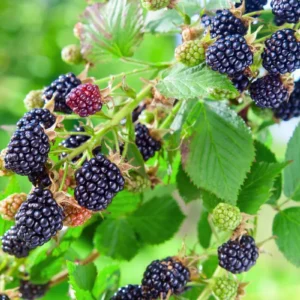
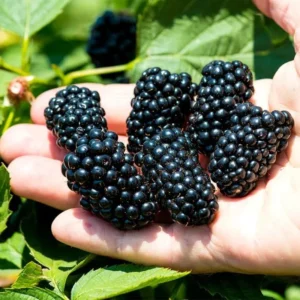
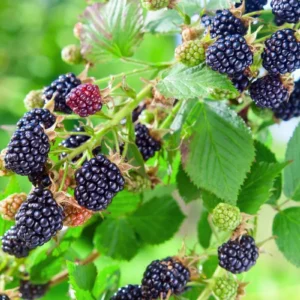
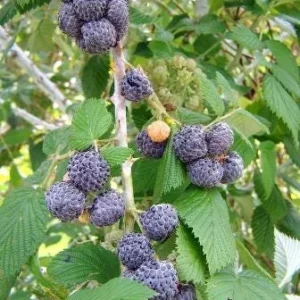
Bring the joy of fresh, homegrown fruit to your garden with the Osage blackberry live plant. This exceptional variety, known botanically as Rubus ‘Osage’, is a highly sought-after selection from the University of Arkansas breeding program. Renowned for its thornless canes, the Osage blackberry live plant offers an easy and enjoyable harvesting experience, making it a favorite among both novice and experienced gardeners. It is an early-ripening, floricane-fruiting plant that consistently produces a generous yield of medium-sized berries. The fruits are celebrated for their remarkably sweet flavor and outstanding quality, boasting a good shelf life that makes them perfect for fresh eating, baking, or preserving. This semi-erect plant is a vigorous grower, providing a bountiful harvest season after season.
Choosing the Osage blackberry live plant means investing in a high-performing, low-maintenance fruit producer. Its robust nature and disease resistance contribute to a healthy and productive bush, ensuring you’ll enjoy succulent berries year after year. Whether you’re looking to create a backyard orchard or simply add a productive and beautiful element to your landscape, the Osage blackberry live plant is an excellent choice. Its thornless characteristic is a significant advantage, simplifying pruning and harvesting while protecting your hands from scratches.
Key Benefits
The Osage blackberry live plant offers a multitude of benefits for the home gardener, making it a standout choice for fruit production:
- Thornless Canes: One of the most significant advantages, the thornless nature of the Osage blackberry live plant makes harvesting and maintenance a much more pleasant experience, eliminating painful pricks and making it safer for families with children.
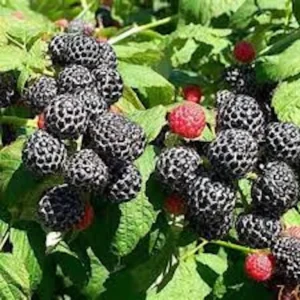
- Exceptional Flavor: These berries are celebrated for their superior sweetness and rich, classic blackberry taste, making them ideal for fresh consumption, desserts, jams, and jellies. The quality of the fruit is consistently high.
- Early Ripening: Enjoy your fresh blackberries sooner in the season! The ‘Osage’ variety is known for its early ripening, extending your harvest window and providing a delicious treat when other berries are still developing.
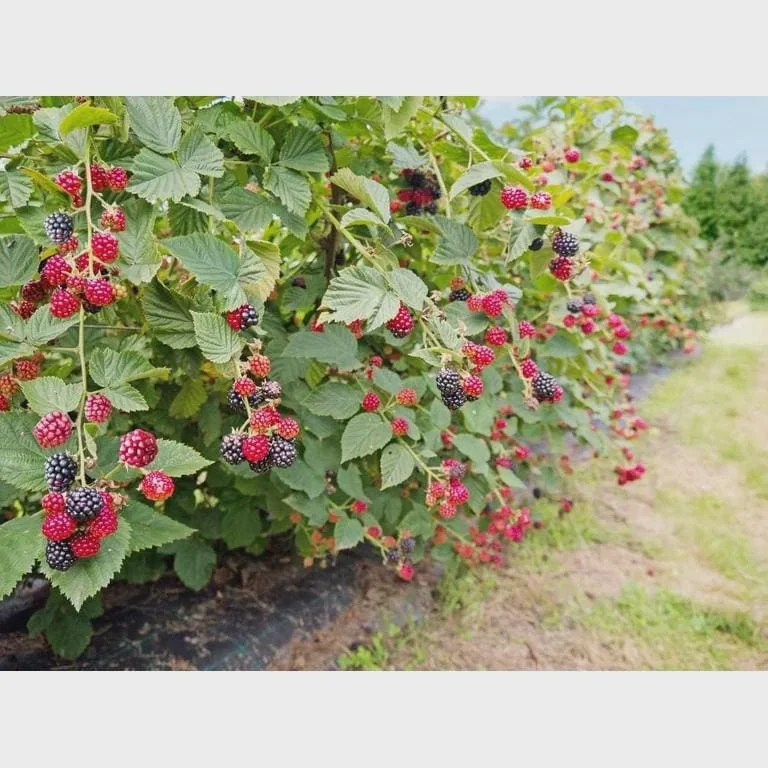
- High Yields: This semi-erect, floricane-fruiting plant is a prolific producer, ensuring you’ll have an abundance of berries to enjoy throughout its season. A single bush can provide a significant harvest.
- Good Shelf Life: The medium-sized berries from the Osage blackberry live plant possess a good shelf life after picking, allowing you more time to enjoy or process your harvest without them spoiling quickly.
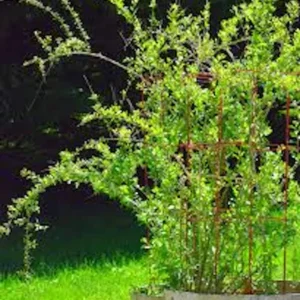
- Semi-Erect Growth Habit: The semi-erect growth habit of the Rubus Osage plant makes it easier to manage and prune compared to sprawling varieties, often requiring less trellising or support.
- Versatile Use: Perfect for fresh eating, baking into pies and cobblers, making preserves, or freezing for later use, the versatility of these berries is unmatched.
Plant Care & Growing Tips
Caring for your Osage blackberry live plant is relatively straightforward, ensuring a bountiful harvest with proper attention. Blackberries thrive in full sun, meaning they need at least 6-8 hours of direct sunlight per day to produce the best fruit. Choose a location in your garden that receives ample sun exposure. While they are adaptable, a well-draining soil rich in organic matter is ideal. A slightly acidic to neutral pH (6.0-7.0) is preferred. Amend heavy clay soils with compost or peat moss to improve drainage and aeration. When planting, ensure the crown of the plant is at soil level and space plants about 3-5 feet apart to allow for proper air circulation and growth.
Watering is crucial, especially during dry spells and when the fruit is developing. Aim for about 1 inch of water per week, either from rainfall or irrigation. Keep the soil consistently moist but not waterlogged. Mulching around the base of the plant with wood chips or straw helps retain soil moisture, suppress weeds, and regulate soil temperature. Fertilize in early spring with a balanced granular fertilizer, following package directions. Pruning is essential for productivity. Since growing Osage blackberries are floricane-fruiting, they produce fruit on second-year canes. After fruiting, these canes should be cut back to the ground. In late winter or early spring, thin out weaker canes and head back remaining primocanes to encourage branching and fruit production.
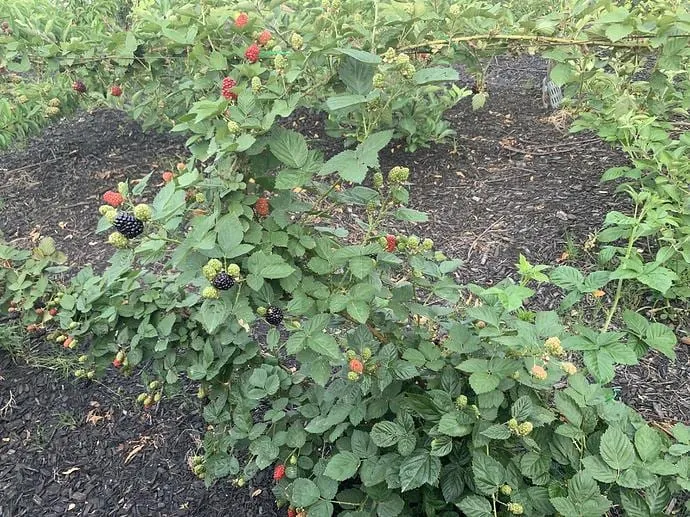
The thornless blackberry plant is generally hardy and disease-resistant, but keep an eye out for common pests like Japanese beetles or diseases such as anthracnose. Good air circulation and proper sanitation can help prevent most issues. Providing a simple trellis or support system can help manage the semi-erect canes, especially when laden with fruit. With these care tips, your Osage blackberry live plant will flourish, providing you with delicious berries for years to come. Understanding how to care for a Rubus Osage plant is key to its success.
Size & Details
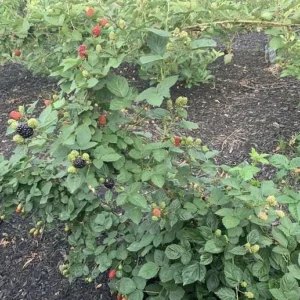
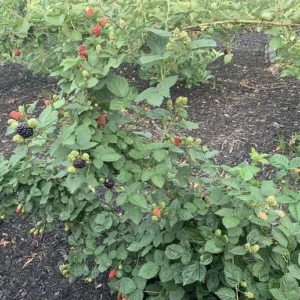
This offering includes 1 Osage blackberry starter plug, a young and healthy live plant ready to establish itself in your garden. Starter plugs are an excellent way to get a head start on your blackberry patch, as they are already rooted and have begun their initial growth. The plant will typically arrive with a developed root system and some initial foliage, ready for transplanting. While the initial size of the plug will be compact, the Osage blackberry live plant is a vigorous grower and will quickly develop into a mature bush.
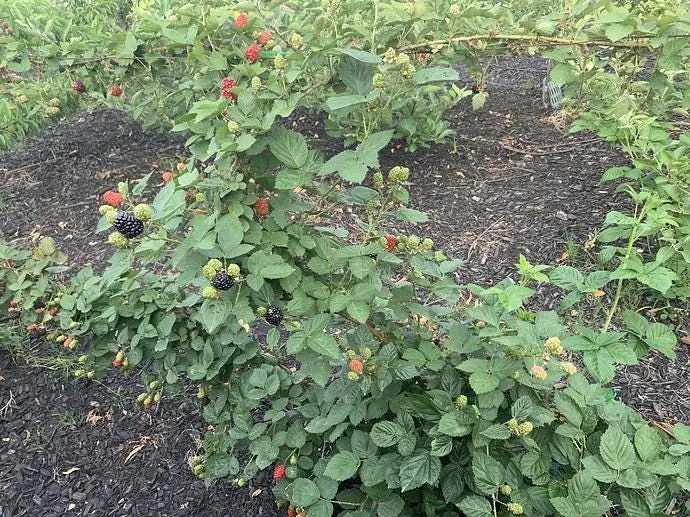
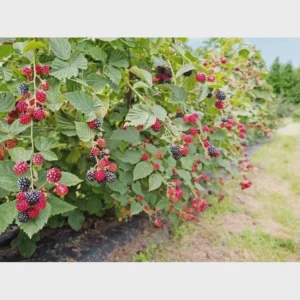
Mature ‘Osage’ blackberry plants typically reach a height of 4-6 feet and can spread similarly, depending on pruning and growing conditions. They are known for their semi-erect growth habit, making them easier to manage than some other trailing varieties. Expect fruit production to begin in the second year after planting, with full production achieved in subsequent years. The berries are medium-sized and ripen early in the season, usually in early to mid-summer, providing a delightful harvest. This thornless blackberry plant is a long-lived perennial, offering many seasons of delicious fruit.
Frequently Asked Questions
- Q: How big will the Osage blackberry plant get? A: A: The Osage blackberry live plant typically grows to a height of 4-6 feet and can spread similarly. Its semi-erect growth habit makes it relatively compact and manageable, often benefiting from light support.
- Q: Is this an indoor or outdoor plant? A: The Osage blackberry live plant is an outdoor fruit-bearing shrub. It requires full sun exposure and is best suited for garden beds, edible landscapes, or large containers outdoors.
- Q: How much sunlight does the Osage blackberry need? A: For optimal fruit production and plant health, the Rubus Osage plant requires at least 6 to 8 hours of direct sunlight per day. Choose a sunny location in your garden.
- Q: Is this plant easy to care for? A: Yes, the thornless blackberry plant ‘Osage’ is considered relatively easy to care for, especially due to its thornless canes. It requires consistent watering, annual fertilization, and proper pruning to ensure a good harvest.
- Q: What condition will the starter plug arrive in? A: Your Osage blackberry live plant starter plug will arrive as a young, rooted plant with initial foliage, carefully packaged to ensure its health during transit. It will be ready for immediate planting upon arrival.
- Q: When is the best time to plant Osage blackberries? A: The best time for growing Osage blackberries is typically in early spring after the last frost, or in early fall in milder climates. This allows the plant to establish its root system before extreme temperatures.
- Q: What USDA hardiness zones is the Osage blackberry suitable for? A: The Osage blackberry is generally hardy in USDA Zones 5-9, making it suitable for a wide range of climates across the United States.
- Q: How long until the Osage blackberry plant produces fruit? A: The Osage blackberry live plant will typically begin producing fruit in its second year after planting. Full production can be expected in the third year and beyond.
- Q: Can I grow this thornless blackberry plant in a pot? A: While primarily suited for in-ground planting, the thornless blackberry plant can be grown in very large containers (20-gallon or larger) with excellent drainage, provided it receives adequate sunlight and consistent watering.
- Q: What kind of soil does the Osage blackberry prefer? A: The growing Osage blackberries thrive in well-draining soil that is rich in organic matter. A slightly acidic to neutral pH (6.0-7.0) is ideal for optimal growth and fruit development.
Related products
-20%
Original price was: $80.00.$64.00Current price is: $64.00.
-10%
Original price was: $23.99.$21.59Current price is: $21.59.
-50%
Original price was: $39.98.$19.99Current price is: $19.99.
-20%
Original price was: $36.00.$28.80Current price is: $28.80.
-20%
Original price was: $50.00.$40.00Current price is: $40.00.
-20%
Original price was: $32.00.$25.60Current price is: $25.60.
-20%
Original price was: $60.00.$48.00Current price is: $48.00.
PLANTING & CARE

Growing Glencoe Raspberry: A Complete Guide for Gardeners
If you’re looking to add something unique to your garden, look no further than the
31
Mar
Mar

The Comprehensive Guide to Growing Bay Leaf Plants for a Flavorful Garden
Imagine stepping into your garden, greeted by the earthy aroma of fresh bay leaves, their
09
Feb
Feb

How to Make Comfrey Tea: The Ultimate Organic Plant Food
Growing an organic garden can be surprisingly expensive, especially when most store-bought fertilizers come in
02
Feb
Feb

True Comfrey: 7 Essential Tips Before You Plant This Herb
A staple in permaculture practices across the US, True Comfrey easily earns its reputation as
27
Jan
Jan

7 Heart-Shaped Plants for a Lasting Valentine’s Gift
If you’ve ever bought a bouquet of roses for Valentine’s Day, you know they are
26
Jan
Jan

Best Types of Ivy Plant for Houses: How to Choose the Perfect Ones for Your Home
Are you a garden lover looking to introduce some greenery into your home? Maybe you’ve
14
Nov
Nov

When to Harvest Garlic (Especially Fall-Planted Garlic)
TIMING IS EVERYTHING, they say – and for garlic, that truth hits with surprising accuracy.
13
Nov
Nov

11 of the Best Sweet Potato Varieties to Grow for Your Garden
If you’ve ever tried growing sweet potatoes, you know that picking the right variety can
12
Nov
Nov