5 Horseradish Plant Bare Roots – Armoracia rusticana – Hardy Perennial
-20%
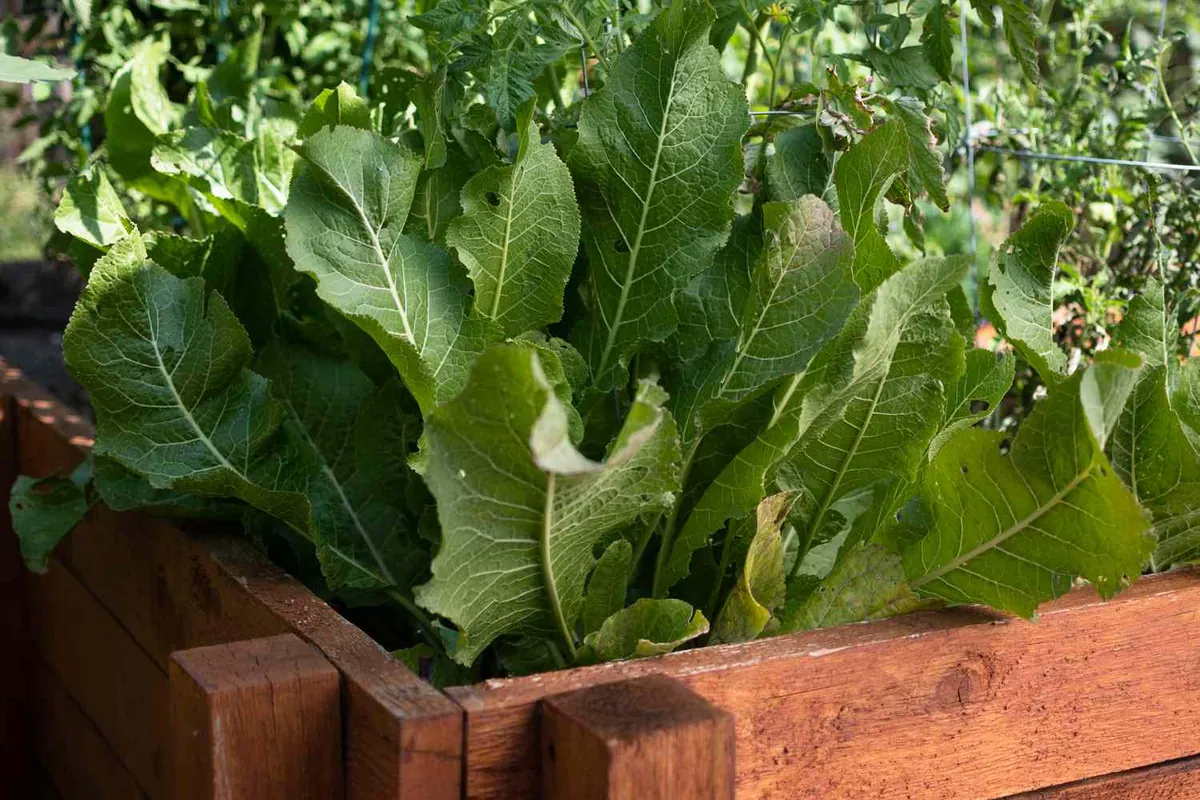
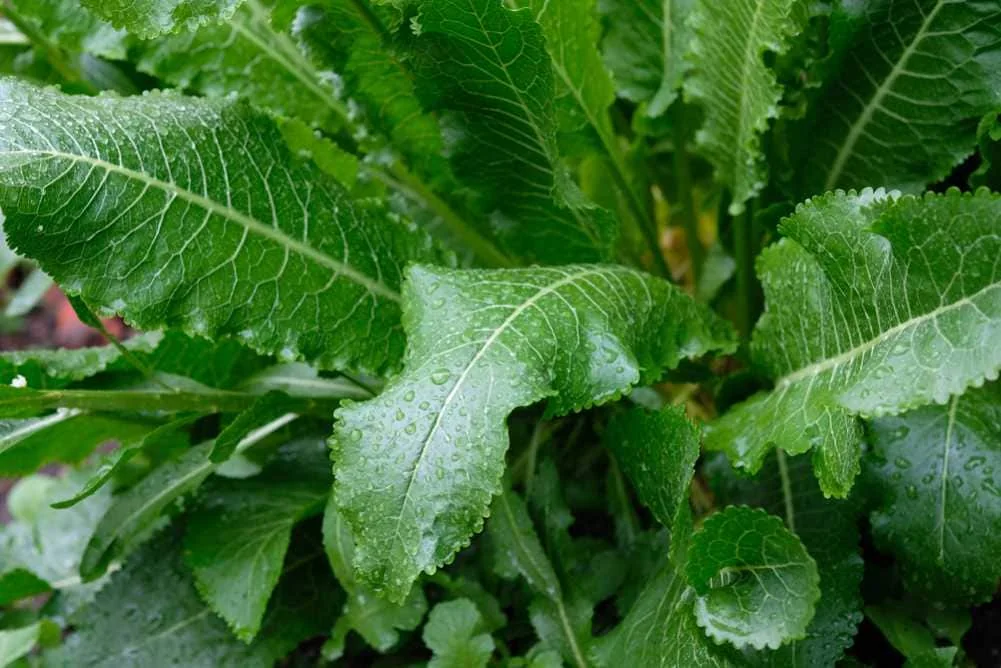
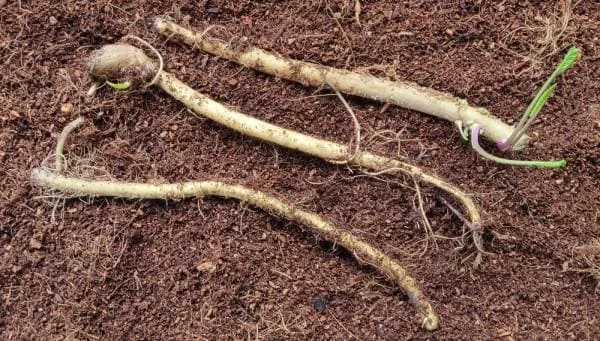
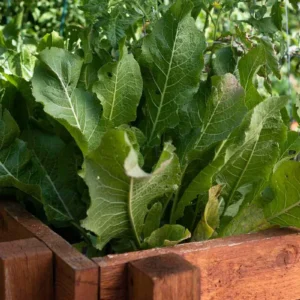
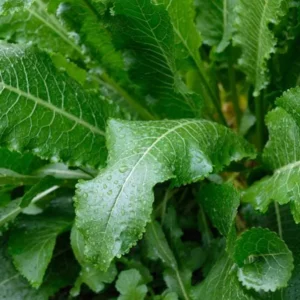
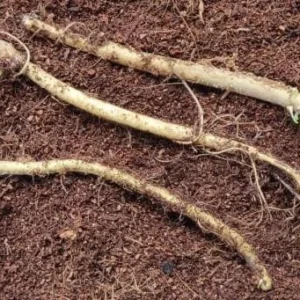
5 Horseradish Plant Bare Roots – Armoracia rusticana – Hardy Perennial
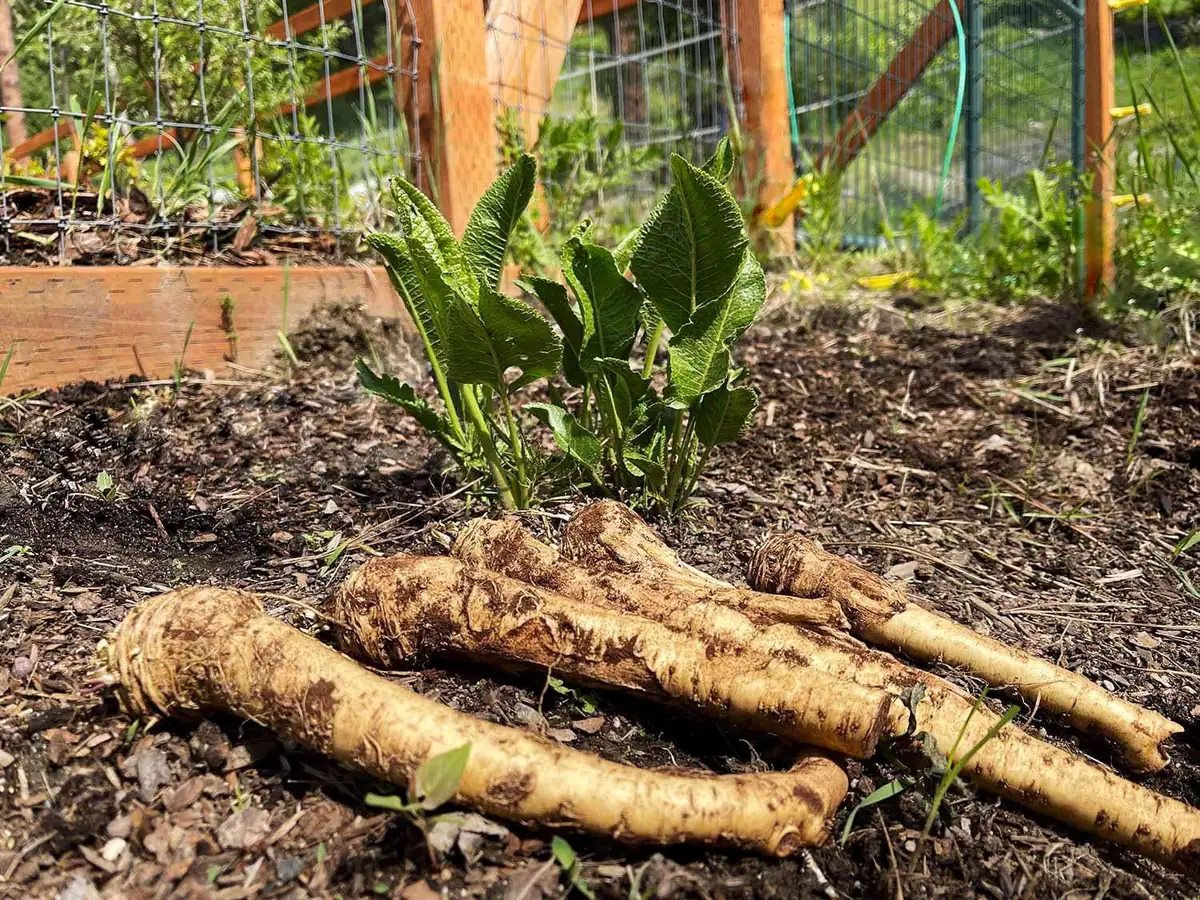
Cultivate your own spicy condiment with our horseradish bare roots. This offer includes 5 horseradish bare roots (Armoracia rusticana), a hardy and vigorous perennial plant known for its pungent root. Easy to grow and low-maintenance, perfect for any home garden.
Original price was: $70.00.$56.00Current price is: $56.00.

With our Alive & Thrive Guarantee, we’ve got your back for the first 30 days! If you have any concerns about your plants, just reach out to us. Our team is here to help answer your questions and guide you in selecting the best plants for your garden, climate, and unique preferences. We're excited to help you create the garden of your dreams!
Estimated arrival
Apr 04
Apr 09 - Apr 11
Apr 14 - Apr 18
Product Details
-
USDA Hardiness Zone
USDA Zones 3-9 -
Soil type
Deep, rich, moist, well-drained loamy soil -
Sunlight Exposure
Full sun -
Expected Planting Period
Early spring
Overview
Embark on a culinary adventure by growing your own zesty condiment right at home with our premium horseradish bare roots. This package contains 5 horseradish bare roots of the botanical name Armoracia rusticana, a robust and hardy perennial plant renowned for its distinctively pungent and spicy root. Often referred to as the ‘wasabi of the West’, horseradish is a must-have for those who appreciate bold flavors. These bare roots are an economical and effective way to establish horseradish in your garden, promising a vigorous start and bountiful harvests. A low-maintenance addition to almost any garden, these plants will quickly establish themselves and provide years of delicious roots for sauces, relishes, and savory dishes.
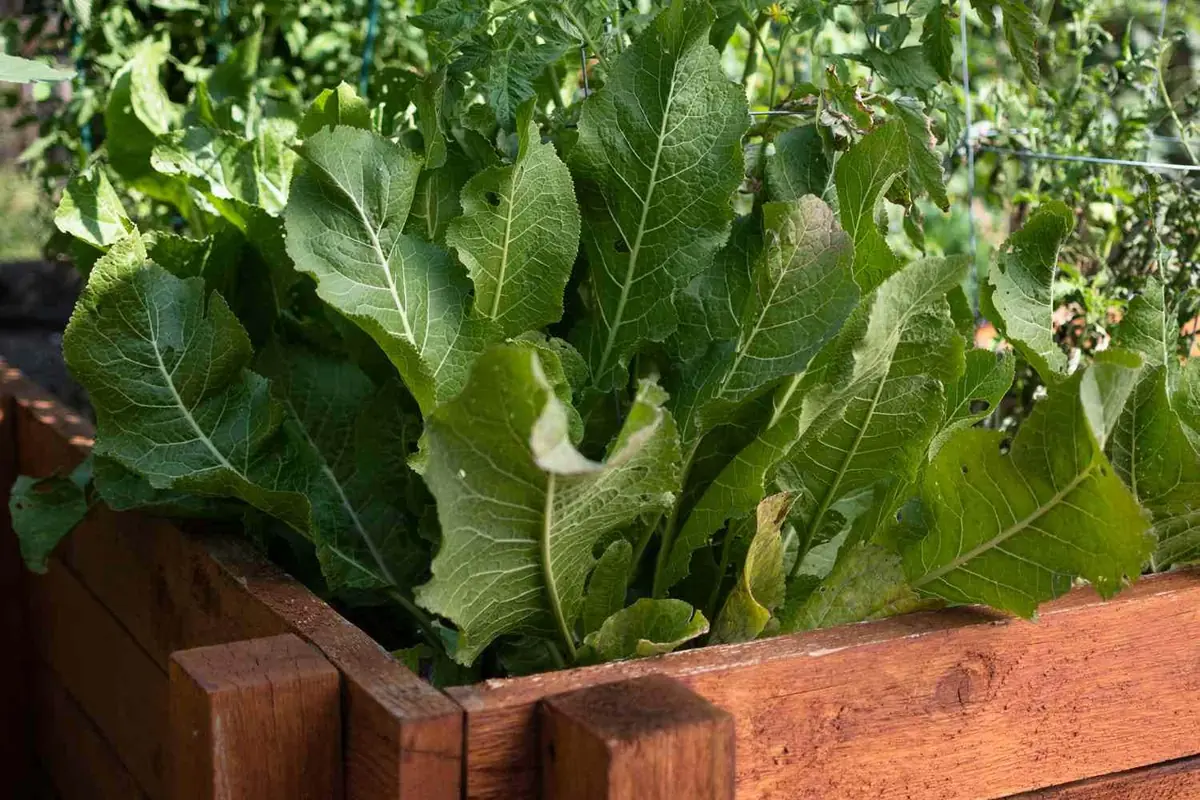
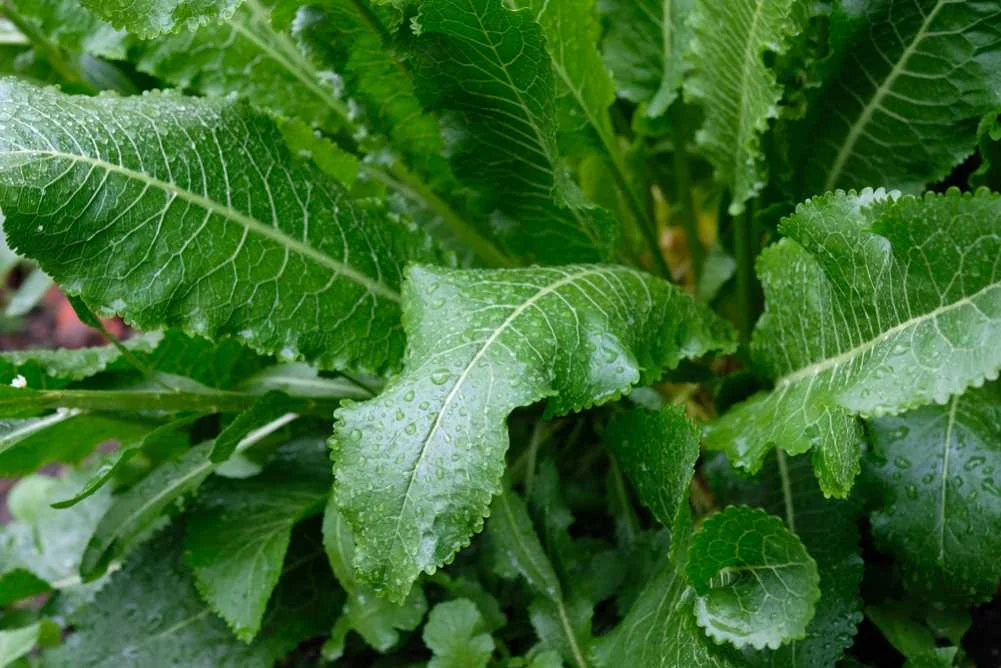
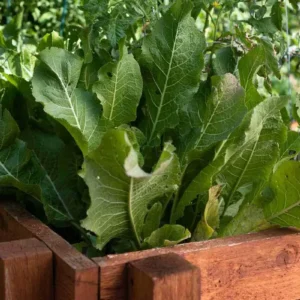
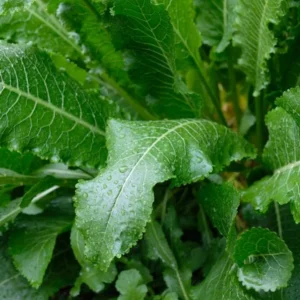
Horseradish has a long history of culinary and medicinal use, cherished for its sharp flavor and potential health benefits. Growing your own ensures the freshest possible roots, far superior to store-bought varieties. The plant itself is quite attractive, featuring large, vibrant green leaves that can also be used in some culinary applications, though the root is the star. With minimal effort, you can enjoy the satisfaction of harvesting this versatile root directly from your garden. Our horseradish bare roots are carefully selected to ensure strong growth and high yields, making your gardening experience successful and rewarding.
Key Benefits
Adding horseradish bare roots to your garden offers a variety of advantages, from culinary delight to ease of care. These plants are a fantastic choice for both novice and experienced gardeners.
- Culinary Versatility: The primary benefit of growing horseradish is its incredibly versatile root. It’s perfect for making fresh horseradish sauce, adding a spicy kick to sandwiches, roasts, and seafood, or incorporating into homemade pickles and vinegars.
- Robust Growth: Armoracia rusticana is known for its vigorous growth habit. Once established, it spreads readily and can provide a continuous supply of roots for many years with little intervention, making it a sustainable choice for your garden.
- Low Maintenance: These plants are incredibly resilient and require minimal attention once planted. They are relatively pest and disease resistant, making them an easy-to-grow horseradish option for busy gardeners.
- Perennial Nature: As a hardy perennial, horseradish returns year after year, eliminating the need for annual replanting. This makes it a cost-effective and enduring addition to your herb or vegetable patch.
- Adaptable to Various Conditions: While preferring certain conditions, horseradish is quite adaptable and can tolerate a range of soil types and light exposures, though optimal growth occurs with ideal conditions.
- Distinctive Flavor Profile: The unique pungent and spicy flavor of fresh horseradish is unmatched. It provides a powerful zest that elevates many dishes and condiments, offering a unique taste experience.
- Easy Propagation: Horseradish can be easily propagated from root cuttings, meaning you can expand your patch or share with friends and family once your plants are established, ensuring a continuous supply of perennial horseradish.
Plant Care & Growing Tips
To successfully grow horseradish from your horseradish bare roots, understanding its preferred growing conditions is key. Horseradish thrives in full sun, meaning it needs at least 6-8 hours of direct sunlight per day to produce the best roots. While it can tolerate partial shade, root development may be less robust. When choosing a location, consider that horseradish can spread aggressively, so a dedicated bed or a contained area is often recommended to prevent it from taking over other plants.
The ideal soil for horseradish is deep, rich, moist, and well-drained loamy soil. It prefers a slightly acidic to neutral pH (6.0-7.5). Before planting, amend heavy clay soils with organic matter like compost or aged manure to improve drainage and fertility. For sandy soils, adding organic matter will help with water retention. Plant your horseradish bare roots in early spring, as soon as the soil can be worked. Plant them about 2-3 inches deep, laying them horizontally or slightly angled, with the crown (the thicker end) pointing slightly upwards. Space roots about 12-18 inches apart to allow for proper growth and spread. Keep the soil consistently moist but not waterlogged, especially during dry spells. Horseradish is a heavy feeder, so a balanced fertilizer can be applied in mid-summer, or simply ensure the soil is rich in organic matter. Harvesting typically occurs in the fall after the first frost, which sweetens the roots, or in early spring before new growth begins. For continuous supply, leave some smaller roots in the ground to resprout.
Size & Details
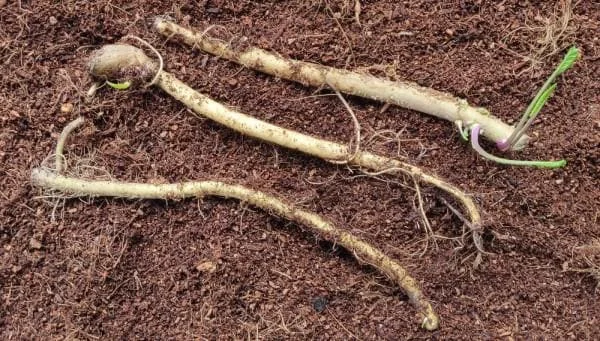
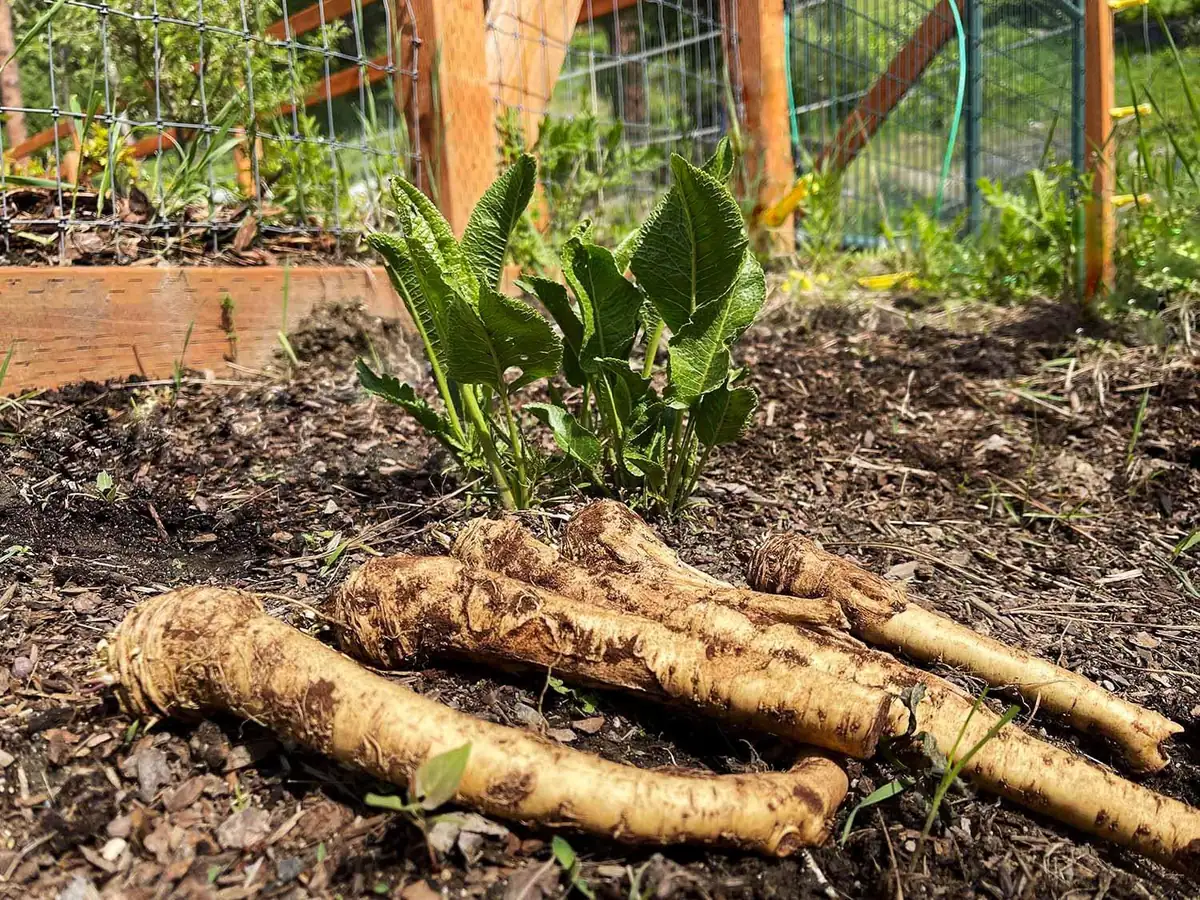
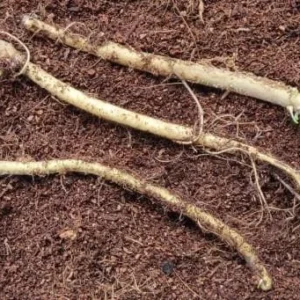
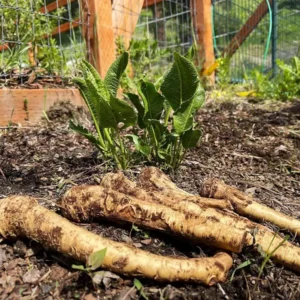
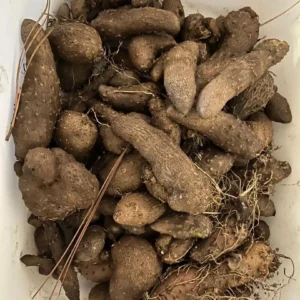
This offering includes 5 horseradish bare roots, ready for planting. Each bare root is a section of the robust Armoracia rusticana plant, typically measuring several inches in length, ensuring a healthy start. When mature, the foliage of a horseradish plant can reach heights of 2-3 feet, with a similar spread, creating a lush green presence in your garden. The valuable roots, which are the primary harvest, can grow quite large, often 6-12 inches long and 1-2 inches in diameter, depending on growing conditions and time in the ground. These bare roots are designed for direct planting into your garden soil, eliminating the need for pots. They establish quickly and begin to produce new foliage within weeks of planting, leading to a harvestable root within one growing season. The vigorous nature of this perennial horseradish ensures that with proper care, you will enjoy fresh roots for many years to come.
Frequently Asked Questions
- Q: How big will the horseradish plants get? A: A mature horseradish plant can typically grow to about 2-3 feet tall and wide. The roots themselves can be harvested when they are 6-12 inches long and 1-2 inches in diameter, though they can grow larger.
- Q: When is the best time to plant these horseradish bare roots? A: The ideal time to plant your horseradish bare roots is in early spring, as soon as the ground is workable. This allows the roots to establish themselves well before the summer heat.
- Q: Is this an indoor or outdoor plant? A: Horseradish is primarily an outdoor garden plant. It requires space for its root system to develop and thrives with full sun exposure. While theoretically possible, growing Armoracia rusticana indoors is not typically recommended due to its size and growth habit.
- Q: How much sunlight does horseradish need? A: For optimal root development and overall plant health, horseradish prefers full sun, meaning at least 6-8 hours of direct sunlight per day. It can tolerate partial shade, but root production may be reduced.
- Q: Is this plant easy to care for, good for beginners? A: Yes, horseradish plant care is considered quite easy, making it an excellent choice for beginners. It’s a very hardy and low-maintenance plant that tolerates a range of conditions once established.
- Q: What condition will the bare roots arrive in? A: Your horseradish bare roots will arrive dormant and without soil or foliage, as is typical for bare root plants. They will be carefully packaged to ensure freshness and viability upon arrival, ready for immediate planting.
- Q: How long until I can harvest the horseradish? A: You can typically begin to harvest your perennial horseradish roots in the fall of the first year after planting, usually after the first frost which helps to improve their flavor. Some gardeners prefer to wait until the second year for larger roots.
- Q: Will it survive winter in my zone? A: Horseradish is very cold hardy and can survive winters in most temperate climates. It is typically hardy in USDA Zones 3-9, meaning it will reliably return each spring even after freezing temperatures.
- Q: Can I use the leaves of the horseradish plant? A: While the root is the star, the young leaves of the horseradish plant are edible and can be used in salads or cooked like other greens. They have a milder, peppery flavor compared to the root.
- Q: How do I prevent horseradish from spreading too much? A: To control its spread, you can plant horseradish in a dedicated, isolated bed, or use physical barriers like bottomless containers or root barriers sunk into the ground around the planting area.
Related products
-20%
Original price was: $36.00.$28.80Current price is: $28.80.
-25%
Original price was: $39.99.$29.90Current price is: $29.90.
-50%
Original price was: $63.96.$31.98Current price is: $31.98.
-20%
Original price was: $100.00.$80.00Current price is: $80.00.
-10%
Original price was: $19.99.$17.99Current price is: $17.99.
-54%
From Original price was: $20.99.$10.49Current price is: $10.49.
-20%
Original price was: $84.00.$67.20Current price is: $67.20.
PLANTING & CARE

Growing Glencoe Raspberry: A Complete Guide for Gardeners
If you’re looking to add something unique to your garden, look no further than the
31
Mar
Mar

The Comprehensive Guide to Growing Bay Leaf Plants for a Flavorful Garden
Imagine stepping into your garden, greeted by the earthy aroma of fresh bay leaves, their
09
Feb
Feb

How to Make Comfrey Tea: The Ultimate Organic Plant Food
Growing an organic garden can be surprisingly expensive, especially when most store-bought fertilizers come in
02
Feb
Feb

True Comfrey: 7 Essential Tips Before You Plant This Herb
A staple in permaculture practices across the US, True Comfrey easily earns its reputation as
27
Jan
Jan

7 Heart-Shaped Plants for a Lasting Valentine’s Gift
If you’ve ever bought a bouquet of roses for Valentine’s Day, you know they are
26
Jan
Jan

Best Types of Ivy Plant for Houses: How to Choose the Perfect Ones for Your Home
Are you a garden lover looking to introduce some greenery into your home? Maybe you’ve
14
Nov
Nov

When to Harvest Garlic (Especially Fall-Planted Garlic)
TIMING IS EVERYTHING, they say – and for garlic, that truth hits with surprising accuracy.
13
Nov
Nov

11 of the Best Sweet Potato Varieties to Grow for Your Garden
If you’ve ever tried growing sweet potatoes, you know that picking the right variety can
12
Nov
Nov