Cassava Live Plant & Yuca Cuttings – Edible Root Crop
Cassava Live Plant & Yuca Cuttings – Edible Root Crop
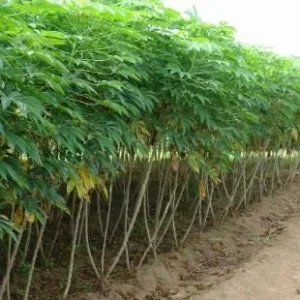
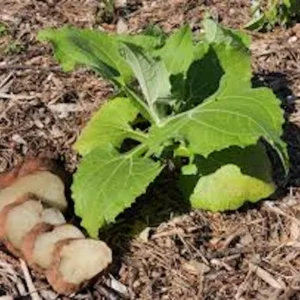
Cultivate your own food source with a cassava live plant or fresh yuca cuttings. This versatile edible root plant is a staple in many tropical cuisines, offering a delicious and nutritious harvest. Easy to grow in warm climates or as an annual elsewhere.
$29.96

With our Alive & Thrive Guarantee, we’ve got your back for the first 30 days! If you have any concerns about your plants, just reach out to us. Our team is here to help answer your questions and guide you in selecting the best plants for your garden, climate, and unique preferences. We're excited to help you create the garden of your dreams!
Estimated arrival
Mar 31
Apr 05 - Apr 07
Apr 10 - Apr 14
Product Details
-
USDA Hardiness Zone
USDA zones 9-11 (Perennial) / Annual in colder zones -
Soil type
Well-draining, sandy loam -
Sunlight Exposure
Full sun -
Expected Planting Period
Spring to early summer
Overview
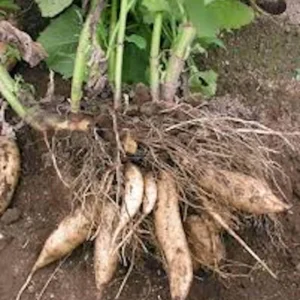
Bring the taste of the tropics to your garden with a cassava live plant. Also widely known as yuca, this essential root crop, Manihot esculenta, is a staple food for millions worldwide. Our offerings include both robust live plants and fresh, viable yuca cuttings, providing you with flexible options to start your own cultivation. Cassava is renowned for its starchy, nutritious tubers, which are a versatile ingredient in countless dishes, from fries to flour. Growing your own cassava allows you to enjoy fresh, organic produce right from your backyard or patio. This resilient plant is not only a food source but also adds a lush, tropical aesthetic to any garden space.
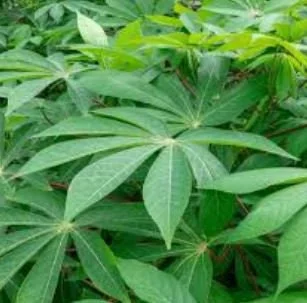
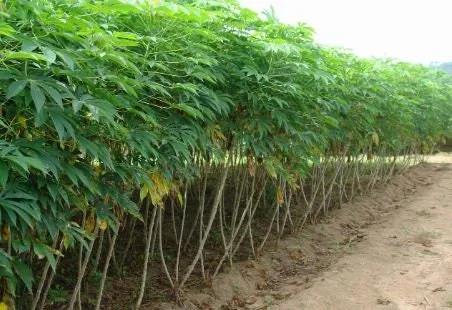
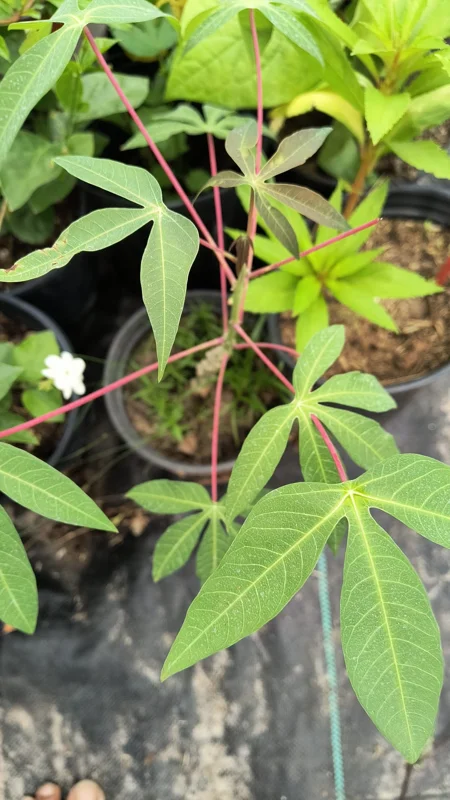
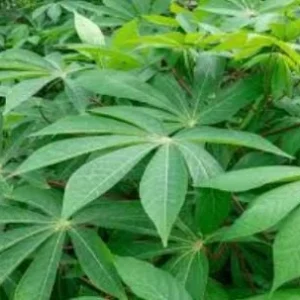
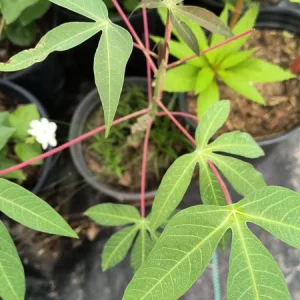
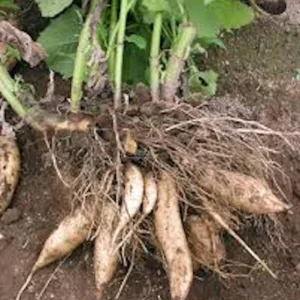
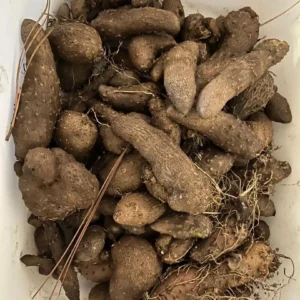
Whether you’re an experienced gardener or just starting, growing cassava can be a rewarding experience. The plant develops into a woody shrub, producing large, palmate leaves that create a dense, green canopy. The real treasure lies beneath the soil, where the elongated, starchy roots develop. These roots can be harvested and cooked in various ways, providing a healthy and satisfying addition to your diet. Cultivating this edible root plant also connects you to a rich agricultural history and sustainable food practices.
Key Benefits
Growing cassava offers a wealth of benefits, from culinary versatility to garden aesthetics:
- Sustainable Food Source: Cultivate your own nutritious tubers, reducing reliance on store-bought produce and ensuring a fresh, organic supply. The cassava live plant is a highly productive crop, yielding substantial harvests.
- Versatile Culinary Ingredient: The starchy roots can be boiled, fried, roasted, or processed into flour. They are a gluten-free alternative and a fundamental ingredient in many global cuisines.
- Tropical Garden Aesthetic: With its large, palmate leaves and upright growth habit, the cassava plant adds a beautiful, lush, and exotic touch to your garden or patio.
- Drought Tolerance: Once established, cassava plants are remarkably tolerant of dry conditions, making them a suitable choice for various climates with warm growing seasons.
- High Nutritional Value: Cassava roots are rich in carbohydrates, providing a significant energy source, and also contain vitamins and minerals, contributing to a balanced diet.
- Easy to Propagate: Starting from yuca cuttings is a straightforward process, allowing you to easily expand your crop or share with friends.
- Adaptable Growth: While ideally suited for tropical climates, cassava can be grown as an annual in temperate regions, allowing more gardeners to experience this unique plant. Learn to grow cassava at home with ease.
Plant Care & Growing Tips
Caring for your cassava live plant or cultivating from yuca cuttings is relatively straightforward, especially in warm conditions. Cassava thrives in full sun, requiring at least 6-8 hours of direct sunlight per day to produce robust roots. In cooler climates, providing the warmest, sunniest spot available is crucial. It prefers well-draining, sandy loam soil with a slightly acidic to neutral pH (5.5-7.0). While tolerant of various soil types, avoid heavy, waterlogged soils which can lead to root rot. Good drainage is paramount for healthy root development. When you grow cassava at home, ensure the soil is consistently moist but never soggy, especially during the establishment phase. Once mature, cassava can withstand short periods of drought.
For optimal growth and yield from your edible root plant, fertilize every 4-6 weeks during the growing season with a balanced fertilizer, or one slightly higher in potassium to encourage root development. Cassava is a heavy feeder, so amending the soil with compost or well-rotted manure before planting is highly beneficial. In regions with cold winters, cassava can be grown as an annual, harvested before the first frost, or the roots can be dug up and stored. For those looking to grow cassava at home in USDA zones 9-11, it can be a perennial, though root harvesting is typically done annually for best quality. Pests are generally not a major issue, but keep an eye out for spider mites or whiteflies, especially in dry conditions. Ensuring proper air circulation can help prevent fungal diseases.
Size & Details
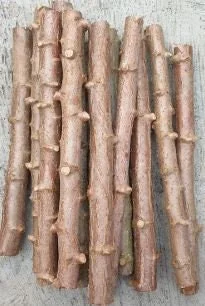
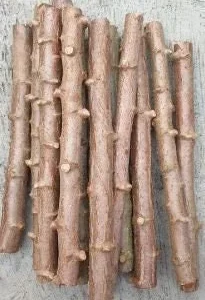
Our cassava live plant typically ships as a young, established plant, ready for transplanting into your garden or a larger pot. The yuca cuttings are fresh stem sections, approximately 6-8 inches long, with multiple nodes, ideal for direct planting. When mature, the cassava plant can reach heights of 5-8 feet and spread 3-5 feet wide, forming a woody shrub. The roots are typically ready for harvest 8-12 months after planting, depending on climate and growing conditions. Each plant can yield several pounds of delicious, starchy tubers. The growth rate is moderate to fast in ideal conditions, allowing for a substantial harvest within a single growing season for many regions. This robust tropical plant is a fantastic addition for those seeking both food and ornamental value.
Frequently Asked Questions
- Q: How big does this plant get? A: A mature cassava live plant can grow 5-8 feet tall and 3-5 feet wide, forming a substantial shrub. The size can vary based on growing conditions and climate, particularly when grown as an annual.
- Q: Is this an indoor or outdoor plant? A: Cassava is primarily an outdoor plant in warm climates (USDA zones 9-11) where it can be grown as a perennial. In cooler zones, it can be grown outdoors as an annual or cultivated in large containers and brought indoors during winter.
- Q: How much sunlight does it need? A: This edible root plant requires full sun, meaning at least 6-8 hours of direct sunlight daily, to thrive and produce a good root harvest.
- Q: Is this plant easy to care for? A: Yes, cassava is considered relatively easy to care for, especially in suitable warm climates. It’s drought-tolerant once established and generally quite resilient, making it a good choice for those who want to grow cassava at home.
- Q: What condition will it arrive in? A: Live plants will arrive carefully packaged and established in a small nursery pot. Yuca cuttings will be fresh, healthy stem sections, ready for planting.
- Q: How long until it’s ready to harvest? A: Cassava roots are typically ready for harvest 8-12 months after planting, though some varieties may mature slightly faster or slower.
- Q: Can I grow this from the yuca cuttings? A: Absolutely! The cuttings are specifically provided for propagation. Simply plant them partially into well-draining soil, and they will root and grow into new plants.
- Q: Will it survive winter in my zone? A: In USDA zones 9-11, cassava can survive winter as a perennial. In colder zones, it will die back with frost and must be replanted annually or grown in pots and protected indoors.
- Q: What kind of soil is best for this tropical plant? A: Well-draining, sandy loam soil with a slightly acidic to neutral pH (5.5-7.0) is ideal. Good drainage is essential to prevent root rot.
- Q: What is the best way to grow cassava at home for maximum yield? A: Provide full sun, well-draining fertile soil, consistent moisture during growth, and regular fertilization. Harvesting at the right time (8-12 months) is also key.
Related products
-50%

Original price was: $59.96.$29.98Current price is: $29.98.
-20%
Original price was: $28.00.$22.40Current price is: $22.40.
-10%
Original price was: $29.99.$26.99Current price is: $26.99.
-20%
Original price was: $100.00.$80.00Current price is: $80.00.
-20%
Original price was: $36.00.$28.80Current price is: $28.80.
-20%
Original price was: $60.00.$48.00Current price is: $48.00.
-20%
Original price was: $17.00.$13.60Current price is: $13.60.
PLANTING & CARE

Growing Glencoe Raspberry: A Complete Guide for Gardeners
If you’re looking to add something unique to your garden, look no further than the
31
Mar
Mar

The Comprehensive Guide to Growing Bay Leaf Plants for a Flavorful Garden
Imagine stepping into your garden, greeted by the earthy aroma of fresh bay leaves, their
09
Feb
Feb

How to Make Comfrey Tea: The Ultimate Organic Plant Food
Growing an organic garden can be surprisingly expensive, especially when most store-bought fertilizers come in
02
Feb
Feb

True Comfrey: 7 Essential Tips Before You Plant This Herb
A staple in permaculture practices across the US, True Comfrey easily earns its reputation as
27
Jan
Jan

7 Heart-Shaped Plants for a Lasting Valentine’s Gift
If you’ve ever bought a bouquet of roses for Valentine’s Day, you know they are
26
Jan
Jan

Best Types of Ivy Plant for Houses: How to Choose the Perfect Ones for Your Home
Are you a garden lover looking to introduce some greenery into your home? Maybe you’ve
14
Nov
Nov

When to Harvest Garlic (Especially Fall-Planted Garlic)
TIMING IS EVERYTHING, they say – and for garlic, that truth hits with surprising accuracy.
13
Nov
Nov

11 of the Best Sweet Potato Varieties to Grow for Your Garden
If you’ve ever tried growing sweet potatoes, you know that picking the right variety can
12
Nov
Nov