Variegated String of Hearts Live Plant – 2 inch Pot – Indoor Ceropegia Woodii

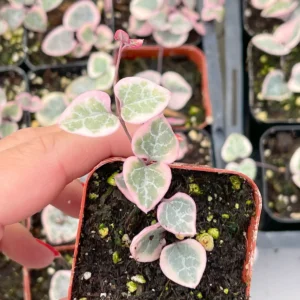
Variegated String of Hearts Live Plant – 2 inch Pot – Indoor Ceropegia Woodii
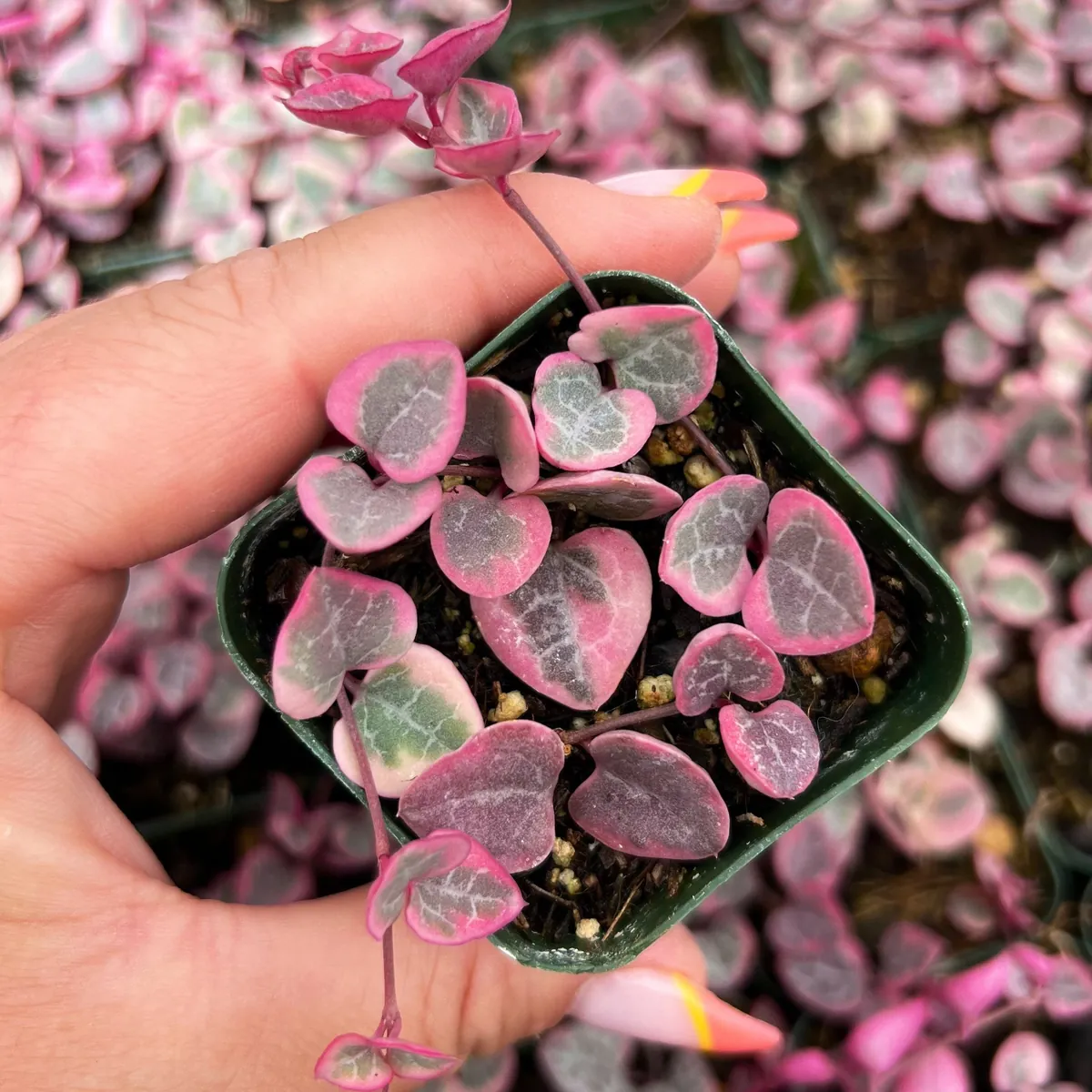
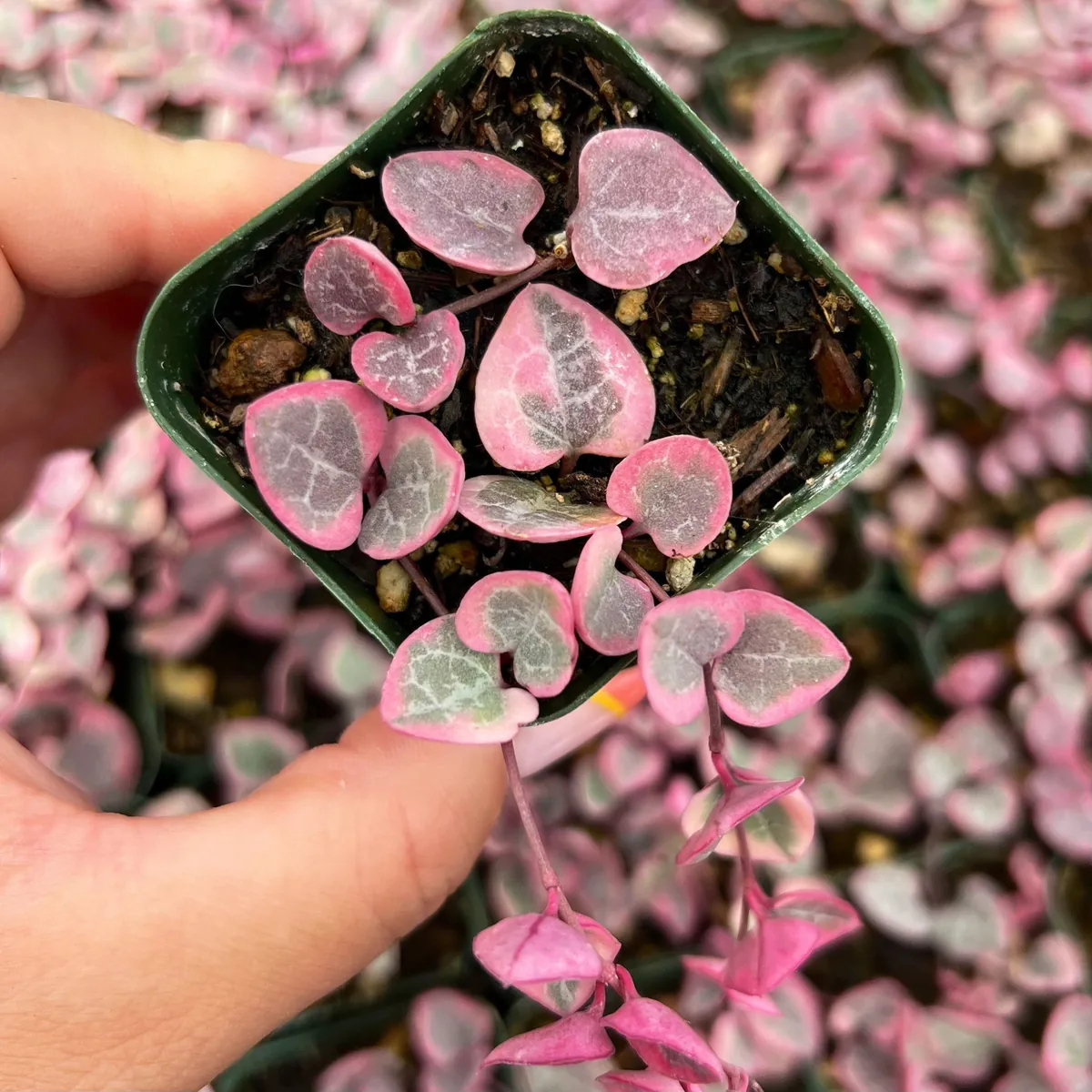
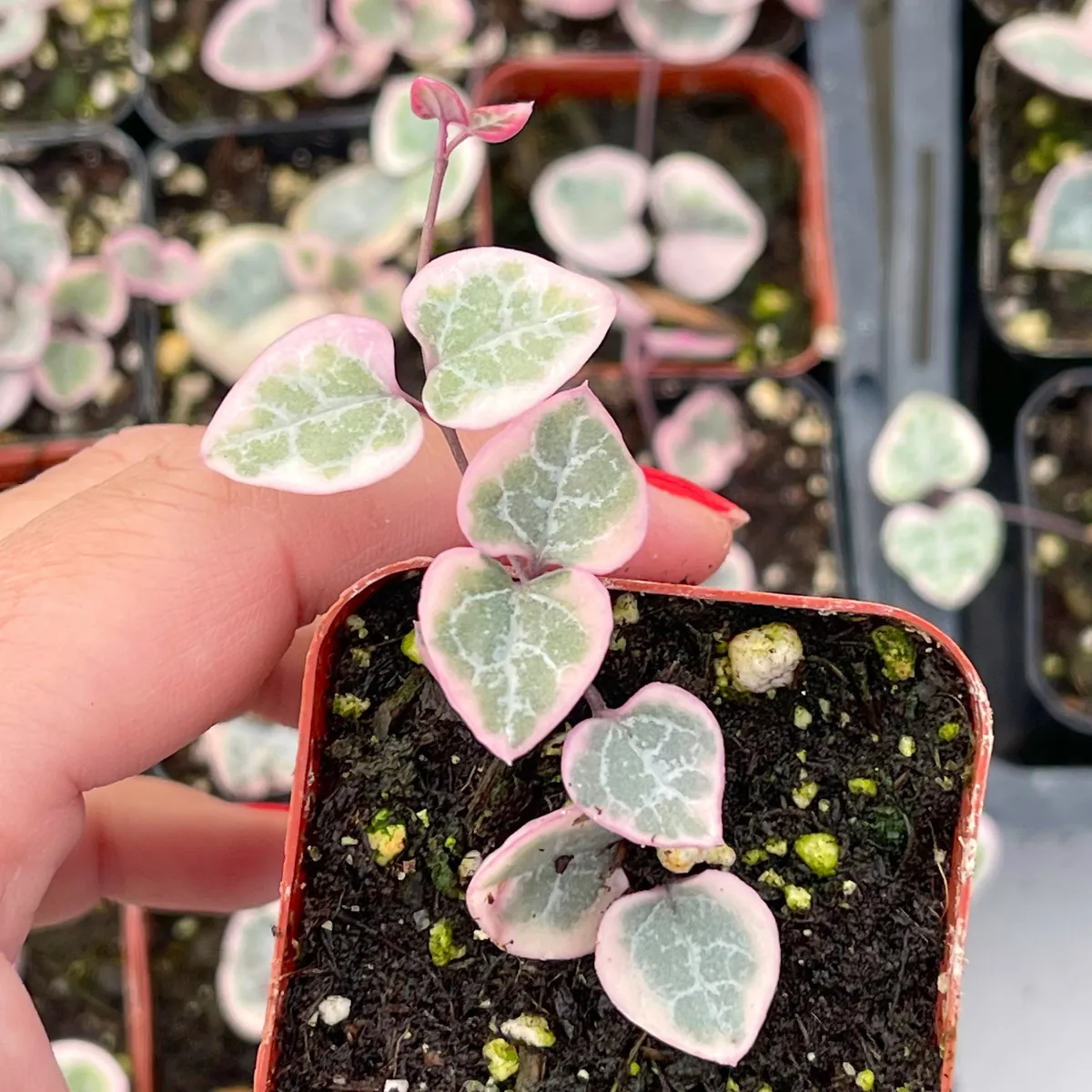
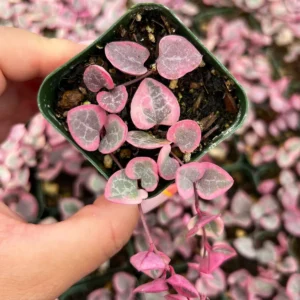
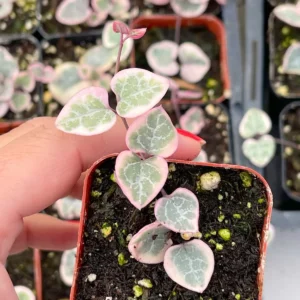
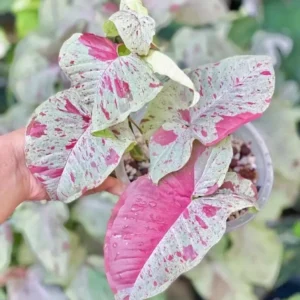
Add enchanting beauty to your space with this variegated string of hearts live plant. This rooted 2″ nursery pot specimen features delicate, heart-shaped leaves in shades of pink, silver, and green, perfect for hanging baskets or shelves. An ideal choice for collectors seeking easy-care trailing houseplants.
$19.98

With our Alive & Thrive Guarantee, we’ve got your back for the first 30 days! If you have any concerns about your plants, just reach out to us. Our team is here to help answer your questions and guide you in selecting the best plants for your garden, climate, and unique preferences. We're excited to help you create the garden of your dreams!
Estimated arrival
Feb 19
Feb 24 - Feb 26
Mar 01 - Mar 05
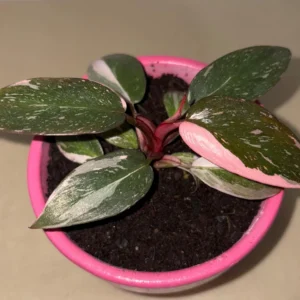
Product Details
-
USDA Hardiness Zone
USDA zones 10-11 (outdoors), otherwise indoor -
Soil type
Well-draining succulent or cactus potting mix -
Sunlight Exposure
Bright indirect light -
Expected Planting Period
Year-round indoors
Overview
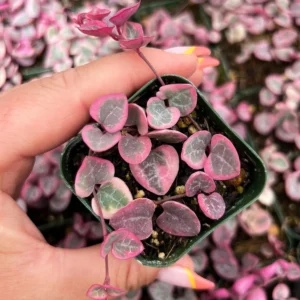
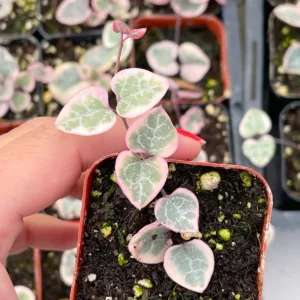
Bring a touch of whimsical beauty to your home with this exquisite variegated string of hearts live plant (Ceropegia woodii ‘Variegata’). This charming succulent is renowned for its delicate, heart-shaped leaves that cascade gracefully, making it a favorite for adding vertical interest to any indoor space. Each leaf boasts a unique blend of soft pink, silvery-green, and deep green hues, creating a mesmerizing display of natural artistry. This live plant is fully rooted and comes ready to thrive in its new home, offering an immediate enhancement to your plant collection. Whether you’re a seasoned plant enthusiast or new to the world of indoor gardening, the variegated string of hearts live plant is a delightful and rewarding choice that promises to captivate all who behold it.
The Ceropegia woodii ‘Variegata’, commonly known as variegated string of hearts, is celebrated not only for its stunning appearance but also for its relatively easy care requirements. This makes it an excellent option for busy individuals or those looking for low-maintenance yet visually striking plants. Its vining habit allows it to trail beautifully from hanging baskets, climb small trellises, or spill elegantly from shelves, adding a dynamic and romantic element to your decor. The vibrant variegation is particularly pronounced when given adequate bright, indirect light, ensuring a continuous show of color.
Key Benefits
The variegated string of hearts live plant offers numerous benefits, making it an outstanding addition to any indoor plant collection. From its aesthetic appeal to its ease of maintenance, this plant is truly a gem.
- Stunning Variegation: Each leaf presents a beautiful mosaic of pink, silver, and green, providing continuous visual interest and a unique decorative element. This natural artwork makes every variegated string of hearts live plant truly one-of-a-kind.
- Elegant Trailing Habit: Its natural vining growth makes it perfect for hanging planters, tall shelves, or macrame hangers, creating a graceful, cascading display that softens any space. It’s one of the most beloved trailing houseplants.
- Low Maintenance: As a succulent, it is drought-tolerant and forgiving, requiring less frequent watering than many other houseplants. This makes string of hearts care straightforward and suitable for beginners.
- Air Purifying Qualities: Like many houseplants, the Ceropegia woodii Variegata contributes to a healthier indoor environment by helping to filter airborne toxins.
- Compact Size: Grown in a 2″ nursery pot, it’s an ideal size for windowsills, desks, or starting a new collection without taking up too much space.
- Collector’s Favorite: Its unique appearance and ease of care have made the ceropegia woodii variegated a highly sought-after plant among collectors and enthusiasts.
- Versatile Decor: Complements a wide range of interior design styles, from bohemian to minimalist, adding a touch of natural elegance.
Plant Care & Growing Tips
Caring for your variegated string of hearts live plant is a rewarding experience, as it thrives with minimal fuss once its basic needs are met. This delightful succulent prefers bright, indirect light to maintain its vibrant variegation. Place it near a south or west-facing window where it can receive plenty of ambient light without direct scorching sun. Insufficient light can lead to less pronounced pink hues and leggy growth, while too much direct sun can burn the delicate leaves. Rotating the plant occasionally will ensure even growth and color development.
When it comes to watering, the variegated string of hearts is drought-tolerant, meaning it prefers its soil to dry out completely between waterings. Overwatering is the most common cause of problems for this plant, leading to root rot. To check if it’s time to water, feel the soil about an inch or two deep; if it’s dry, then water thoroughly until water drains from the bottom of the pot. Reduce watering significantly during the cooler, dormant months. A well-draining potting mix formulated for succulents or cacti is ideal, as it prevents water from sitting around the roots. The plant also appreciates good air circulation.
This species generally prefers average room temperatures between 65-75°F (18-24°C) and can tolerate slightly cooler temperatures but should be protected from frost. It is not cold-hardy and should be kept indoors in USDA zones below 10. Fertilize sparingly during the growing season (spring and summer) with a diluted liquid succulent fertilizer, about once a month. No fertilization is needed during fall and winter. Pests are rarely an issue, but occasionally mealybugs or aphids might appear; these can typically be managed with neem oil or insecticidal soap. Proper string of hearts care will ensure your plant remains healthy and beautiful for years to come.
Size & Details
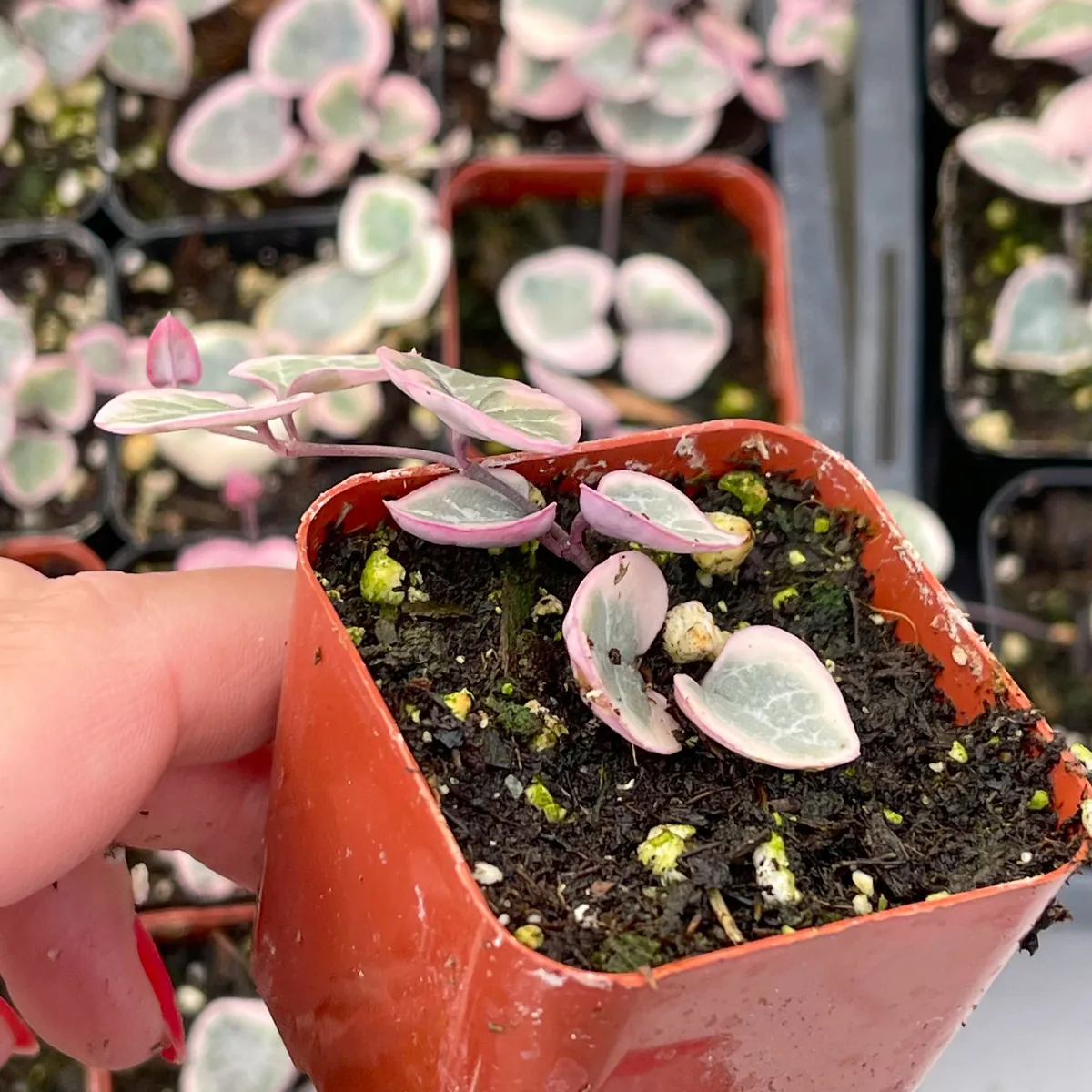
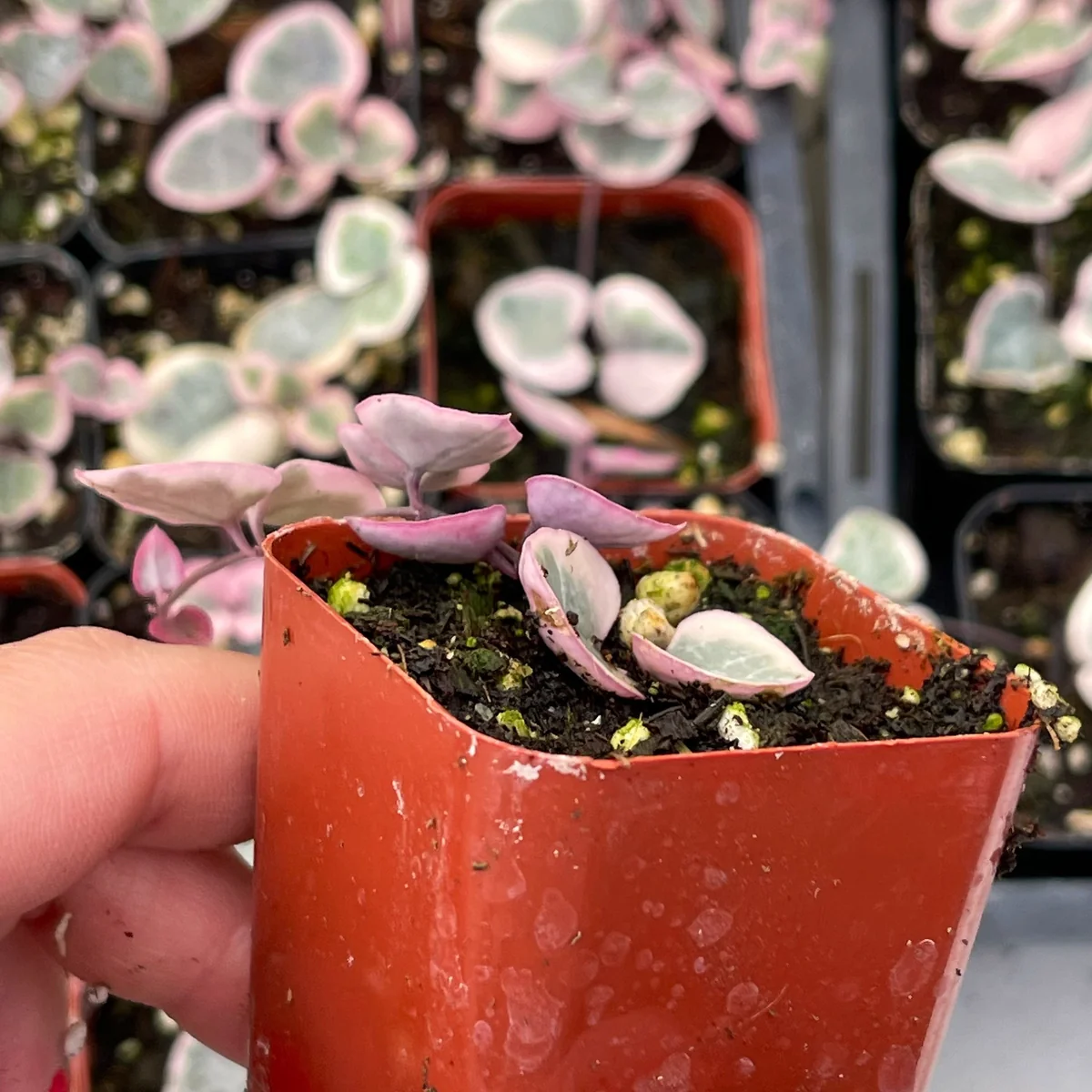
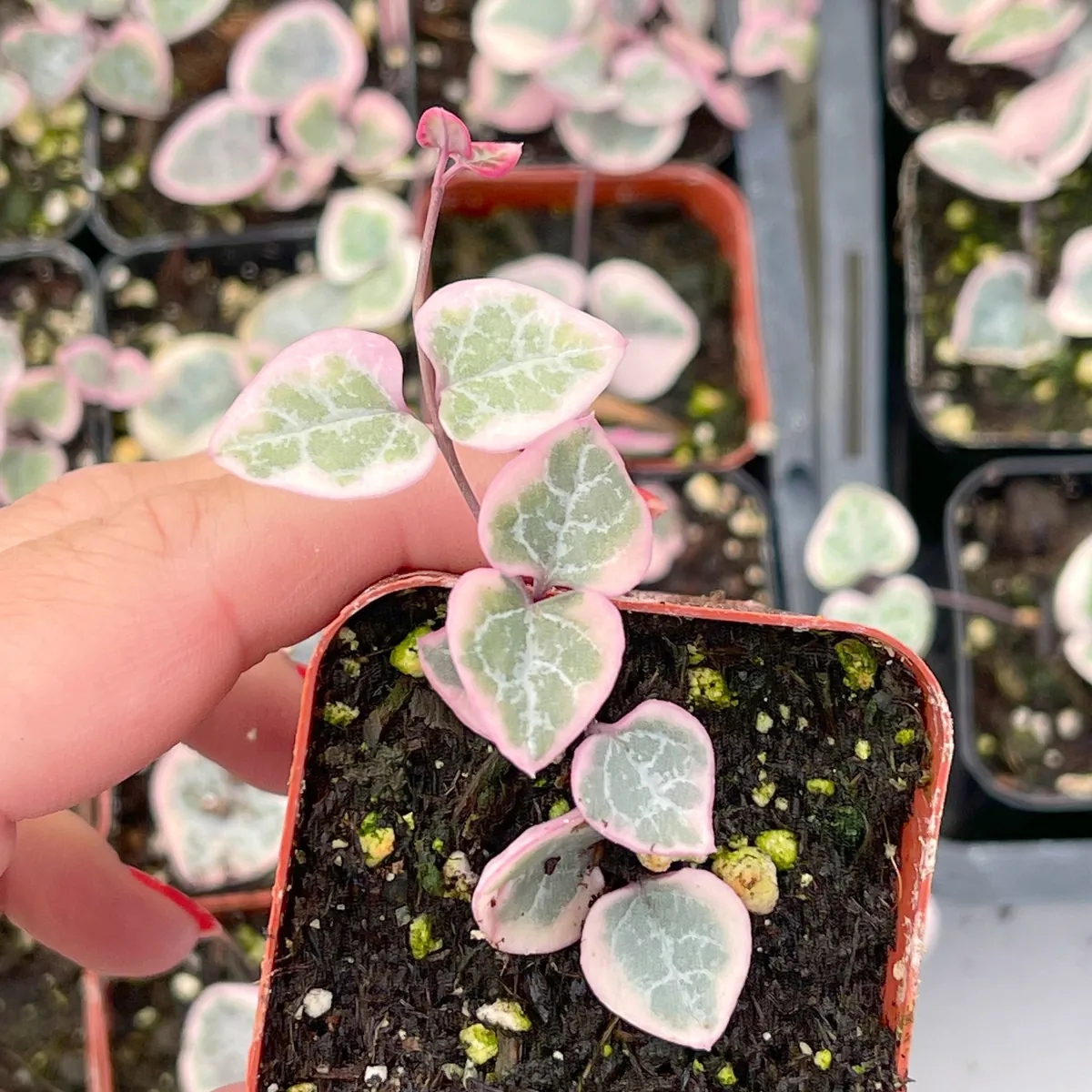
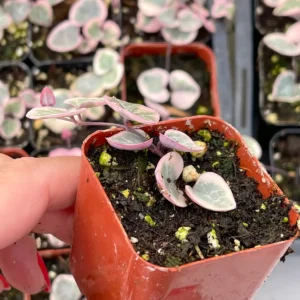
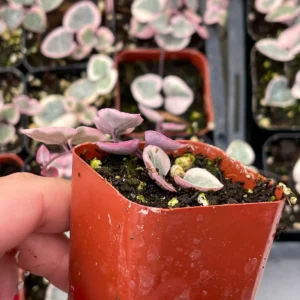
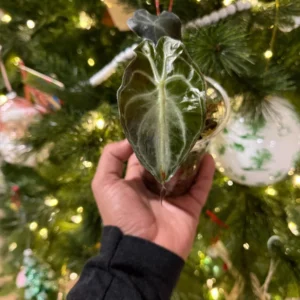
This offering is for one robust, fully rooted variegated string of hearts live plant, meticulously grown in a 2″ nursery pot. The plant will arrive healthy and ready to continue its growth in your home. While individual plants vary slightly in exact trailing length and variegation patterns due to natural growth, each specimen is similar in size and vigor to the one pictured, ensuring a beautiful addition to your collection. The vining stems can trail several feet long over time, creating a stunning visual effect, making it an excellent choice among trailing houseplants.
The 2″ nursery pot provides a stable environment for the plant’s initial establishment, and it can remain in this pot for some time before needing to be repotted. This allows you to observe its growth and decide on the perfect decorative planter. The plant’s growth rate is moderate, and with proper ceropegia woodii variegated care, you will see new heart-shaped leaves emerge regularly, extending its beautiful vines. It is shipped carefully packaged to minimize stress and ensure safe arrival, ready to thrive in its new environment.
Frequently Asked Questions
- Q: How big does the variegated string of hearts get? A: The vines of the variegated string of hearts live plant can grow quite long, often several feet in length, making it ideal for hanging displays. The plant itself remains relatively compact at the base.
- Q: Is this an indoor or outdoor plant? A: While it can tolerate outdoor conditions in very warm, frost-free climates (USDA Zones 10-11), it is primarily cultivated as an indoor houseplant due to its sensitivity to cold and preference for consistent, indirect light conditions.
- Q: How much sunlight does it need? A: This plant thrives in bright, indirect light. Too much direct sun can scorch its leaves, while too little light can reduce the vibrant pink variegation and lead to leggy growth.
- Q: Is this plant easy to care for? A: Yes, the variegated string of hearts is considered an easy-care succulent, making it suitable for beginners. Its main requirements are bright indirect light and infrequent watering.
- Q: What condition will it arrive in? A: Your plant will arrive fully rooted in a 2″ nursery pot, carefully packaged to ensure it reaches you in healthy, thriving condition, ready to be placed in its new home.
- Q: How often should I water my string of hearts? A: Water only when the soil has completely dried out. This plant is drought-tolerant, so it’s better to underwater than overwater to prevent root rot, which is a common issue with improper string of hearts care.
- Q: Is the variegated string of hearts pet-safe? A: The ceropegia woodii variegated is generally considered non-toxic to pets, making it a safer choice for homes with curious animals. However, it’s always best to prevent pets from consuming any houseplants.
- Q: What type of soil is best for this plant? A: A well-draining succulent or cactus potting mix is ideal for the variegated string of hearts live plant. This type of soil prevents water from sitting around the roots, which is crucial for its health.
- Q: Can I propagate this plant? A: Yes, the variegated string of hearts is very easy to propagate from stem cuttings. Simply place cuttings in moist soil or water, and they will typically root quickly.
- Q: Why are my string of hearts leaves losing their pink color? A: A reduction in the pink variegation often indicates insufficient light. Move your plant to a brighter spot with more indirect sunlight to encourage the vibrant colors to return.
Related products
-25%
Original price was: $23.00.$17.24Current price is: $17.24.
-30%
Original price was: $25.98.$18.18Current price is: $18.18.
-25%
Original price was: $20.90.$15.68Current price is: $15.68.
-30%
Original price was: $129.98.$90.98Current price is: $90.98.
-5%
Original price was: $91.98.$87.38Current price is: $87.38.
PLANTING & CARE

The Comprehensive Guide to Growing Bay Leaf Plants for a Flavorful Garden
Imagine stepping into your garden, greeted by the earthy aroma of fresh bay leaves, their
09
Feb
Feb

How to Make Comfrey Tea: The Ultimate Organic Plant Food
Growing an organic garden can be surprisingly expensive, especially when most store-bought fertilizers come in
02
Feb
Feb

True Comfrey: 7 Essential Tips Before You Plant This Herb
A staple in permaculture practices across the US, True Comfrey easily earns its reputation as
27
Jan
Jan

7 Heart-Shaped Plants for a Lasting Valentine’s Gift
If you’ve ever bought a bouquet of roses for Valentine’s Day, you know they are
26
Jan
Jan

Best Types of Ivy Plant for Houses: How to Choose the Perfect Ones for Your Home
Are you a garden lover looking to introduce some greenery into your home? Maybe you’ve
14
Nov
Nov

When to Harvest Garlic (Especially Fall-Planted Garlic)
TIMING IS EVERYTHING, they say – and for garlic, that truth hits with surprising accuracy.
13
Nov
Nov

11 of the Best Sweet Potato Varieties to Grow for Your Garden
If you’ve ever tried growing sweet potatoes, you know that picking the right variety can
12
Nov
Nov
Pruning Bougainvillea for Winter
Bougainvillea vines are known for their dazzling display of magenta, orange, and fuchsia bracts that
05
Nov
Nov