
A staple in permaculture practices across the US, True Comfrey easily earns its reputation as a garden powerhouse. With its legendary deep taproots, this plant acts as a natural pump, drawing essential nutrients from the subsoil to create nutrient-rich foliage. Whether you are looking to brew “liquid gold” fertilizer, speed up your compost pile, or utilize a home-grown organic mulch, True Comfrey is the multi-purpose solution every organic gardener needs.
But before you dig a hole, there are critical things you must know about its persistence and growth habits. Not all Comfrey is created equal. If you plant True Comfrey (Symphytum officinale) without knowing what you are getting into, you might be signing up for a lifelong commitment, literally.
Let’s explore the multifaceted world of Symphytum officinale, its cultivation secrets, and how to harness its benefits effectively for your backyard.
1. What is The True Comfrey (Symphytum officinale)?
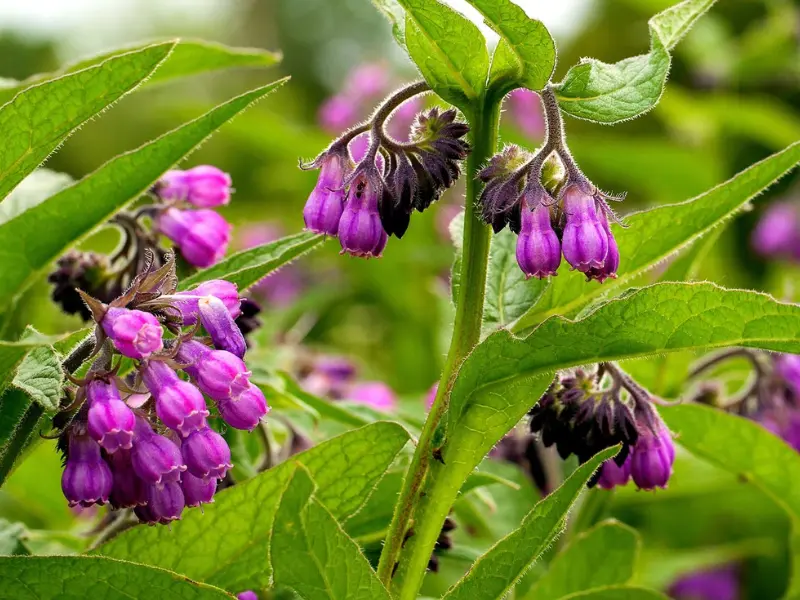
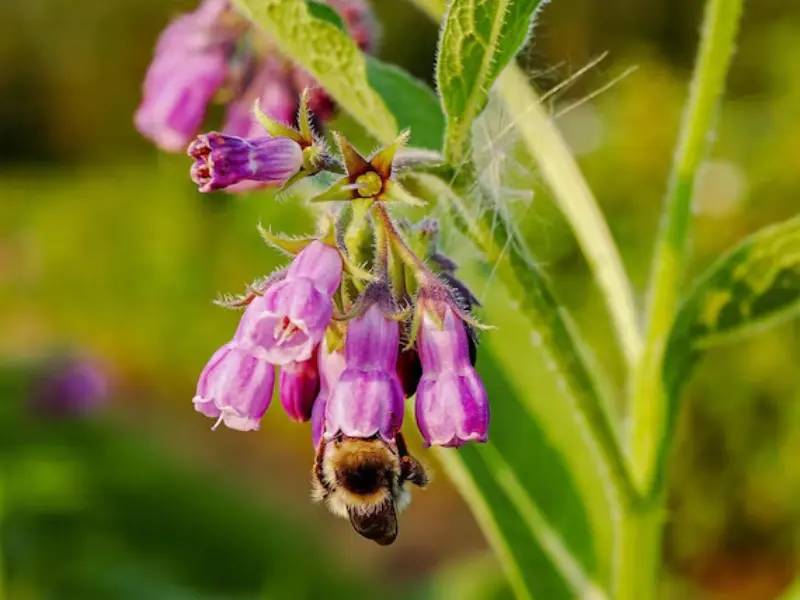
Scientifically known as Symphytum officinale, True Comfrey is a robust herbaceous perennial that can grow to around 4 feet (1.2m) tall. Originating in Europe, this hardy plant boasts large, textured rosettes of hairy, grey-green leaves, topped by elegant, nodding clusters of bell-like mauve or cream flowers.
Depending on where you live in the US, True Comfrey acts like a chameleon. In warmer USDA Hardiness Zones, it may stay evergreen all year round. However, in colder northern states, the plant will put on a floral show, shed its seeds, and then die back completely over winter.
When you browse local nurseries or online seed shops, you will see two main types: True Comfrey and Russian Comfrey (specifically the Bocking 14 cultivar).
True Comfrey is the original species, Symphytum officinale. Unlike its hybrid cousins, this plant produces viable seeds. This means it can spread not just by its roots, but by the wind and birds too. In the gardening world, we call this a “perennial herb,” but in some states, people just call it a persistent weed.
Many US gardeners opt for Russian Comfrey (specifically the Bocking 14 cultivar). While both are excellent dynamic accumulators, True Comfrey is often preferred by those wanting a traditional medicinal garden or those who want to save their own seeds for future expansion.
2. The Power of the Deep Taproot
One of the biggest reasons I tell my friends to plant Comfrey is for its “mining” capabilities.
True Comfrey has a massive taproot that can reach depths of 6 to 10 feet. It acts like a straw, sucking up minerals like potassium, calcium, and magnesium from deep in the subsoil where other plants can’t reach.
In permaculture, we call this a dynamic accumulator. It brings those nutrients up into its big, green leaves. When those leaves die back or you cut them, those nutrients are released back into the topsoil. It’s like having a free fertilizer factory in the corner of your yard.
3. Essential Pre-Planting Checklist Before Planting True Comfrey
Before planting True Comfrey, you need a plan. Trust me, I once planted a small root cutting near my vegetable bed, and three years later, it owned the place.
-
Location is Everything: You need to pick a permanent spot. Because of its deep roots, once True Comfrey is established, it is nearly impossible to move. If you try to dig it up and leave even a half-inch of root behind, a new plant will grow.
-
Climate Zones: True Comfrey is incredibly hardy. It thrives in USDA Hardiness Zones 4 through 9. It can handle a deep freeze in Minnesota and a hot summer in Georgia.
-
Sun and Soil: While it loves full sun, it is surprisingly forgiving. It will grow in clay, sandy soil, or even that weird patch of dirt behind your shed. However, it does appreciate a bit of nitrogen to get those big leaves growing.
4. How to Plant and Propagate True Comfrey
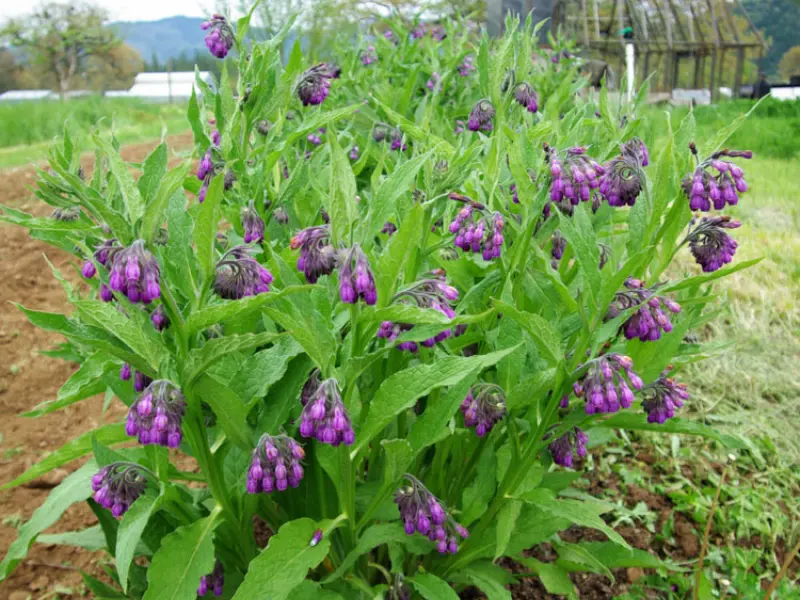
If you have decided that True Comfrey is right for you, you have two main options for starting
When you start from True Comfrey seeds, sow them in the spring after the danger of frost has passed. However, most professionals prefer root cuttings or crown offsets. This is the fastest way.
-
Placement: Space your plants at least 3 feet apart. They start small, but they explode in size by year two.
-
Depth: Plant root cuttings about 2-3 inches deep horizontally.
-
Patience: In the first year, avoid harvesting too many leaves. Let the plant focus its energy on establishing that “superhero” root system.
Make sure to give each plant space. These aren’t tiny herbs; a single plant can grow 3 feet wide and 3 feet tall. Space them at least 2 to 3 feet apart.
You may like:
- How to Grow Comfrey in Pots: Tips for Small Gardens
- How to Grow Comfrey: The Complete Guide for Organic Gardeners
5. Managing the “Invasive” Nature of True Comfrey
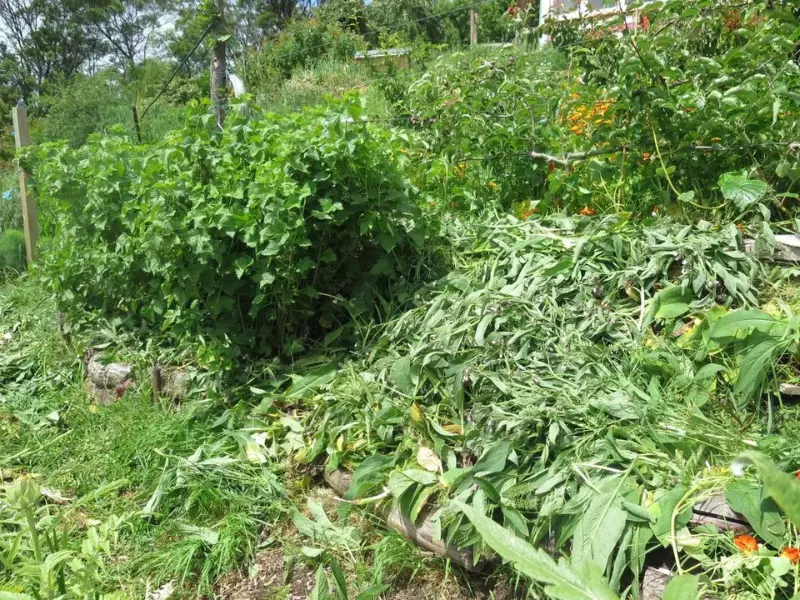
This is the part where I have to be honest with you: True Comfrey can be aggressive.
Because it produces seeds, it can be carried by birds or wind and show up in places you didn’t plant it. If you want the benefits of Comfrey without the “traveling” seeds, many US gardeners choose Bocking 14 Russian Comfrey, which is sterile.
However, if you stick with True Comfrey, the secret is simply harvest the leaves just as the flower buds start to appear before the plant goes to seed. This technique, known as chop-and-drop, prevents seed dispersal while giving you a massive amount of organic material to use around your fruit trees or tomato plants.
6. Practical Uses: Liquid Gold and Chop-and-Drop
Why put up with a plant that refuses to leave? Because the rewards are unmatched:
-
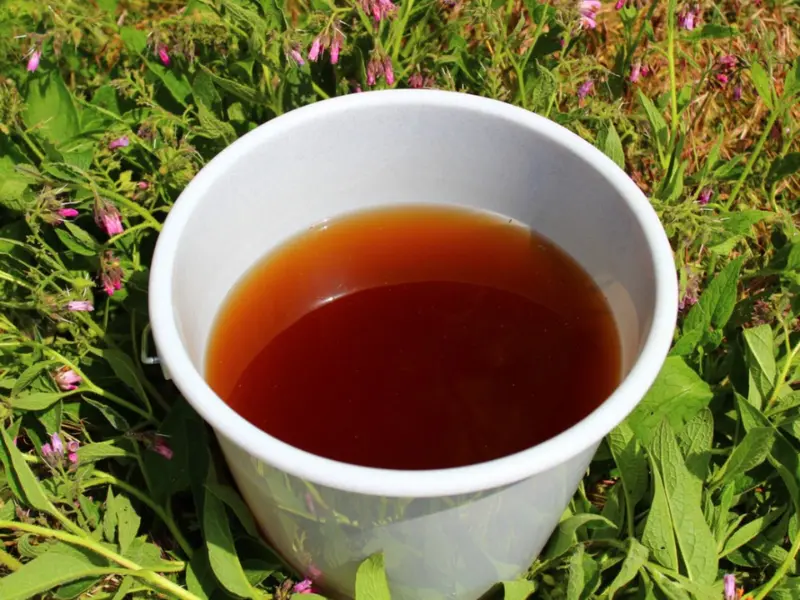
Comfrey Tea: No, not for you to drink! Stuff a bucket with leaves, weigh them down with a brick, and cover with water. After 3-4 weeks, you’ll have a stinky but potent liquid fertilizer for your tomatoes or peppers. Dilute it until it looks like weak tea and watch your flowering plants go wild.
-
The Compost Activator: The high nitrogen content in comfrey leaves acts as a “green” engine, heating up your compost pile and breaking down “brown” materials like straw or woodchips much faster. Simply cut the leaves down 3 or 4 times a year and drop them right on the ground as organic mulch. They break down quickly, feeding the soil and suppressing weeds.
-
Pollinator Support: Bumblebees absolutely adore the purple and bell-shaped flowers. By planting True Comfrey, you are providing a vital nectar source for beneficial insects in your local ecosystem. And your garden will be buzzing with life all summer long.
7. Safety and the “Knitbone” Legacy
Traditionally called Knitbone, comfrey has been used in folk medicine for centuries to treat bruises and sprains due to a compound called Allantoin, which promotes cell regrowth.
However, modern science has flagged Pyrrolizidine Alkaloids (PAs) in the plant, which can be toxic to the liver if ingested in large amounts. Today, we recommend keeping it for external use only (like a soothing salve) or, better yet, keeping it strictly as a “soil doctor” in your garden.
Always wear gloves when handling large amounts of the plant, as the tiny hairs on the leaves can irritate sensitive skin.
Conclusion
True Comfrey is more than just a plant; it is a self-sustaining fertilizer factory and a soil-building machine. While it requires a bit of management to prevent spreading, the benefits it brings to a permaculture garden are hard to ignore.
Are you ready to stop buying expensive fertilizers and start growing your own?
Frequently Asked Questions (FAQs)
1. Can I start planting True Comfrey in a container? You can, but it isn’t ideal. The taproot wants to go deep. If you must use a pot, ensure it is very large and deep, or you will end up with a stunted, unhappy plant.
2. How many times a year can I harvest the leaves? Once established, you can harvest 3 to 5 times a year. Just leave at least 2 inches of growth above the ground so the plant can recover.
3. Is it safe for pets? Most animals (like chickens or goats) actually love comfrey, and it can be a great supplemental feed, but always consult a vet before introducing it to a pet’s diet due to the PA content.
4. How do I kill comfrey if I change my mind? It’s tough! You’ll need to either dig out every tiny root piece or cover the area with a heavy black tarp for an entire growing season to starve it of light.
References:
-
Healthline: What Is Comfrey? Benefits, Uses, and Risks – A comprehensive medical review of the safety profile of Symphytum officinale.
