Othonna Capensis ‘Ruby Necklace’ Live Succulent Plant – 2 Inch Potted – Indoor/Outdoor
-50%
Othonna Capensis ‘Ruby Necklace’ Live Succulent Plant – 2 Inch Potted – Indoor/Outdoor
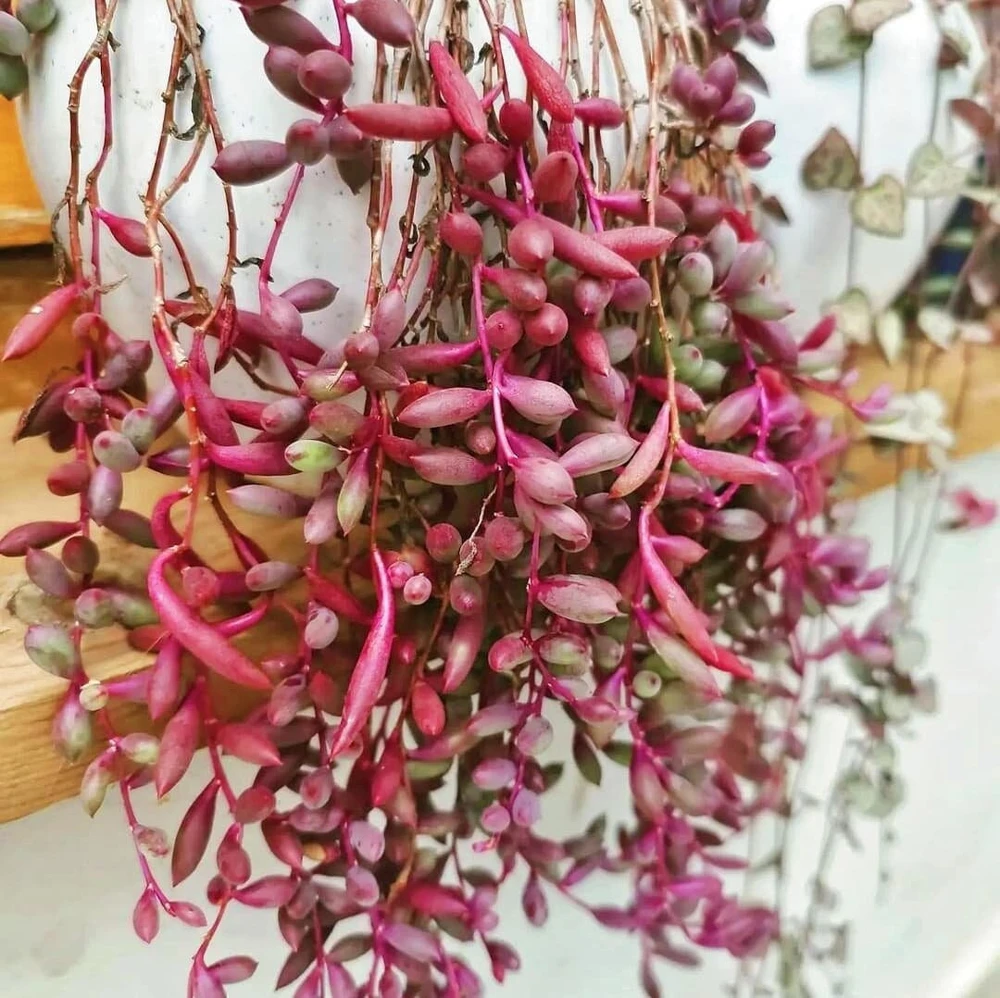
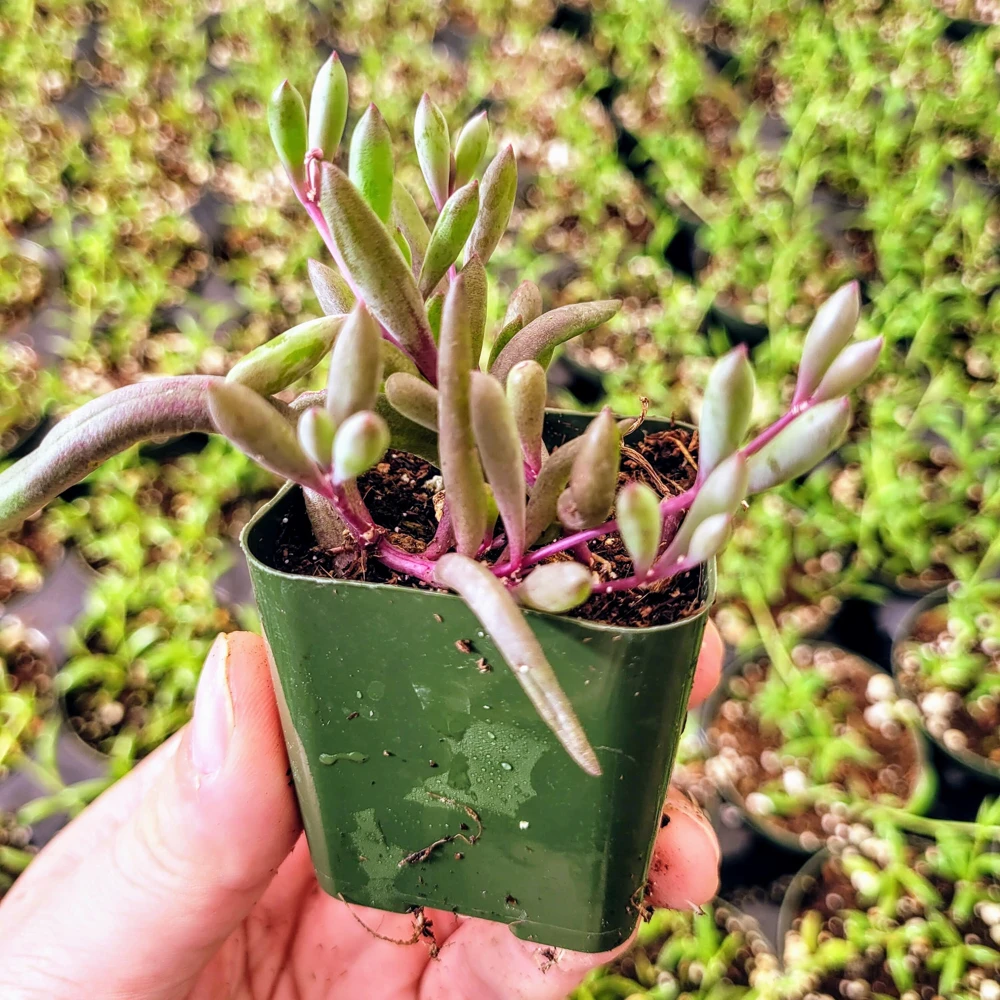
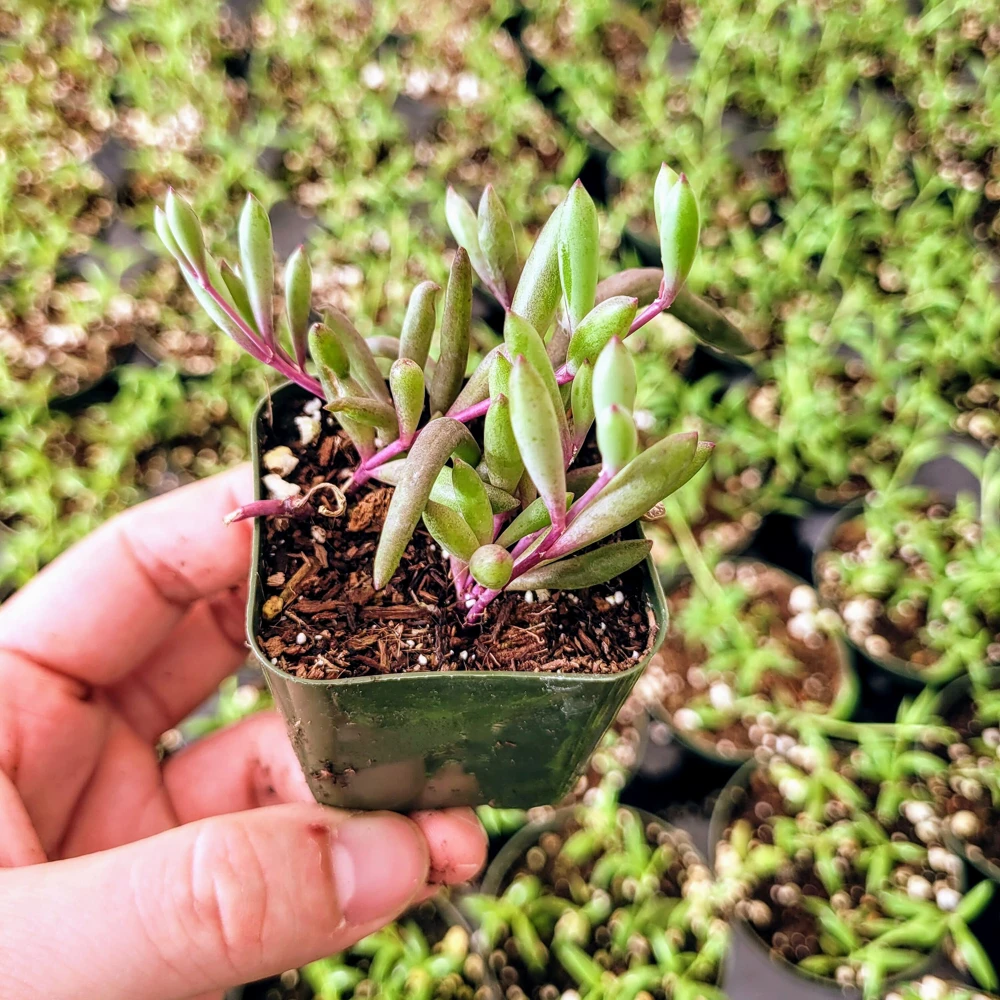
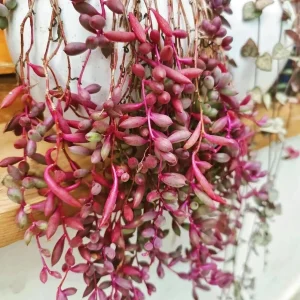
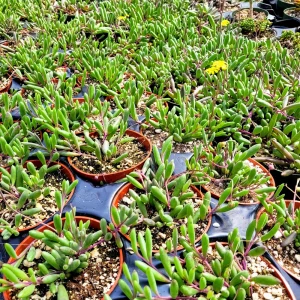
Bring home the unique Othonna Capensis Ruby Necklace, a charming live succulent plant known for its distinctive pickle-shaped leaves that blush ruby red. This 2-inch potted plant is ideal for bright, indirect light settings, perfect for adding a splash of color to your indoor space or shaded outdoor areas.
Original price was: $56.00.$28.00Current price is: $28.00.

With our Alive & Thrive Guarantee, we’ve got your back for the first 30 days! If you have any concerns about your plants, just reach out to us. Our team is here to help answer your questions and guide you in selecting the best plants for your garden, climate, and unique preferences. We're excited to help you create the garden of your dreams!
Estimated arrival
Oct 13
Oct 18 - Oct 20
Oct 23 - Oct 27
Product Details
-
USDA Hardiness Zone
USDA zones 9-11 (outdoors), suitable for all zones indoors -
Soil type
Fast-draining succulent/cactus mix -
Sunlight Exposure
Bright indirect light -
Expected Planting Period
Year-round indoors
Overview
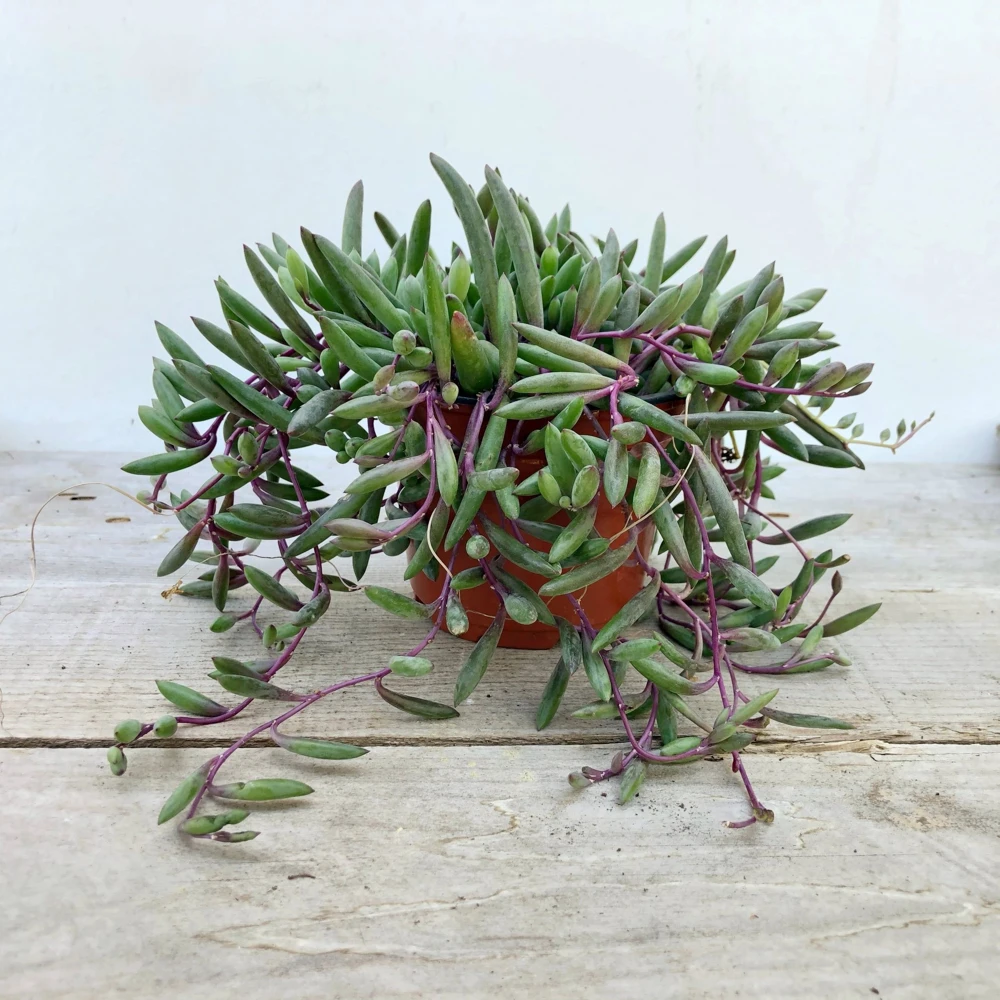
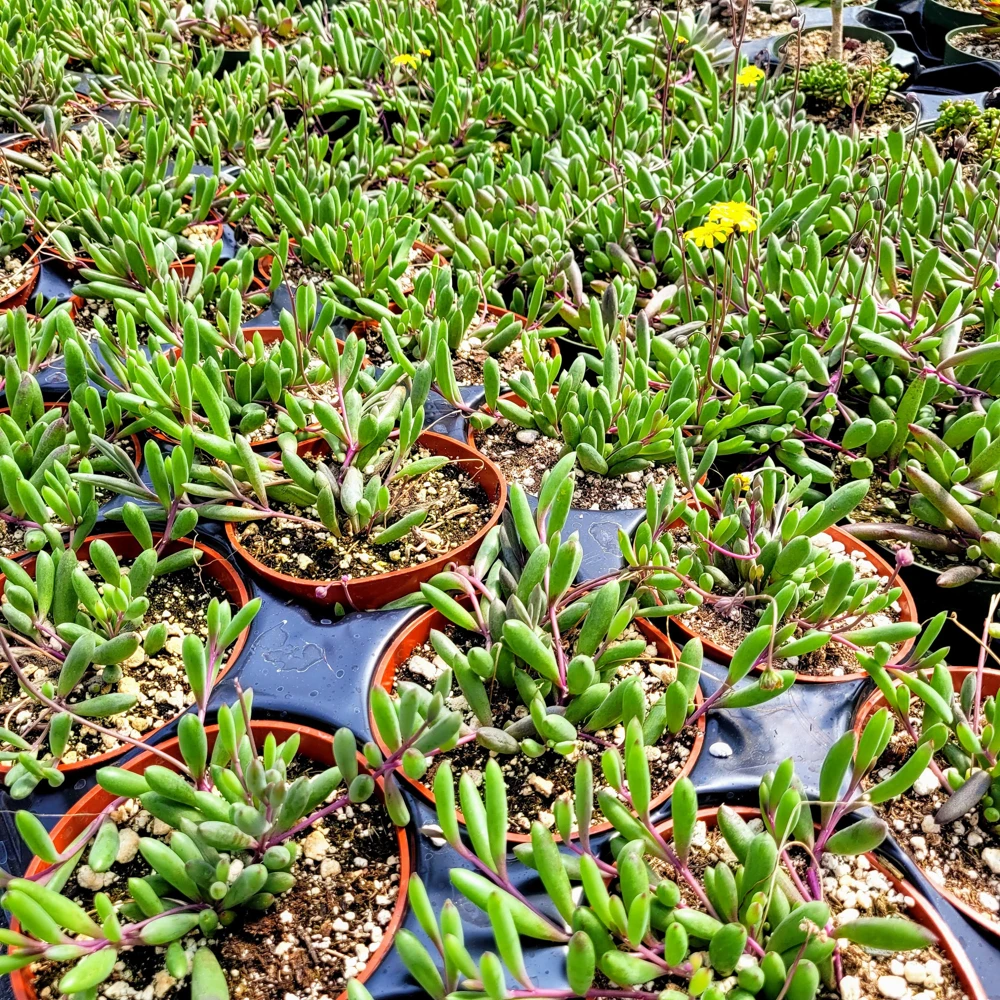
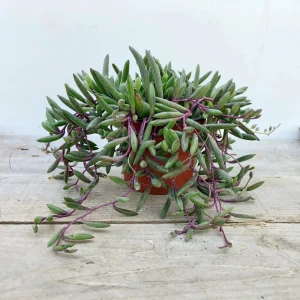
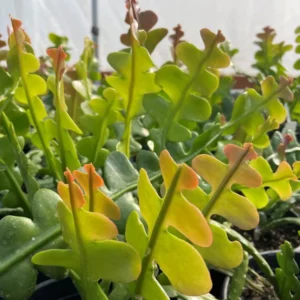
Introduce a touch of vibrant charm to your plant collection with the exquisite Othonna Capensis Ruby Necklace. This fascinating live succulent plant, also commonly known as ‘Ruby Necklace’ or ‘String of Pickles’, is celebrated for its distinctive appearance. Its trailing stems are adorned with plump, blue-green, pickle-shaped leaves that can develop stunning ruby-red to purple hues when exposed to sufficient sunlight or under drought stress. Originating from South Africa, this moderately slow-growing evergreen succulent forms dense clumps, typically reaching up to 4 inches in height and spreading about a foot wide. It’s a fantastic choice for hanging baskets, bright windowsills, or as a vibrant groundcover in suitable climates, offering year-round visual interest with its unique foliage and occasional small yellow daisy-like flowers.
The Othonna Capensis Ruby Necklace is a resilient and relatively low-maintenance plant, making it an excellent option for both seasoned succulent enthusiasts and beginners. Its ability to tolerate periods of drought and its moderate growth rate mean it won’t quickly outgrow its space. The striking color transformation of its leaves is a captivating feature, providing dynamic beauty as light conditions change. This versatile plant thrives in well-draining conditions and bright, indirect light, making it adaptable to various indoor and shaded outdoor environments. Whether you’re looking to enhance a succulent arrangement or create a standalone statement piece, this ‘Ruby Necklace’ is sure to impress.
Key Benefits
The Othonna Capensis Ruby Necklace offers numerous advantages that make it a highly desirable addition to any plant collection. Its unique aesthetics and easy-care nature combine to provide a rewarding gardening experience.
- Stunning Visual Appeal: The most prominent benefit is its striking coloration. The blue-green, pickle-shaped leaves transition to beautiful ruby-red and purple tones, especially under stress, providing a dynamic and eye-catching display. This makes it a perfect focal point for any room or garden.
- Low Maintenance: As a succulent, the Ruby Necklace succulent care is straightforward. It requires infrequent watering and thrives on neglect, making it ideal for busy individuals or those new to plant care. Its resilience to drought conditions minimizes the need for constant attention.
- Versatile Decor: Its trailing growth habit makes it excellent for hanging baskets, adding vertical interest to your space. It also works wonderfully in succulent arrangements, rock gardens, or as a unique groundcover, adapting to various design schemes.
- Compact Growth: This plant maintains a relatively compact size, typically not exceeding 4 inches in height, which means it won’t quickly overwhelm its space. It’s perfect for small apartments, desks, or windowsills where space is limited.
- Drought Tolerant: Being a succulent, it naturally stores water in its leaves, allowing it to withstand dry periods. This characteristic makes it a sustainable choice and reduces water consumption compared to many other houseplants.
- Unique Foliage: The distinctive ‘pickle-shaped’ leaves are a conversation starter. This unique morphology sets the Othonna Capensis plant apart from other succulents, offering an unusual and interesting texture to your plant display.
- Air Purification: Like many plants, succulents contribute to better indoor air quality by absorbing toxins and releasing oxygen, creating a healthier living environment.
Plant Care & Growing Tips
Providing the right conditions for your Othonna Capensis Ruby Necklace will ensure its vibrant growth and stunning color. This succulent is relatively easy to care for, but understanding its specific needs will help it thrive.
Light: The ‘Ruby Necklace’ prefers bright, indirect light. Indoors, place it near a south or west-facing window where it can receive plenty of ambient light without direct, harsh sun exposure, which can scorch its leaves. If growing outdoors, choose a location with morning sun and afternoon shade, especially in hotter climates. The more light it receives (without being scorched), the more pronounced its ruby-red blushing will be. Insufficient light can lead to leggy growth and less vibrant coloration.
Watering: This live succulent plant is highly drought-tolerant. Water infrequently, allowing the soil to dry out completely between waterings. Typically, watering once every 1-2 weeks is sufficient, but this can vary depending on your climate, humidity, and pot size. Always check the soil moisture by feeling the top inch or two; if it’s dry, it’s time to water. Overwatering is the most common cause of succulent demise, leading to root rot. Reduce watering significantly during its dormant winter months.
Soil: Use a fast-draining soil mix specifically formulated for succulents and cacti. A good mix typically contains peat moss, perlite, and sand or gravel to ensure excellent drainage and aeration. This prevents water from sitting around the roots, crucial for the health of your Othonna Capensis plant. If kept indoors, a well-draining terracotta pot can further aid in moisture evaporation, promoting healthy root growth.
Temperature & Humidity: The ‘Ruby Necklace’ thrives in warm temperatures, ideally between 65-80°F (18-27°C). It is not frost-tolerant and should be protected from temperatures below 40°F (4°C). If grown outdoors in zones with cold winters, it’s best to bring it indoors before the first frost. Average indoor humidity levels are generally suitable; it does not require high humidity.
Fertilizing: Fertilize sparingly, if at all. During the growing season (spring and summer), you can feed it once a month with a diluted, balanced liquid houseplant fertilizer or a specialized succulent fertilizer. Avoid fertilizing in fall and winter when the plant’s growth slows down. Too much fertilizer can lead to nutrient burn.
Potting & Repotting: Repot only when the plant has outgrown its current container, typically every 2-3 years. Choose a pot that is only slightly larger than the previous one. Ensure the new pot has drainage holes. When repotting, handle the plant gently to avoid damaging the delicate stems and leaves. The pickle plant succulent will appreciate being slightly root-bound.
Size & Details
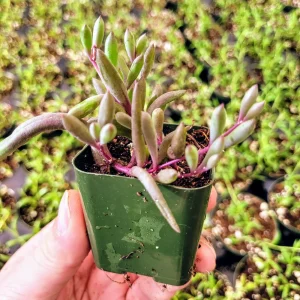
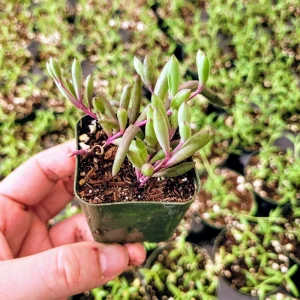
This offering includes one vibrant Othonna Capensis Ruby Necklace, cultivated as a healthy live succulent plant and provided in a 2-inch nursery pot. At maturity, this charming succulent typically grows to a height of not much more than 4 inches, with its trailing stems capable of spreading up to 1 foot wide, making it perfect for cascading over the edges of pots or hanging baskets. The leaves themselves are approximately 1 inch long, exhibiting their characteristic pickle shape. The plant’s moderate growth rate ensures it remains a manageable size for various indoor and outdoor settings. It will arrive carefully packaged, ready to be placed in its new home or transplanted into a decorative container.
Frequently Asked Questions
- Q: How big will my Othonna Capensis ‘Ruby Necklace’ get? A: This succulent typically grows to about 4 inches tall and can spread its trailing stems up to 1 foot wide. Its compact nature makes it suitable for small spaces and containers, and its growth rate is considered moderate.
- Q: Is this an indoor or outdoor plant? A: The Othonna Capensis Ruby Necklace is versatile. It thrives as an indoor plant in bright, indirect light, and can also be grown outdoors in shaded areas, especially in warmer climates. It is not frost-tolerant and should be brought indoors during cold weather.
- Q: How much sunlight does the ‘Ruby Necklace’ need for its color? A: For the best ruby-red and purple coloration, the Othonna Capensis plant needs plenty of bright, indirect sunlight. While it can tolerate lower light, its vibrant hues will be more pronounced with ample light exposure, avoiding direct harsh sun that can cause sunburn.
- Q: Is this live succulent plant easy to care for? A: Yes, the ‘Ruby Necklace’ is considered a low-maintenance succulent, making it an excellent choice for beginners. Its primary requirements are well-draining soil and infrequent watering, along with bright, indirect light. Overwatering is the main pitfall to avoid.
- Q: What condition will my Othonna Capensis Ruby Necklace arrive in? A: Your plant will arrive as one healthy 2-inch potted specimen, carefully packed in a shipping box with filler to protect it during transit. While variations in color and minor imperfections from shipping are possible, it will be a live, viable plant.
- Q: How often should I water my pickle plant succulent? A: Water infrequently, only when the soil has completely dried out. This could be once a week or every two weeks, depending on environmental factors like temperature and humidity. Always err on the side of underwatering rather than overwatering to prevent root rot.
- Q: Can I propagate the Othonna Capensis Ruby Necklace? A: Yes, this succulent is relatively easy to propagate from stem cuttings. Simply snip a healthy stem, allow the cut end to callus for a few days, and then place it in well-draining soil. Roots should form within a few weeks.
- Q: What type of soil is best for this succulent? A: A fast-draining soil mix is crucial. Use a succulent and cactus mix, or create your own by combining peat moss with plenty of perlite or coarse sand to ensure excellent drainage and prevent water retention around the roots of your Othonna Capensis Ruby Necklace.
- Q: Is this plant pet-friendly? A: While generally considered non-toxic, it’s always best to keep plants out of reach of pets to prevent any potential irritation or digestive upset. If you have concerns, consult with a veterinarian.
- Q: When is the best time to repot my ‘Ruby Necklace’? A: Repotting is typically needed every 2-3 years, or when the plant has significantly outgrown its container. The best time to repot is during the spring or early summer, which is the start of its active growing season, allowing it to recover quickly.
Related products
-30%
Original price was: $85.98.$60.18Current price is: $60.18.
-30%
Original price was: $79.98.$55.98Current price is: $55.98.
-30%
Original price was: $79.98.$55.98Current price is: $55.98.
-30%
Original price was: $79.98.$55.98Current price is: $55.98.
-30%
Original price was: $79.98.$55.98Current price is: $55.98.
-30%
Original price was: $47.98.$33.58Current price is: $33.58.
PLANTING & CARE
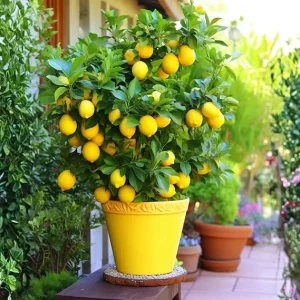
Lemon Tree Growing: Choose, Plant, and Harvest
Learn how to choose, plant, feed, and protect a lemon tree so it fits your
23
Sep
Sep
Dwarf Meyer Lemon Tree Australia: Climate Guide
Learn where dwarf Meyer lemon trees grow, how much cold they tolerate, and whether Australia,
Where to Buy a Dwarf Meyer Lemon Tree: Buyer’s Guide
Find the right dwarf Meyer lemon tree online or locally, compare starter sizes and costs,
Dwarf Meyer Lemon Tree for Sale: Buying Guide
Compare Meyer lemon tree sizes, prices, shipping limits, indoor growing and California options before you
Dwarf Meyer Lemon Tree Guide: Size, Care and Fruit
META: Learn how large a dwarf Meyer lemon tree grows, where it thrives, and how
How to Prune a Dwarf Meyer Lemon Tree
Learn when and how to prune a dwarf Meyer lemon tree, including tools, shaping cuts,
Can You Grow a Dwarf Meyer Lemon Tree in a Pot?
META: Learn how to grow a dwarf Meyer lemon tree in a pot, including container
When Do Dwarf Meyer Lemon Trees Bloom and Fruit?
META: Dwarf Meyer lemon trees usually bloom from winter through spring and may flower again