
Can a dwarf Meyer lemon tree grow in Australia?
Yes, a dwarf Meyer lemon tree can grow outdoors in climates that meet its citrus requirements, but location and winter exposure matter. Meyer lemon trees are generally suited to USDA Zones 9–11; in colder areas, grow them in containers so you can move or protect them during cold weather.
Australia does not use USDA hardiness zones as its primary gardening system, so do not rely on an Australian location name alone. Compare your site with the tree’s needs:
- Full sun, preferably at least 6 hours of direct light daily
- Well-drained, fertile soil with organic matter
- Slightly acidic soil, approximately pH 5.5–6.5
- Protection from damaging cold
- Regular watering without waterlogged soil
In a suitable Australian climate, plant it in the ground after the risk of frost has passed. In a colder area, a container is the safer choice.
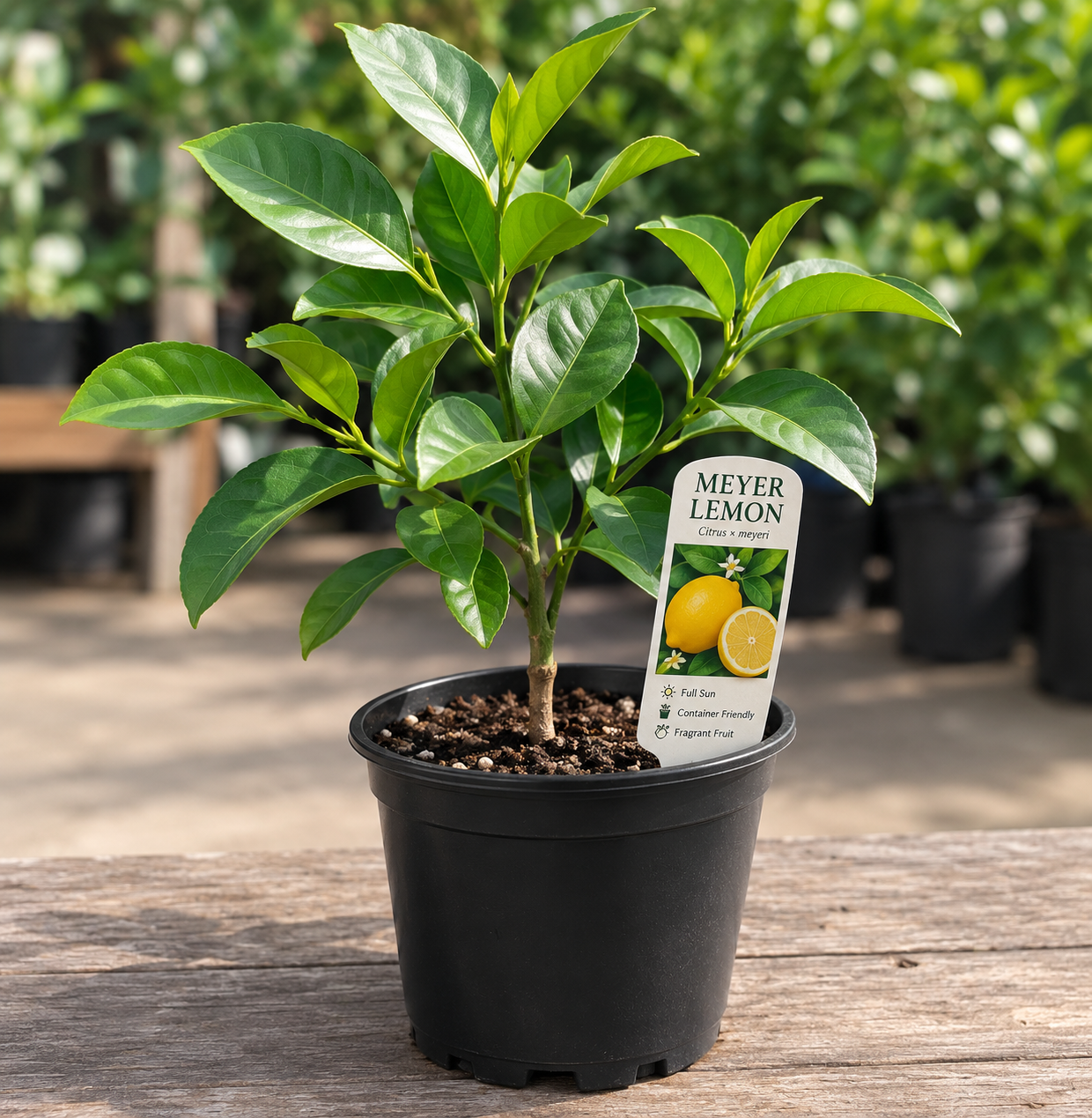
What growing zone is suitable for a dwarf Meyer lemon tree?
The recommended dwarf Meyer lemon tree growing zone is USDA Zones 9–11. A tree may also be grown in colder zones in a container that can be moved indoors or otherwise protected.
USDA hardiness zones describe the average annual extreme minimum winter temperature. They do not tell you how hot, dry, humid or rainy a location is. They also do not replace local knowledge about frost exposure, reflected heat, wind or drainage.
For a practical decision:
| Growing situation | Best approach |
|---|---|
| USDA Zone 9–11 with a suitable citrus site | Grow outdoors in the ground or a container |
| Colder zone with a protected patio or bright indoor space | Grow in a container and protect it during cold weather |
| Site with poor drainage | Improve drainage or use a container |
| Frost-prone location with no protection | Choose a more cold-tolerant plant instead |
A “dwarf” label does not provide a guaranteed mature height or width. Final size depends on rootstock, pruning, container culture and growing conditions. If you need a tree to fit a particular patio or greenhouse space, confirm the plant’s current size and expected form with the seller before ordering.
How cold tolerant is a dwarf Meyer lemon tree?
A dwarf Meyer lemon tree is not a reliably hardy outdoor tree in every climate. Its listed hardiness range is USDA Zones 9–11, and trees grown in colder areas need protection rather than exposure to unprotected winter conditions.
The fact pack does not provide a safe minimum temperature, so we do not recommend promising that a Meyer lemon will survive a particular cold event. Cold tolerance also depends on the tree’s age, whether it is in a container, how exposed the site is and how quickly conditions change.
Use this rule:
- In a suitable warm climate, plant outdoors in a sunny, well-drained location.
- In a borderline climate, use a sheltered site and be ready to protect the plant.
- In a colder climate, keep it in a container that can be moved indoors or placed in protected conditions.
- Do not treat the word “dwarf” as a claim of extra cold tolerance.
The tree is evergreen, so it remains exposed to winter conditions rather than going dormant like a deciduous tree. Spring planting after the danger of frost has passed is the general recommendation for outdoor planting.
Can you grow a dwarf Meyer lemon tree in Adelaide?
A dwarf Meyer lemon tree may be suitable for Adelaide if your particular site provides enough sun, good drainage and winter conditions within the tree’s requirements. For a garden location that experiences damaging frost or cold exposure, container culture gives you more control.
For an Adelaide garden:
- Choose the sunniest practical position, with at least 6 hours of direct light.
- Test or amend the soil if it is not fertile, well drained and slightly acidic.
- Plant after the local frost risk has passed.
- Use a container if winter exposure is uncertain.
- Water deeply when the soil surface begins to dry, but do not let the roots remain waterlogged.
The city name is not enough to guarantee success. A warm, sheltered yard and an exposed site can produce very different results.
Can you grow a dwarf Meyer lemon tree in Canberra?
Canberra requires more caution than a warm, frost-free citrus location. A dwarf Meyer lemon tree can be considered for a container there, but outdoor planting should not be treated as automatically suitable because winter cold and frost exposure may exceed what the tree can handle.
A container lets you move the tree indoors or into another protected space when conditions require it. Put it in the brightest available location, and return it outdoors only when conditions are warm and suitable. If you want a permanent, low-maintenance tree in the ground, Meyer lemon may not be the best choice for an exposed Canberra site.
Can you grow a dwarf Meyer lemon tree in California?
Many California sites can suit Meyer lemon trees, but California is climatically diverse. Warmer locations with full sun and well-drained soil are the strongest candidates. Colder inland, high-elevation or frost-prone areas may require container growing or winter protection.
For California buyers, evaluate the actual planting site rather than the state label:
- Warm coastal or lower-elevation sites: Often the simplest setting for outdoor culture if drainage and sun are suitable.
- Colder inland sites: Use a protected position and have a plan for cold weather.
- Hot, dry sites: Water consistently and protect the roots from severe drying; the soil must still drain freely.
- Small patios or rental gardens: A container makes size and winter protection easier to manage.
A dwarf tree is useful for container culture, but “dwarf” does not mean it will stay a fixed size without pruning or that it can tolerate more cold.
Is a dwarf Meyer lemon tree suitable for San Diego?
San Diego can be a good match for a Meyer lemon tree where the planting site has full sun and good drainage. Conditions still vary by neighborhood and exposure, so a colder or unusually sheltered site should be assessed separately.
Plant in spring after frost danger has passed, or plant a container when conditions are warm and suitable. In the ground, keep the tree away from areas where irrigation water collects. In a container, choose a growing medium and pot setup that drains freely.
Can you grow a dwarf Meyer lemon tree in Florida?
Florida can suit Meyer lemon trees, but drainage is especially important. Citrus roots should not remain in waterlogged soil, even where temperatures are favorable.
For Florida gardens:
- Select a full-sun site.
- Use fertile, well-drained soil with organic matter.
- Avoid low spots where water collects.
- Water deeply when the soil surface begins to dry.
- Monitor the plant during periods of heavy rain and adjust watering accordingly.
Florida’s regional conditions vary, so a site that stays wet is a poor match even if winter temperatures are suitable. A raised or container planting may be more practical where drainage cannot be corrected.
Can you grow a dwarf Meyer lemon tree in Houston?
Houston gardeners can consider a Meyer lemon tree if they can provide full sun, fast drainage and a plan for protecting it during damaging cold. The warmer parts of a region may be suitable for outdoor culture, while exposed or colder sites may be better served by container growing.
A container is the more flexible option for a Houston gardener who wants to move the tree during cold weather or place it under protection. In the ground, choose a sheltered site but do not plant where water stands after rain.
Hot weather alone is not the deciding factor. The tree also needs consistent moisture, fertile soil and protection from unsuitable cold.
Can you grow a dwarf Meyer lemon tree in Arizona or Las Vegas?
A dwarf Meyer lemon tree may grow in Arizona or Las Vegas when the gardener manages intense sun, dry conditions, irrigation and winter exposure. These locations are not automatically easy just because they are warm.
Use a site with full sun, but watch the soil closely so it does not become excessively dry. Water deeply when the surface begins to dry, then allow excess water to drain away. Container trees need particular attention because their limited root volume can dry faster than in-ground soil.
For Arizona and Las Vegas:
- Improve soil drainage before planting.
- Use organic matter where appropriate while avoiding waterlogged conditions.
- Check the plant frequently during hot, dry weather.
- Protect the container and roots from severe exposure.
- Be prepared to move or protect the tree during cold weather.
A sheltered container is often the most manageable choice for buyers who are unsure whether their exact site is suitable.
What conditions does a dwarf Meyer lemon tree need?
A dwarf Meyer lemon tree needs full sun, well-drained fertile soil and steady but not excessive moisture. The tree prefers slightly acidic soil, approximately pH 5.5–6.5.
Light
Give the tree at least 6 hours of direct light daily. More shade can reduce the plant’s ability to grow well and produce fruit. Indoors, place it in the brightest practical location and rotate or reposition it as needed for even light.
Soil
Use fertile soil with good organic matter and reliable drainage. Avoid planting in compacted or waterlogged ground. If your native soil drains poorly, a container or a raised planting area may be more dependable than trying to manage a persistently wet site.
Water
Water deeply when the soil surface begins to dry. Keep moisture available without leaving the roots saturated. The right frequency varies with weather, container size, soil and plant age, so check the soil instead of following a rigid calendar.
Pollination
Meyer lemon is self-fertile, so you generally do not need a second tree for fruit production. That makes one tree practical for a patio, small garden or container collection.
Flowers and fruit
The tree is evergreen, with white flowers. Blooming often occurs from winter through spring, with additional flowering possible in favorable warm conditions. Harvest commonly occurs from fall through winter, although flowering and fruiting can occur at other times in suitable climates.
How large will a dwarf Meyer lemon tree become?
There is no dependable mature height or width supplied for this tree. Dwarf Meyer lemon trees vary substantially in size according to rootstock, pruning, container culture and growing conditions.
Plan for a living plant that will need room for its canopy and root system rather than assuming a fixed “dwarf” measurement. Container culture and pruning can help manage the plant, but they do not eliminate the need for adequate light, drainage and access for watering.
The growth rate is moderate under favorable growing conditions. If you are buying for a balcony, patio or indoor space, ask the seller for the plant’s current shipping size and guidance for its expected form.
Where can you buy a dwarf Meyer lemon tree for your climate?
Choose the plant format based on your winter conditions and how much flexibility you need. A larger container plant can be a practical starting point for a suitable outdoor climate, while a smaller dwarf plant may be easier to place indoors or establish in a pot.
Our available options include:
- Meyer Lemon Tree Live Plant – 3 Gallon Pot – Cold Hardy — listed at $99.99. The listing describes a live plant grown in a 3-gallon pot for patio or home-garden growing.
- Meyer Lemon Tree Live Plant 2 Inch Tall – Dwarf Fruit Tree for Indoor Outdoor — listed at $37.96. The listing describes a small dwarf live plant for indoor or outdoor growing.
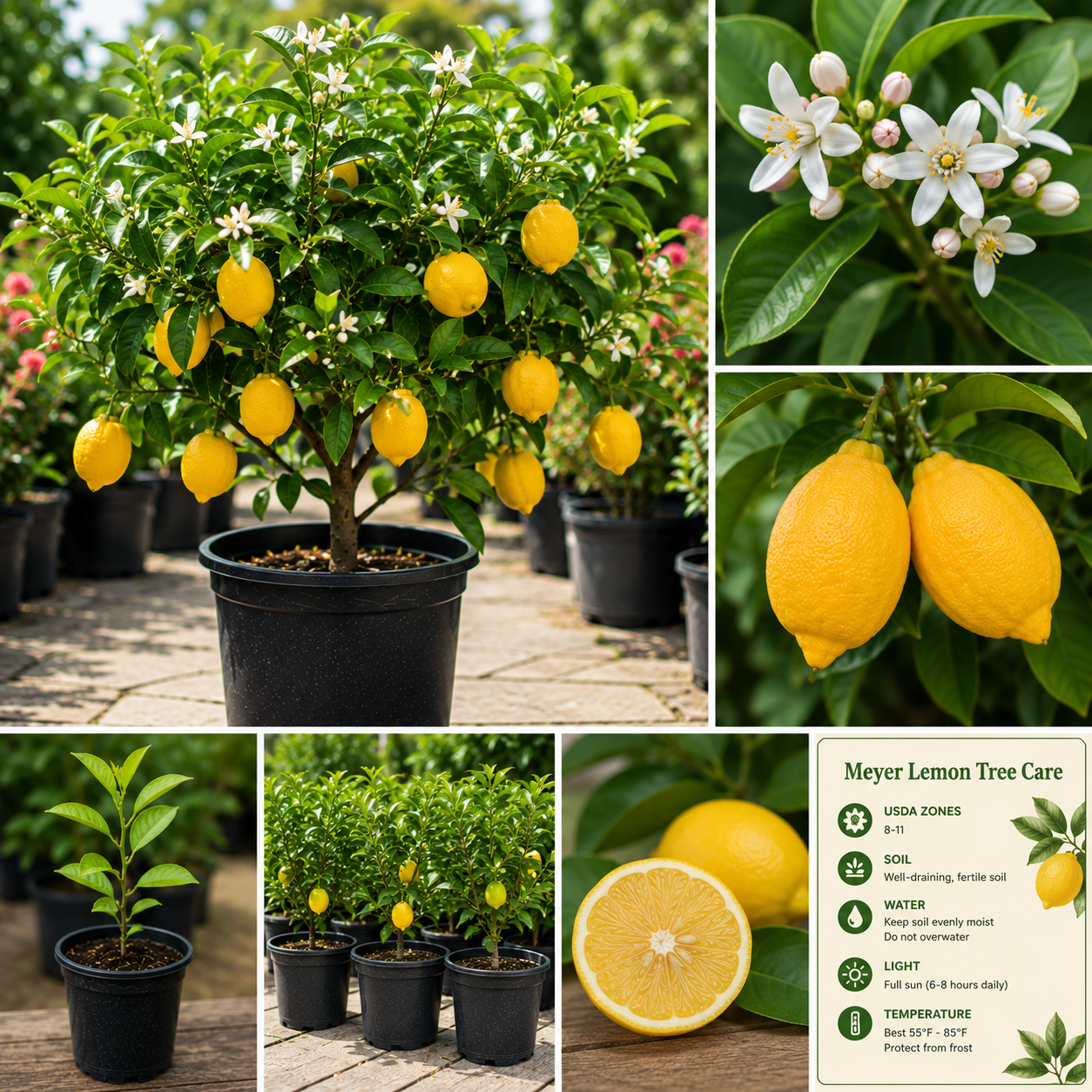
Before ordering for Australia, Canada or another country, confirm that the seller can legally ship to your destination. Plant import rules, quarantine requirements and shipping availability are separate from horticultural suitability. For a Canadian buyer or anyone outside the United States, a protected container plan is also more realistic where local winter conditions fall outside the tree’s recommended hardiness range.
When should you plant a dwarf Meyer lemon tree?
Spring, after the danger of frost has passed, is the general best planting time for an outdoor tree. Container plants can be planted when conditions are warm and suitable.
If you are moving a tree outdoors from a protected setting, make the transition gradually and avoid placing it immediately in a harsh location. In colder climates, keep the plant in its container so you can move it before damaging cold arrives.
The exact calendar differs by region. Use your local frost pattern and current conditions rather than a universal date.
Should you buy one for your climate?
Buy a dwarf Meyer lemon tree if you can provide full sun, free drainage and either a suitable warm climate or a reliable winter-protection plan. It is a good fit for many warm gardens, patios and container growers, but it is not a carefree outdoor tree in every region.
For Adelaide, California, Florida, Houston, Arizona and San Diego, judge the specific site’s sun, drainage and winter exposure. For Canberra, Canada and other colder locations, container culture is the safer recommendation. A single tree is enough for pollination, and its moderate growth rate makes it manageable when you plan for its eventual size rather than relying on the word “dwarf” alone.
Related guides
- Buying a Dwarf Meyer Lemon Tree: Shipping Guide
- How to Care for a Dwarf Meyer Lemon Tree
- Why Are Dwarf Meyer Lemon Tree Leaves Turning Yellow?
- Meyer Lemon Bonsai: Size, Care, and Buying Guide
- Growing a Dwarf Meyer Lemon Tree in the Ground
- How Big Does a Dwarf Meyer Lemon Tree Get?
- When Do Dwarf Meyer Lemon Trees Bloom and Fruit?
- Can You Grow a Dwarf Meyer Lemon Tree in a Pot?
- How to Prune a Dwarf Meyer Lemon Tree
- Dwarf Meyer Lemon Tree Guide: Size, Care and Fruit
- Dwarf Meyer Lemon Tree for Sale: Buying Guide
- Where to Buy a Dwarf Meyer Lemon Tree: Buyer’s Guide
