
META: Learn how to care for a dwarf Meyer lemon tree with practical guidance on sunlight, watering, soil, fertilizer, pruning and winter protection.
How do you care for a dwarf Meyer lemon tree?
A dwarf Meyer lemon tree stays healthy with full sun, well-drained fertile soil, deep watering when the soil surface begins to dry, and regular citrus fertilizer used according to its label. Give it at least 6 hours of direct sunlight daily, protect it from frost, and prune only to maintain its shape and remove problem growth.
Meyer lemon trees are evergreen citrus plants that can grow in the ground or in containers. Their mature size varies with rootstock, pruning, container culture and growing conditions, so do not rely on the word “dwarf” to predict an exact height or width.
Dwarf Meyer lemon tree care at a glance
| Care need | Recommendation |
|---|---|
| Light | Full sun; at least 6 hours of direct light daily |
| Water | Water deeply when the soil surface begins to dry |
| Soil | Fertile, well-drained soil with good organic matter |
| Soil pH | Approximately 5.5–6.5 |
| Fertilizer | Use a fertilizer labeled for citrus and follow its directions |
| Outdoor growing | Best suited to USDA Zones 9–11 |
| Cold-climate growing | Grow in a container and move it indoors or protect it when needed |
| Planting time | Spring, after the danger of frost has passed |
| Pollination | Self-fertile; a second tree is generally not needed |
| Blooming | Often winter through spring, with additional flowering possible in warm conditions |
| Harvest | Commonly fall through winter, though timing varies by climate and culture |
How much sunlight does a dwarf Meyer lemon tree need?
A dwarf Meyer lemon tree needs full sun and prefers at least 6 hours of direct light each day. Place an outdoor tree where it receives unobstructed sun for most of the day, rather than under a dense canopy or beside a building that blocks afternoon light.
Insufficient light can lead to weak, stretched growth and fewer flowers. Container-grown trees may need to be moved as the angle of the sun changes through the year.
If you bring the tree indoors for winter, place it in your brightest available location. Acclimate it gradually when moving it between indoor and outdoor conditions to reduce stress. A sudden change in light can cause leaf drop even when watering is correct.
How often should you water a dwarf Meyer lemon tree?
Water when the soil surface begins to dry, then water deeply so moisture reaches the full root area. Allow excess water to drain completely. Meyer lemon trees need moderate moisture, but consistently wet soil can damage roots.
There is no single watering schedule that works in every garden. A tree in a small container may dry faster than one planted in the ground, while hot, sunny or windy conditions increase water use. Cool weather and lower indoor light generally slow drying.
Check the soil before watering rather than watering by the calendar:
- Feel the soil surface.
- If it has begun to dry, water thoroughly.
- Let excess water drain from the container or planting area.
- Empty standing water from a saucer.
Do not leave a container sitting in water. Poor drainage is one of the most common causes of decline in citrus grown in pots.
What is the best soil for a dwarf Meyer lemon tree?
The best soil for a dwarf Meyer lemon tree is fertile, well-drained soil with good organic matter. Aim for a slightly acidic pH of approximately 5.5–6.5, and avoid heavy or waterlogged conditions.
For a container, choose a high-quality potting mix that drains freely rather than using dense garden soil by itself. The container must have drainage holes. For in-ground planting, improve poor soil only in a way that preserves drainage; adding organic matter does not solve a site that stays saturated after rain.
A soil test can help confirm pH if the tree repeatedly shows weak growth despite proper light and watering. Avoid making repeated amendments without knowing the existing soil condition.
The best soil also depends on where the tree grows:
- In a container: Use a loose, well-drained potting mix and a container with drainage holes.
- In the ground: Choose a site where water does not collect after irrigation or rain.
- Indoors for winter: Use a container and mix that drain reliably, since indoor plants often dry more slowly.
What is the best fertilizer for a dwarf Meyer lemon tree?
The best fertilizer for a dwarf Meyer lemon tree is a complete fertilizer labeled for citrus. Use the application rate and timing on the product label rather than guessing at a dose, because fertilizer needs vary with container size, soil, climate, plant age and growth.
Apply fertilizer when the tree is actively growing according to the label directions. Do not use extra fertilizer to compensate for poor light, waterlogged soil or root problems. More fertilizer is not a substitute for suitable growing conditions and can injure roots.
For a practical routine:
- Choose a product specifically labeled for citrus.
- Follow the label for application amount and frequency.
- Apply it to adequately moist soil unless the label says otherwise.
- Keep granular fertilizer away from the trunk.
- Water as directed after application.
- Reduce unnecessary feeding when growth slows, especially for an indoor tree in low light.
A young tree and a mature container tree may require different amounts. The fertilizer label should take priority over a general calendar.
When should you plant or repot a dwarf Meyer lemon tree?
Plant a dwarf Meyer lemon tree in spring after the danger of frost has passed. Container plants can be planted or moved outdoors when conditions are warm and suitable.
When repotting, choose a container with drainage and avoid moving the plant into a dramatically oversized pot. Excess soil can remain wet around a small root system, increasing the risk of root problems. Handle the root ball carefully and water thoroughly after planting.
A newly planted tree may need closer monitoring while it establishes. Check soil moisture regularly, but do not keep the soil constantly wet.
Meyer lemon trees are self-fertile, so one tree is generally enough to produce fruit. You do not need a second tree solely for pollination.
How do you prune a dwarf Meyer lemon tree?
Prune a dwarf Meyer lemon tree lightly to maintain its shape, remove damaged or dead growth, and control branches that are weak, crossing or poorly placed. Avoid heavy pruning unless there is a clear reason to remove substantial growth.
A simple pruning routine is usually enough:
- Remove dead, broken or damaged branches.
- Cut out branches that cross and rub against one another.
- Remove weak growth that crowds the center.
- Shorten overly long shoots when needed to maintain a balanced shape.
- Use clean, sharp pruners and make clean cuts.
The best timing depends on climate and the tree’s growth pattern. Pruning after a major flush of growth or after harvest can help you see the structure clearly, but avoid removing healthy branches simply to force a particular size. Since dwarf trees vary in mature size, pruning should support the available space rather than follow an assumed height.
Do not remove large amounts of foliage just because the tree is flowering or fruiting. Leaves supply energy for growth and fruit development.
How do you protect a dwarf Meyer lemon tree in winter?
Meyer lemon trees are generally suited to USDA Zones 9–11. In colder zones, grow the tree in a container that can be moved indoors or otherwise protected when frost threatens.
Planting in a warm climate does not remove the need to consider local weather. USDA hardiness zones describe average extreme winter cold; they do not tell you about summer heat, rainfall, humidity or the length of your growing season.
Before cold weather:
- Move a container tree to a protected location when necessary.
- Bring it indoors before frost if your climate requires indoor protection.
- Place it in the brightest available indoor location.
- Check soil moisture more often than on a fixed schedule, but water less frequently if the soil dries slowly.
- Inspect leaves and stems for pests after moving the plant indoors.
- Return it outdoors gradually when conditions are suitable.
A tree may shed some leaves after a move because indoor light and humidity differ from outdoor conditions. Keep its light as strong as possible and avoid overwatering while it adjusts.
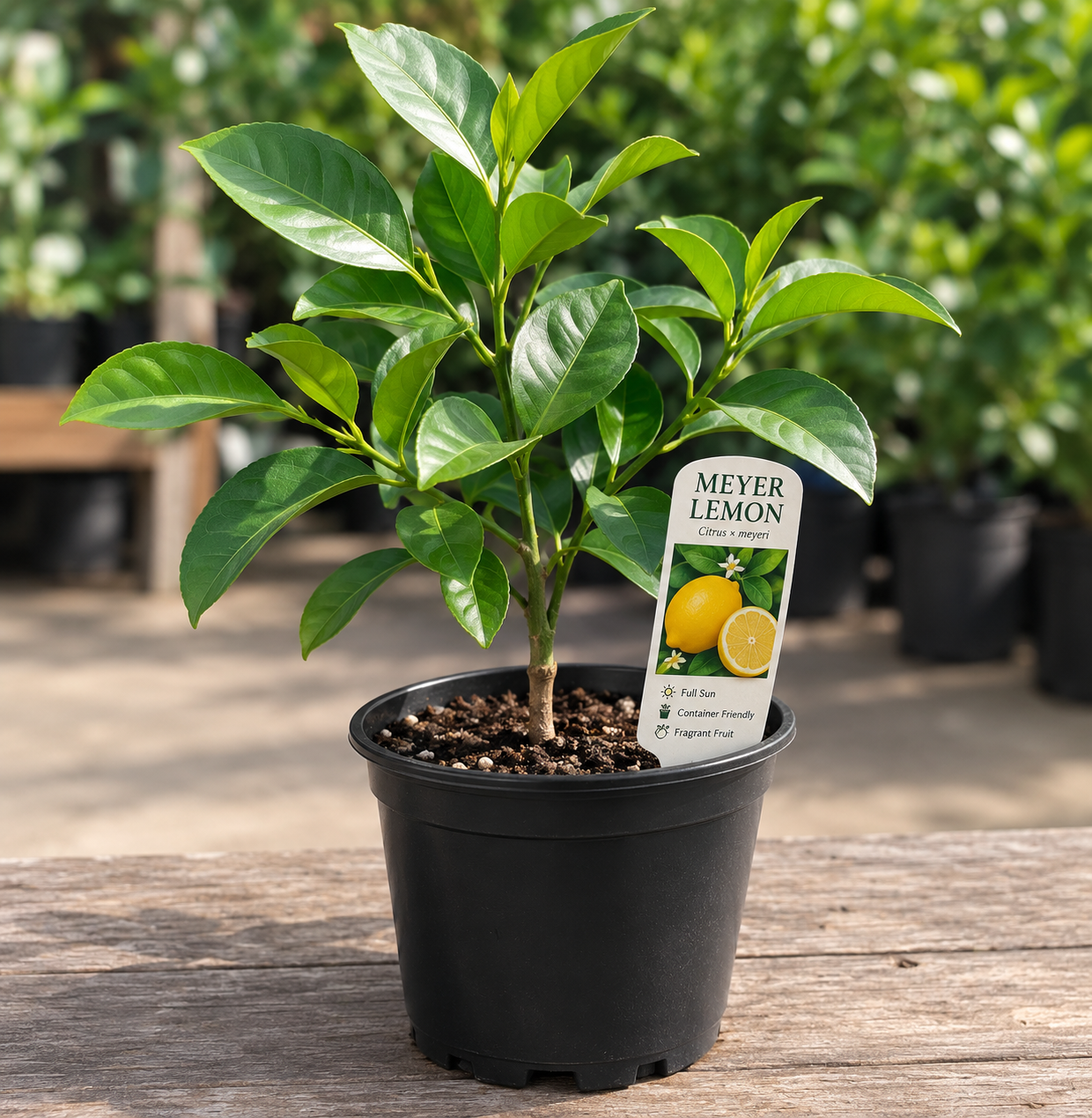
For gardeners who want a larger starting plant, the Meyer Lemon Tree Live Plant – 3 Gallon Pot – Cold Hardy is listed at $99.99. It is suited to patio or home-garden growing, but its cold protection needs still depend on your local climate.
What does a healthy dwarf Meyer lemon tree look like?
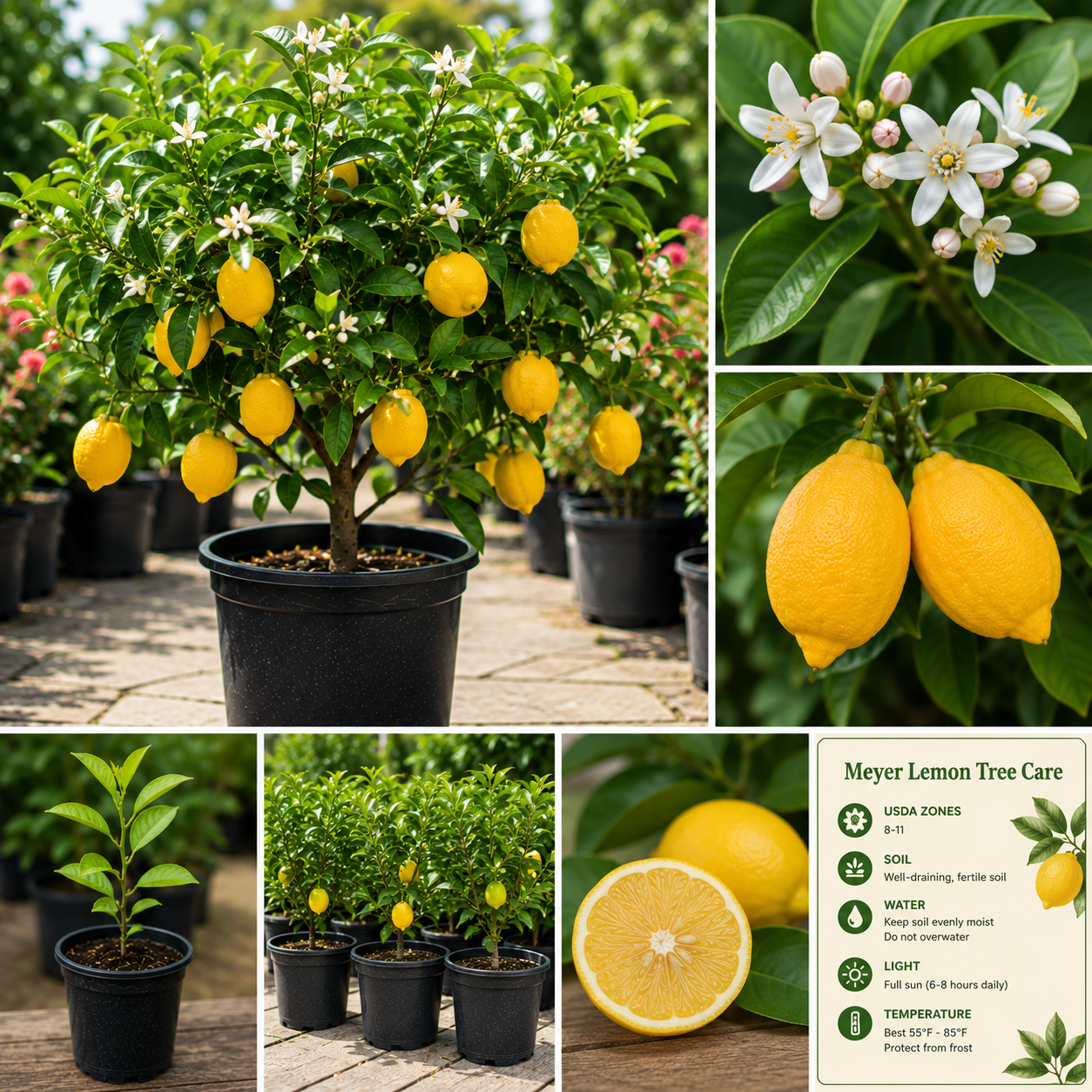
A healthy dwarf Meyer lemon tree has firm green foliage, steady new growth during favorable conditions, and a well-drained root environment. It may bloom from winter into spring, with additional flowering possible throughout the year in warm, favorable conditions. Fruit commonly develops from fall through winter, but bloom and harvest timing vary by climate and culture.
Healthy growth does not always mean constant growth. Indoor trees may slow down when light levels fall, and newly moved or newly planted trees may take time to adjust.
Watch for these positive signs:
- Leaves remain reasonably firm and retain good color.
- New shoots develop when growing conditions are favorable.
- Flowers form during the tree’s normal bloom periods.
- The soil drains freely after watering.
- The tree holds a balanced shape without excessive weak growth.
What are the most common Meyer lemon care mistakes?
The most common mistakes are inadequate light, overwatering, poor drainage, excessive fertilizer and abrupt environmental changes.
Watering on a fixed schedule
A calendar cannot account for container size, temperature, sunlight or soil. Check the soil surface and water when it begins to dry.
Keeping the soil constantly wet
Meyer lemon trees prefer moisture but not waterlogged roots. Use a draining soil mix and a container with drainage holes.
Growing in too little light
A bright room may still provide less light than a sunny outdoor location. Give the tree at least 6 hours of direct light daily when possible.
Fertilizing without reading the label
Using more fertilizer does not correct poor soil drainage or low light. Choose a citrus-labeled fertilizer and follow its directions.
Pruning too aggressively
Heavy pruning can remove productive foliage and create an uneven shape. Remove problem branches first and make smaller corrective cuts.
Leaving a container outdoors in freezing conditions
Meyer lemon trees can be grown in colder zones only when container plants are moved indoors or otherwise protected. Plan the winter location before cold weather arrives.
Which Meyer lemon tree should you buy?
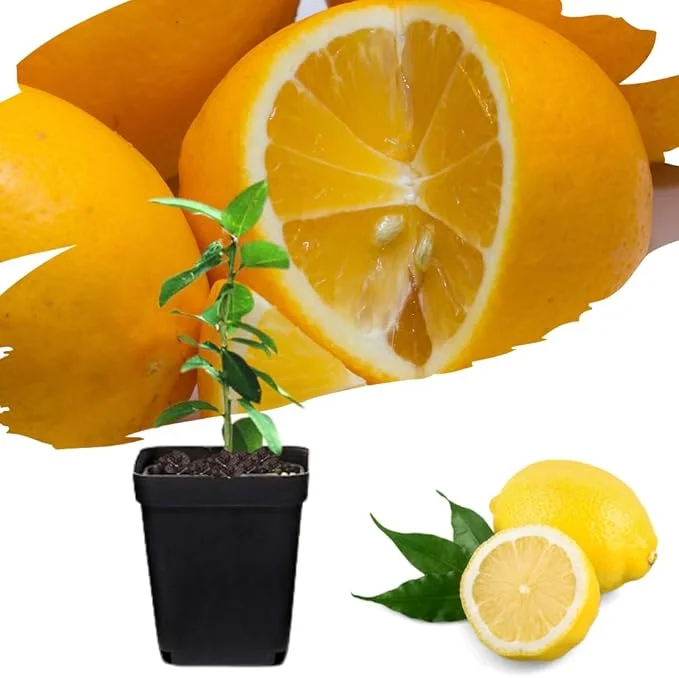
Choose a small starter plant if you want an economical way to grow a tree in a container and are comfortable with a longer establishment period. The Meyer Lemon Tree Live Plant Seedling – Starter 2-3 Inch Tall – Tropical Fruit is listed at $32.99 and is described as a 2–3-inch starter plant suited to pots.
Choose the 3-gallon option if you prefer a more established container plant and have room for a larger starting size. In either case, the long-term care is the same: full sun, moderate watering with good drainage, fertile slightly acidic soil, citrus fertilizer used as directed, and protection from frost.
A dwarf Meyer lemon tree is a good fit if you can provide strong light and manage seasonal protection. In Zones 9–11, it may grow outdoors in suitable conditions; in colder areas, container culture is the practical choice because the tree can be moved indoors or protected when needed.
Related guides
- Buying a Dwarf Meyer Lemon Tree: Shipping Guide
- Why Are Dwarf Meyer Lemon Tree Leaves Turning Yellow?
- Meyer Lemon Bonsai: Size, Care, and Buying Guide
- Growing a Dwarf Meyer Lemon Tree in the Ground
- How Big Does a Dwarf Meyer Lemon Tree Get?
- When Do Dwarf Meyer Lemon Trees Bloom and Fruit?
- Can You Grow a Dwarf Meyer Lemon Tree in a Pot?
- How to Prune a Dwarf Meyer Lemon Tree
- Dwarf Meyer Lemon Tree Guide: Size, Care and Fruit
- Dwarf Meyer Lemon Tree for Sale: Buying Guide
- Where to Buy a Dwarf Meyer Lemon Tree: Buyer’s Guide
- Dwarf Meyer Lemon Tree Australia: Climate Guide
