Madagascar Palm Pachypodium Lamerei subs. fiherense Live Plant – Easy Care Indoor/Outdoor
-49%
Madagascar Palm Pachypodium Lamerei subs. fiherense Live Plant – Easy Care Indoor/Outdoor
Bring exotic beauty to your home with the Madagascar Palm live plant. This unique succulent offers striking architectural appeal and is incredibly easy to care for. Perfect for both indoor and outdoor settings, it thrives with minimal watering, making it an ideal choice for busy plant enthusiasts.
Original price was: $187.90.$96.00Current price is: $96.00.

With our Alive & Thrive Guarantee, we’ve got your back for the first 30 days! If you have any concerns about your plants, just reach out to us. Our team is here to help answer your questions and guide you in selecting the best plants for your garden, climate, and unique preferences. We're excited to help you create the garden of your dreams!
Estimated arrival
Oct 14
Oct 19 - Oct 21
Oct 24 - Oct 28
Product Details
-
USDA Hardiness Zone
USDA Zones 9-11 (outdoors), suitable for indoor growing in all zones -
Soil type
Well-draining cactus or succulent potting mix -
Sunlight Exposure
Full sun to bright direct light (6-8+ hours daily) -
Expected Planting Period
Year-round indoors; spring to early summer outdoors (in appropriate zones)
Overview
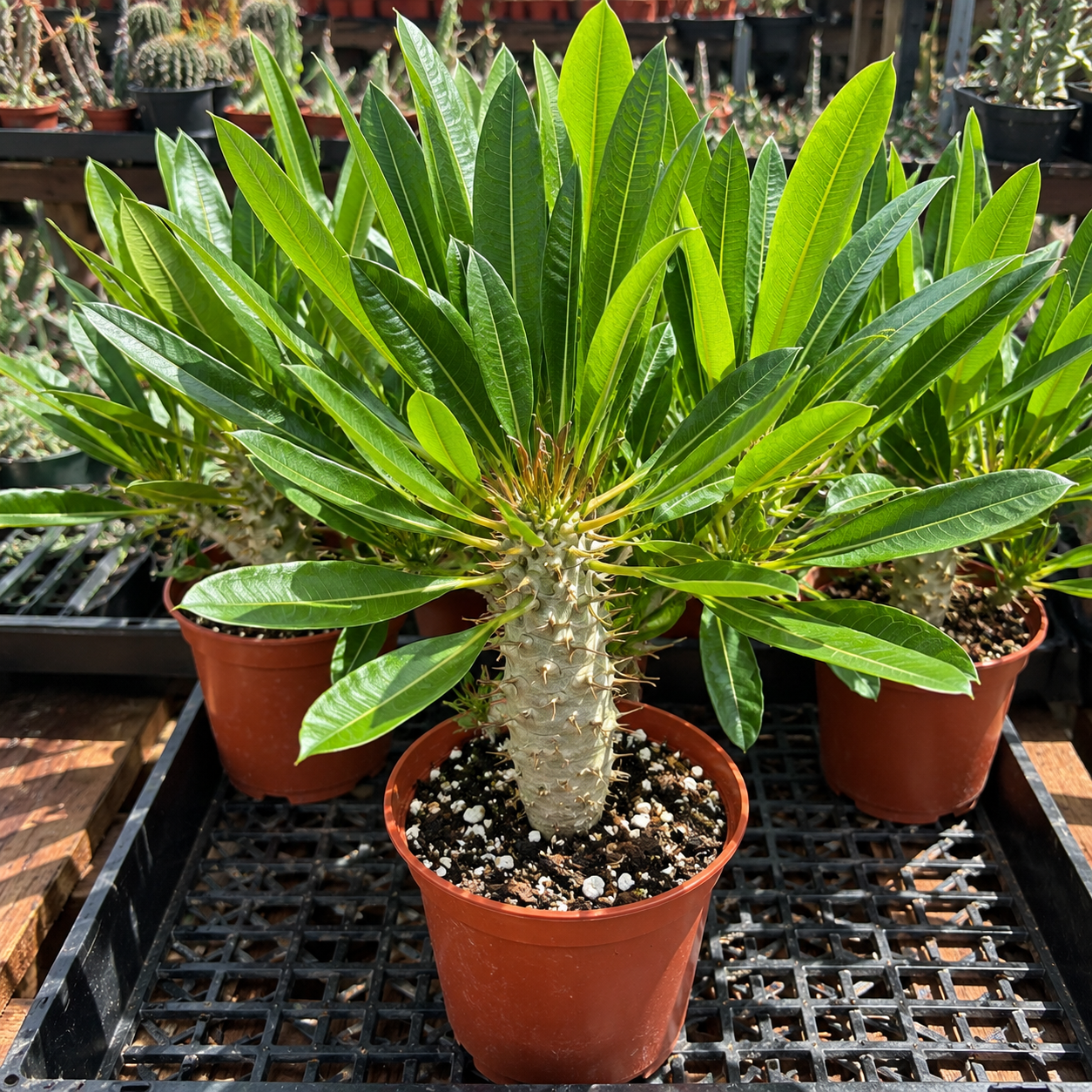
Introduce a touch of the exotic to your plant collection with the magnificent Madagascar Palm live plant. Despite its common name, this fascinating specimen is not a true palm but rather a succulent belonging to the Pachypodium genus, specifically Pachypodium Lamerei subs. fiherense. Native to Madagascar, this plant is renowned for its distinctive, bottle-shaped trunk covered in sharp spines, topped with a crown of long, narrow leaves. It’s a striking architectural plant that can serve as a captivating focal point in any indoor or outdoor setting. Known for its resilience and low maintenance, the Madagascar Palm live plant is an excellent choice for both novice and experienced gardeners seeking a unique and durable addition to their space. Its ability to thrive in dry conditions makes it a standout among drought-tolerant succulents, embodying both beauty and hardiness.
The Pachypodium Lamerei subs. fiherense variety is particularly prized for its robust growth and often more compact form compared to other Pachypodium species, making it versatile for various landscape designs or as a potted houseplant. When mature, it can produce beautiful, fragrant white flowers, adding another layer of appeal. This plant is a fantastic conversation starter and a testament to nature’s incredible diversity, offering a unique aesthetic that blends the rugged charm of a desert plant with the elegant silhouette of a palm. Embrace the beauty and simplicity of caring for this extraordinary succulent, a true gem for any plant lover.
Key Benefits
The Madagascar Palm live plant offers a multitude of benefits that make it a highly desirable addition to any home or garden. Its unique characteristics provide both aesthetic appeal and practical advantages, ensuring it stands out from typical houseplants.
- Striking Architectural Form: The distinctive, spiny trunk and crown of leaves create a dramatic visual statement, making it a natural focal point in any room or garden. Its sculptural quality adds modern elegance.
- Exceptional Drought Tolerance: As a succulent, the Madagascar Palm live plant is perfectly adapted to dry conditions, requiring infrequent watering. This makes it an ideal choice for those seeking a low-maintenance plant that can withstand periods of neglect.
- Versatile Indoor and Outdoor Plant: This resilient plant thrives in a variety of environments. It can be a stunning indoor houseplant in cooler climates or a robust outdoor specimen in warmer regions, adapting well to different settings.
- Easy Care Plant: Known for its hardiness, the Madagascar Palm is forgiving and relatively simple to maintain. It doesn’t demand constant attention, making it suitable for beginners or individuals with busy lifestyles.
- Unique Flowering Potential: Mature plants can produce beautiful, fragrant white flowers, typically during the warmer months. These delicate blooms provide a lovely contrast to the plant’s spiky exterior, adding another dimension of beauty.
- Air Purification Benefits: Like many plants, the Madagascar Palm contributes to a healthier indoor environment by helping to filter toxins from the air, promoting better air quality in your home.
- Long-Lived Specimen: With proper care, these plants can live for many years, growing into impressive specimens that become cherished parts of your plant collection or landscape.
Plant Care & Growing Tips
Caring for your Madagascar Palm live plant is straightforward, thanks to its resilient nature and adaptation to harsh environments. Understanding its basic needs will ensure it thrives and potentially rewards you with its unique blooms. This easy care plant is perfect for those who appreciate low-maintenance gardening.
Sunlight Requirements: The Madagascar Palm absolutely loves bright, direct sunlight. For optimal growth and health, aim for at least 6-8 hours of direct sun per day. If grown indoors, place it in your brightest south-facing window. If outdoor conditions allow, full sun is ideal. Insufficient light can lead to leggy growth and a weaker plant. Rotate your potted plant periodically to ensure even light exposure.
Watering Schedule and Soil Moisture: As a drought tolerant succulent, overwatering is the biggest threat to a Madagascar Palm. Allow the soil to dry out completely between waterings, then water thoroughly until it drains from the bottom. During its active growing season (spring and summer), you might water every 2-4 weeks, depending on heat and humidity. In fall and winter, when the plant enters a period of dormancy and may shed its leaves, reduce watering significantly, perhaps once a month or even less. Always check the soil moisture before watering.
Soil Type and Drainage Requirements: A well-draining soil mix is crucial for this plant. Use a cactus or succulent potting mix, or create your own by mixing regular potting soil with perlite, pumice, or coarse sand to improve drainage. The pot must have drainage holes to prevent water from sitting around the roots, which can lead to rot. Good aeration is key for a healthy root system.
Temperature Range and USDA Hardiness Zone: The Madagascar Palm prefers warm temperatures, ideally between 65-80°F (18-27°C). It is not frost-tolerant. If grown outdoors, it is best suited for USDA Hardiness Zones 9-11, where temperatures rarely drop below freezing. If you live in a cooler climate, it should be brought indoors before the first frost. Protect it from cold drafts, especially during winter.
Fertilization Schedule and Type: Fertilize sparingly during the active growing season (spring and summer) with a balanced, slow-release granular fertilizer or a diluted liquid succulent fertilizer. A half-strength application once a month or every other month is usually sufficient. Avoid fertilizing in fall and winter when the plant is dormant. Too much fertilizer can harm the plant, so err on the side of less.
Common Problems and Solutions: The most common issue is root rot due to overwatering. Ensure proper drainage and let the soil dry out. Pests like mealybugs or spider mites can occasionally appear; treat with insecticidal soap or neem oil. Yellowing leaves can indicate overwatering or nutrient deficiency, while shriveling can mean underwatering. Monitor your Pachypodium Lamerei fiherense closely for any signs of distress and adjust care accordingly.
Size & Details
The Madagascar Palm live plant is a slow to moderate grower, typically reaching heights of 6-8 feet (1.8-2.4 meters) when grown outdoors in ideal conditions, and often smaller, around 3-5 feet (0.9-1.5 meters), as an indoor outdoor plant in a container. Its trunk can thicken significantly over time, developing its characteristic bottle-like shape. Our plants are shipped as established, healthy specimens, ready to thrive in your care. They are typically supplied in a nursery pot, ensuring the root system is intact and protected during transit. The growth rate can vary depending on light, water, and nutrient availability, but with proper care, you can expect steady development. This plant does not have a specific ‘time to maturity’ in the traditional sense, as it continues to grow and develop character over many years, potentially producing flowers once it reaches a certain size and age, often several years after planting.
Frequently Asked Questions
- Q: How big does this plant get? A: The Madagascar Palm live plant can grow up to 6-8 feet tall outdoors and typically 3-5 feet tall indoors. Its size is largely dependent on its growing conditions and whether it’s planted in the ground or a pot.
- Q: What size pot does it come in? A: Our Madagascar Palms are shipped as established plants in a nursery pot, the specific size of which may vary. We ensure the pot is appropriate for the plant’s current size and health, providing a good foundation for its continued growth.
- Q: Is this an indoor or outdoor plant? A: This is a versatile indoor outdoor plant. It thrives outdoors in USDA Zones 9-11 and can be grown as a beautiful houseplant in cooler climates, provided it receives ample sunlight.
- Q: How much sunlight does it need? A: The Madagascar Palm requires at least 6-8 hours of bright, direct sunlight daily. Place it in a south-facing window indoors or a full-sun location outdoors for best results.
- Q: Is this plant easy to care for? A: Yes, the Madagascar Palm live plant is considered an easy care plant, especially for those who tend to forget to water. Its drought-tolerant nature makes it very forgiving, ideal for beginners or busy individuals.
- Q: What condition will it arrive in? A: Your plant will arrive healthy and carefully packaged, typically in its nursery pot with soil. We take great care to ensure it reaches you in the best possible condition, ready to be acclimated to its new home.
- Q: Is it shipped in soil? A: Yes, the Madagascar Palm live plant is shipped in its nursery pot with soil to protect its root system and minimize transplant shock.
- Q: When is the best time to plant or repot? A: The best time to plant or repot your Madagascar Palm is during its active growing season, typically spring or early summer, allowing it ample time to establish itself before cooler temperatures arrive.
- Q: Will it survive winter in my zone? A: If you are outside USDA Zones 9-11, your Madagascar Palm will need to be brought indoors before temperatures drop below 40°F (4°C) to protect it from frost.
- Q: Can the Pachypodium Lamerei fiherense produce flowers? A: Yes, mature Pachypodium Lamerei fiherense plants can produce beautiful, fragrant white flowers, usually during the warmer months. This is a delightful characteristic of a well-cared-for specimen.
Related products
-30%
Original price was: $85.98.$60.18Current price is: $60.18.
-30%
Original price was: $129.98.$90.98Current price is: $90.98.
-30%
Original price was: $79.98.$55.98Current price is: $55.98.
-30%
Original price was: $49.98.$34.98Current price is: $34.98.
PLANTING & CARE
Lemon Tree Growing: Choose, Plant, and Harvest
Learn how to choose, plant, feed, and protect a lemon tree so it fits your
23
Sep
Sep
Dwarf Meyer Lemon Tree Australia: Climate Guide
Learn where dwarf Meyer lemon trees grow, how much cold they tolerate, and whether Australia,
Where to Buy a Dwarf Meyer Lemon Tree: Buyer’s Guide
Find the right dwarf Meyer lemon tree online or locally, compare starter sizes and costs,
Dwarf Meyer Lemon Tree for Sale: Buying Guide
Compare Meyer lemon tree sizes, prices, shipping limits, indoor growing and California options before you
Dwarf Meyer Lemon Tree Guide: Size, Care and Fruit
META: Learn how large a dwarf Meyer lemon tree grows, where it thrives, and how
How to Prune a Dwarf Meyer Lemon Tree
Learn when and how to prune a dwarf Meyer lemon tree, including tools, shaping cuts,
Can You Grow a Dwarf Meyer Lemon Tree in a Pot?
META: Learn how to grow a dwarf Meyer lemon tree in a pot, including container
When Do Dwarf Meyer Lemon Trees Bloom and Fruit?
META: Dwarf Meyer lemon trees usually bloom from winter through spring and may flower again